Gold Prices Recover as Trump Rejects Iran Peace Proposal
Gold prices moved higher on Monday, recovering from earlier losses after U.S. President Donald Trump dismissed Iran’s counterproposal to a U.S.-backed peace initiative. The rejection kept investor concerns alive over rising energy prices and the risk of inflationary pressure linked to the ongoing conflict.
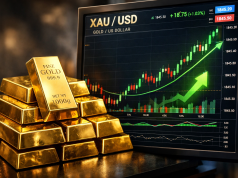
By 09:57 ET (13:57 GMT), spot gold rose 0.6% to $4,742.96 per ounce, while gold futures slipped 0.5% to $4,751.16 per ounce.
Iran Responds to U.S. Peace Plan
According to Iranian state media, Tehran delivered its response to a U.S. proposal aimed at ending the conflict that has now lasted more than two months. Iran’s response reportedly focused on ending hostilities across all fronts while also demanding compensation for war-related damages.
Iran additionally emphasized its control over the Strait of Hormuz, one of the world’s most strategically important oil shipping routes. Roughly 20% of global oil supplies normally pass through the narrow waterway located off Iran’s southern coast.
The Strait of Hormuz has effectively been shut down during the conflict and is currently blockaded by both Iranian and U.S. forces, raising fears of major disruptions to global energy markets.
Trump Calls Iran Proposal “Totally Unacceptable”
Shortly after Iran’s counteroffer became public, President Donald Trump reacted strongly on social media, describing the proposal as “TOTALLY UNACCEPTABLE.”
No further details were provided regarding Washington’s objections.
The United States has been pushing for a rapid end to the conflict before entering broader negotiations on key geopolitical issues, including Iran’s nuclear program.
Rising Oil Prices Continue to Pressure Markets
Gold has struggled to gain momentum throughout the conflict as investors increasingly worry that surging oil prices could reignite global inflation and force central banks to maintain higher interest rates.
Non-yielding assets such as gold typically face pressure in high-rate environments because they do not provide interest income.
On Monday, oil prices climbed again, with benchmark Brent crude futures remaining above $100 per barrel, significantly higher than levels seen before the war began.
Stronger U.S. Dollar Limits Gold Upside
At the same time, the U.S. dollar continued to strengthen as investors sought safety in the greenback amid rising geopolitical uncertainty.
Part of the dollar’s resilience has been driven by the perception that the United States, as a major energy exporter, may be better positioned to withstand energy supply disruptions caused by the effective closure of the Strait of Hormuz.
A stronger dollar also tends to weigh on gold demand by making bullion more expensive for international buyers using other currencies.
Markets Await U.S. Inflation Data and China Talks
Beyond geopolitical developments, investors are closely watching upcoming U.S. inflation data scheduled for release this week.
Markets are also monitoring President Trump’s upcoming visit to China, where discussions with Chinese President Xi Jinping are expected to cover topics including Iran, trade relations, and global energy security.