Wall Street Banks Push Back Fed Rate-Cut Expectations
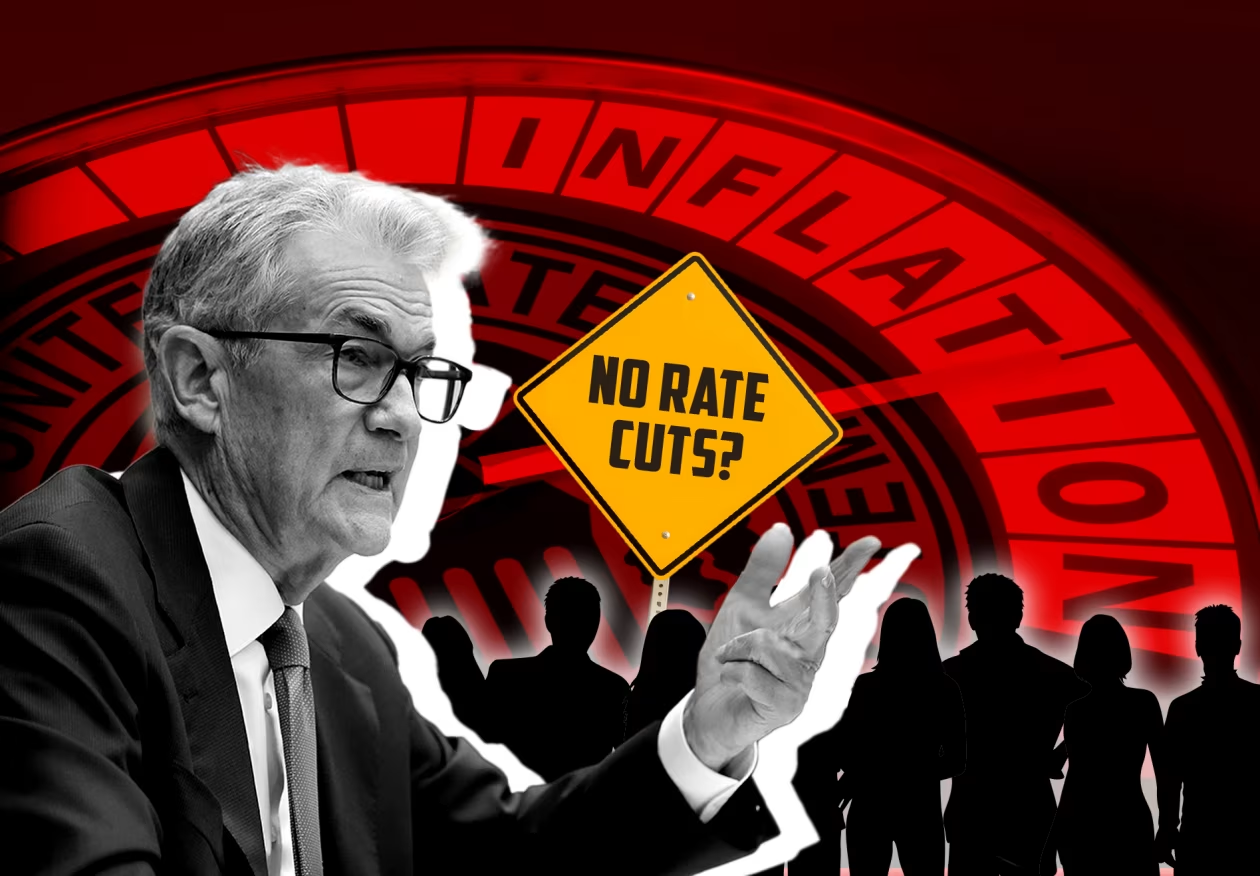
Two major Wall Street banks have revised their forecasts for future Federal Reserve interest rate cuts, signaling that sticky inflation and a resilient U.S. labor market are reducing the urgency for monetary easing.
Despite growing concerns surrounding global supply shocks and energy costs, analysts now believe the Federal Reserve may keep interest rates elevated for longer than previously expected.
Goldman Sachs Delays Final Expected Rate Cuts
Goldman Sachs analyst David Mericle said the bank has postponed its final two projected rate cuts by one quarter.
Goldman Sachs now expects the Federal Reserve to deliver rate reductions in December 2026 and March 2027 rather than earlier forecasts.
According to Mericle, rising energy costs are likely to keep core Personal Consumption Expenditures (PCE) inflation closer to 3% rather than the Fed’s 2% target throughout the year.
He added that the Federal Open Market Committee (FOMC) would likely need to see both softer monthly inflation data and additional weakening in the labor market before considering rate cuts.
Goldman Sachs maintained its long-term terminal rate forecast at 3%–3.25% but acknowledged that if the U.S. economy remains resilient, the Federal Reserve could ultimately decide that additional rate cuts are unnecessary.
Bank of America Removes 2026 Rate Cut Forecasts
Bank of America adopted an even more hawkish stance by completely removing its previous expectations for two rate cuts in 2026.
The bank now expects any future rate reductions to be delayed until the July-to-September period of 2027.
Bank of America analyst Aditya Bhave said recent Federal Reserve commentary has shifted noticeably more hawkish, including statements from traditionally dovish policymakers such as Mary Daly and Christopher Waller, who have recently supported maintaining current rates.
Inflation Remains Well Above the Fed’s Target
According to Bank of America, inflation remains one of the biggest obstacles preventing the Federal Reserve from cutting interest rates sooner.
The bank noted that core PCE inflation rose to 3.2% year-over-year in March, while the inflationary impact from higher oil prices has yet to fully filter through the economy.
Analysts believe ongoing energy market disruptions and supply-side pressures could continue supporting elevated inflation over the coming quarters.
Rate Hike Risks Still Remain on the Table
Bank of America also warned that markets may still be underestimating the possibility of additional rate hikes.
The bank assigned a 15%–20% probability to further tightening by the Federal Reserve, particularly if unemployment falls to 4% or lower and core PCE inflation moves closer to 3.5%.
In such a scenario, the Fed could potentially frame future hikes as a reversal of last year’s rate cuts rather than the start of a new tightening cycle.