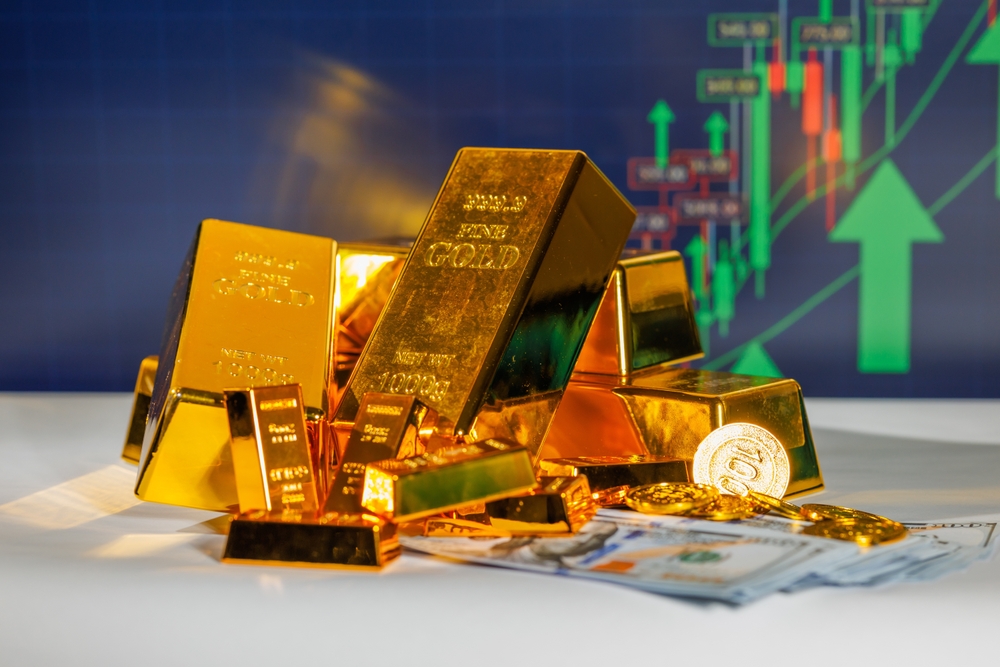
Gold prices surged on Monday as falling oil prices and easing inflation concerns improved the outlook for the precious metal.
The move followed the announcement of a preliminary peace agreement between the United States and Iran.
U.S. and Iran Prepare to Sign Agreement
Pakistan, which has frequently acted as a mediator during the conflict, said a memorandum of understanding would be signed in Switzerland on Friday.
Neither Washington nor Tehran has released the full terms of the agreement. Iran has also indicated that the deal will not take effect until the official signing is completed.
However, the announcement has already influenced global commodity and currency markets.
Strait of Hormuz Reopening Pressures Oil Prices
U.S. President Donald Trump said the agreement would lead to the reopening of the Strait of Hormuz.
The waterway, located near Iran’s southern coast, is one of the world’s most important routes for crude oil shipments. Before the conflict began in late February, roughly one-fifth of global oil supplies passed through the Strait.
The prospect of restored shipping activity pushed crude oil prices sharply lower.
Brent crude futures, which recently climbed above $110 per barrel during the fighting, fell back to just over $80 per barrel.
Gold Prices Climb More Than 3%
Spot gold rose by 3.2% to $4,353.75 per ounce as of 09:27 ET. The metal also reached its highest level since June 9.
The advance marked gold’s third consecutive session of gains.
U.S. gold futures recorded a similar increase, rising 3.2% to $4,375.95 per ounce.
Weaker Dollar Provides Additional Support
Gold also benefited from a decline in the U.S. dollar, which fell to a 10-day low against a basket of major currencies.
The dollar had attracted safe-haven demand during the conflict. However, expectations of a peace agreement improved investor sentiment and reduced the need for defensive positions in the greenback.
A weaker dollar generally supports gold prices because it makes the precious metal less expensive for buyers using other currencies.
Lower Oil Prices Ease Rate Hike Concerns
The sharp decline in oil prices also reduced fears of another energy-driven rise in inflation.
Persistently high energy costs could have encouraged global central banks to adopt a more aggressive monetary policy stance. However, lower crude prices may reduce the need for additional interest rate increases.
Gold does not generate interest. Therefore, it often struggles when interest rates and bond yields remain elevated.
According to the CME FedWatch Tool, traders now see a 55% probability that the Federal Reserve will raise interest rates by December. That figure has fallen from 69% one week earlier.
The Federal Reserve is widely expected to leave interest rates unchanged when its two-day policy meeting concludes on Wednesday.
Analysts at Britannia Global Markets said the preliminary agreement weakened the dollar and pushed crude oil prices sharply lower. Together, those developments created a more supportive macroeconomic environment for gold and other commodities.