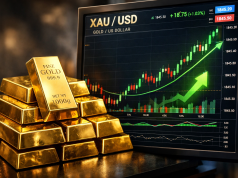
Gold prices remained close to a more than two-month high on Thursday, supported by falling U.S. Treasury yields after the government announced a larger buyback program for longer-dated debt.
A weaker U.S. dollar and expectations of easier financial conditions also helped support bullion. However, investors remain cautious as the Federal Reserve continues to signal concern about persistent inflation.
At 22:37 ET, XAU/USD traded around $4,491.35 per ounce, down approximately 0.7% after reaching an intraday high of $4,527.67.
Gold futures edged 0.1% higher to around $4,548.51, while silver remained nearly unchanged at $66.99 per ounce. Platinum fell approximately 1.1% to $1,801.42.
Treasury Buybacks Push Bond Yields Lower
Gold received additional support after the U.S. Treasury announced plans to double the size of some liquidity-support buybacks involving longer-dated government debt.
The increased Treasury demand helped push long-term bond yields lower. That provided another boost to gold after the precious metal surged more than 4% during the previous session.
Falling Treasury yields are generally supportive for gold because bullion does not pay interest.
When bond yields rise, investors can earn higher returns from interest-bearing government securities. This can reduce the appeal of holding gold. In contrast, falling yields lower the opportunity cost of owning bullion.
Weaker U.S. Dollar Supports Gold
The U.S. dollar also remained relatively weak, providing additional support for precious metals.
Because gold is priced in dollars, a weaker greenback makes the metal less expensive for investors using other currencies. This can increase international demand.
The U.S. Dollar Index traded near 98.84, remaining close to recent lows despite a modest intraday increase.
U.S. Government Debt Raises Fiscal Concerns
Gold’s strength also comes as investors pay closer attention to the condition of U.S. government finances.
Total U.S. government debt has surpassed $40 trillion for the first time, according to Treasury Department data.
The milestone has renewed concerns about the long-term sustainability of government borrowing, particularly as spending on social programs and interest payments continues to rise.
Persistent fiscal deficits and rising debt-servicing costs could increase demand for alternative stores of value such as gold, especially during periods of financial uncertainty.
Easier Financial Conditions Could Benefit Gold
Analysts at ANZ said the Treasury’s expanded bond buyback program suggests that policymakers are attempting to reduce borrowing costs.
Lower yields and easier financial conditions are generally considered supportive for gold prices, especially if they also place downward pressure on the dollar.
Gold had already begun recovering after briefly falling toward $4,000 per ounce in the previous month.
Renewed investor demand and continued purchases from global central banks have contributed to the rebound.
Federal Reserve Inflation Concerns Remain a Risk
Although lower Treasury yields are helping gold, the Federal Reserve’s inflation outlook remains an important risk for the precious metal.
Minutes from the Fed’s July policy meeting showed that several officials were prepared to support higher interest rates.
Many policymakers also indicated that another rate increase could become necessary if inflation fails to move toward the central bank’s 2% target.
Higher interest rates typically create a more difficult environment for gold because they increase returns available from bonds and other interest-bearing assets.
Markets Expect Fed to Hold Rates in September
Despite the Fed’s hawkish tone, traders currently see a greater probability that policymakers will leave interest rates unchanged at the September meeting.
According to CME FedWatch data, markets were pricing in approximately a 67.3% probability of no rate change, compared with a 32.7% chance of an increase.
This balance between persistent inflation risks and expectations for stable rates could remain an important driver of gold prices in the weeks ahead.
A more accommodative Federal Reserve would generally support bullion, while renewed expectations for rate hikes could place downward pressure on prices.
Central Banks Continue to Support Gold Demand
Long-term demand for gold is also being supported by geopolitical and economic uncertainty.
According to a World Gold Council survey, 45% of central banks indicated that they plan to increase their gold reserves.
Inflation concerns and geopolitical risks were among the main reasons cited for increasing exposure to bullion.
Central-bank purchases have become an increasingly important source of demand in the global gold market and could continue to support prices over the longer term.
Gold Outlook Remains Tied to Yields, Dollar and Fed Policy
Gold’s near-term direction will likely depend heavily on U.S. Treasury yields, the dollar, Federal Reserve policy and inflation expectations.
Lower bond yields and a weaker dollar currently provide a favorable backdrop. However, any renewed rise in interest-rate expectations could limit further gains.
At the same time, continued central-bank buying, fiscal concerns and geopolitical uncertainty may help maintain longer-term demand for gold.