European Stocks Hit Record High After U.S.-Iran Peace Deal
European stocks opened sharply higher after the United States and Iran announced a peace agreement aimed at ending hostilities.
The development improved global investor sentiment and pushed oil prices significantly lower.
The pan-European STOXX 600 climbed to a new record high. The index extended Friday’s gains, when markets first began anticipating a possible diplomatic breakthrough.
U.S. and Iran Confirm Peace Agreement
U.S. President Donald Trump confirmed on Sunday that Washington and Tehran had reached an agreement.
The deal calls for an immediate end to hostilities and the reopening of the Strait of Hormuz. The strategic waterway plays a major role in global oil and fuel shipments.
Iran’s Deputy Foreign Minister, Gharibabadi, also confirmed the agreement on state television.
He said both sides had finalized the accord and were preparing to formally sign it on Friday.
Major European Markets Rally
The positive news triggered broad gains across European stock markets.
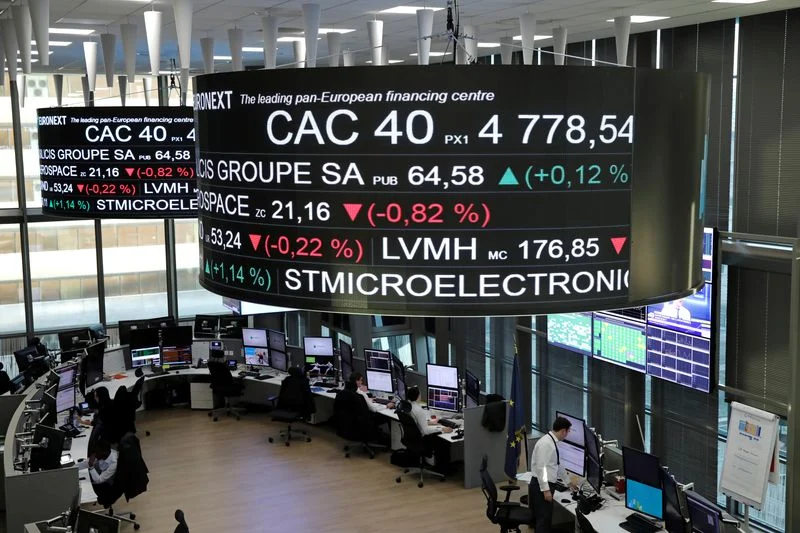
France’s CAC 40 rose 1.6%, while Germany’s DAX advanced 1.8%.
London’s FTSE 100 gained 0.9%. Meanwhile, Italy’s FTSE MIB climbed 2.5%, making it one of the strongest-performing major indexes in the region.
The rally reflected growing confidence that lower geopolitical risks could improve the economic outlook for Europe.
Airline Stocks Surge as Oil Prices Fall
Airline stocks recorded some of the strongest gains as crude oil prices dropped sharply.
Lower fuel prices can reduce operating costs for airlines and improve their profit margins.
Air France shares climbed 5.2%, while International Airlines Group, the owner of British Airways, gained 4.6%.
Lufthansa advanced 5.6% as investors welcomed the prospect of lower energy costs.
European Stocks Recover From March Correction
The peace agreement marks a major turning point for European equities following a volatile period.
European markets entered correction territory in mid-March after falling at least 10% from their recent highs.
The decline reflected concerns about the Middle East conflict, rising oil prices and the risk of persistent inflation.
The latest rally suggests that investors are becoming more confident that geopolitical and economic pressures may begin to ease.
Reopening Hormuz Could Reduce Eurozone Inflation
The expected reopening of the Strait of Hormuz could have significant economic benefits for Europe.
The Eurozone depends heavily on energy imports from the Middle East. Therefore, lower oil prices could reduce transportation, manufacturing and household energy costs.
A sustained decline in crude prices could also ease inflation and support consumer spending.
These developments may give central banks more flexibility when setting future monetary policy.
Investors Reduce Hawkish Rate Expectations
Markets have begun scaling back expectations for additional interest-rate increases.
Lower oil prices may reduce inflation risks, weakening the case for tighter monetary policy.
According to the CME FedWatch Tool, investors have lowered the probability of a Federal Reserve rate increase in October.
Although the Federal Reserve sets U.S. monetary policy, its decisions often influence interest rates and financial markets around the world.
Real Estate Stocks Benefit From Rate Outlook
Rate-sensitive real estate stocks also moved higher.
Segro shares rose 2.6%, while Unibail-Rodamco-Westfield gained 1.4%.
Property companies often benefit when expectations for higher interest rates decline because lower borrowing costs can support investment and asset valuations.
Saint-Gobain and Renault Record Strong Gains
Several individual European stocks also rose following company-specific announcements.
Saint-Gobain gained 5.4% after agreeing to sell its DAHL business to Kesko for $1.7 billion.
Renault shares climbed nearly 6% after the automaker announced a partnership with French technology and defence company Thales.
The corporate developments added further momentum to an already strong trading session across European markets.