European Stocks Rise as Reports of US-Iran Ceasefire Extension Boost Market Sentiment
European stock markets opened higher on Friday, while oil prices moved lower, as investors reacted positively to reports of progress in diplomatic efforts aimed at ending the conflict between the United States and Iran.
The prospect of a prolonged ceasefire improved risk appetite across financial markets and eased concerns about potential disruptions to global energy supplies.
Major European Indexes Start the Day Higher
During early trading, the pan-European Stoxx 600 index gained 0.2%.
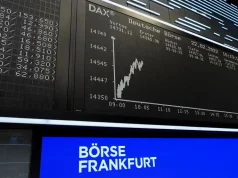
Germany’s DAX advanced 0.1%, while France’s CAC 40 outperformed with a 0.5% increase. The UK’s FTSE 100 traded near unchanged levels as investors assessed the latest geopolitical developments.
The gains reflected growing optimism that tensions in the Middle East may continue to ease in the coming weeks.
US-Iran Ceasefire Extension Reportedly Near
According to reports citing sources familiar with the negotiations, the United States and Iran have reached an agreement in principle to extend their existing ceasefire.
The proposed deal is said to extend the truce by an additional 60 days, although it still requires final approval from U.S. President Donald Trump.
The agreement would reportedly allow commercial shipping activity to resume through the Strait of Hormuz while negotiators continue discussions on a broader framework addressing regional security concerns and Iran’s nuclear program.
Strait of Hormuz Remains a Critical Focus
The Strait of Hormuz remains one of the most strategically important waterways in the world, carrying roughly 20% of global oil shipments.
Since the conflict began approximately three months ago, restrictions imposed by both sides have significantly disrupted commercial shipping through the channel.
The resulting supply concerns contributed to sharp increases in global energy prices and heightened volatility across commodity markets.
Any progress toward restoring normal shipping operations could help stabilize energy supplies and reduce pressure on global markets.
Oil Prices Retreat on Easing Supply Concerns
The possibility of a ceasefire extension weighed on crude oil prices as traders reduced expectations of further supply disruptions.
Brent crude futures, the international benchmark for oil prices, declined 1.3% to $92.54 per barrel.
Although prices have retreated from recent highs, they remain well above levels seen before the conflict began, reflecting the lingering geopolitical risk premium still embedded in energy markets.
Inflation Concerns Remain in Focus
Rising oil prices throughout the conflict have fueled concerns that higher energy costs could trigger broader inflationary pressures worldwide.
Investors continue to monitor developments closely, particularly in major economies such as the United States, where elevated inflation could influence future Federal Reserve policy decisions.
For now, financial markets appear encouraged by the prospect of diplomatic progress, although traders remain cautious until a formal agreement receives final approval and implementation begins.