SpaceX IPO Sends Valuation Above $2 Trillion as Musk Becomes First Trillionaire
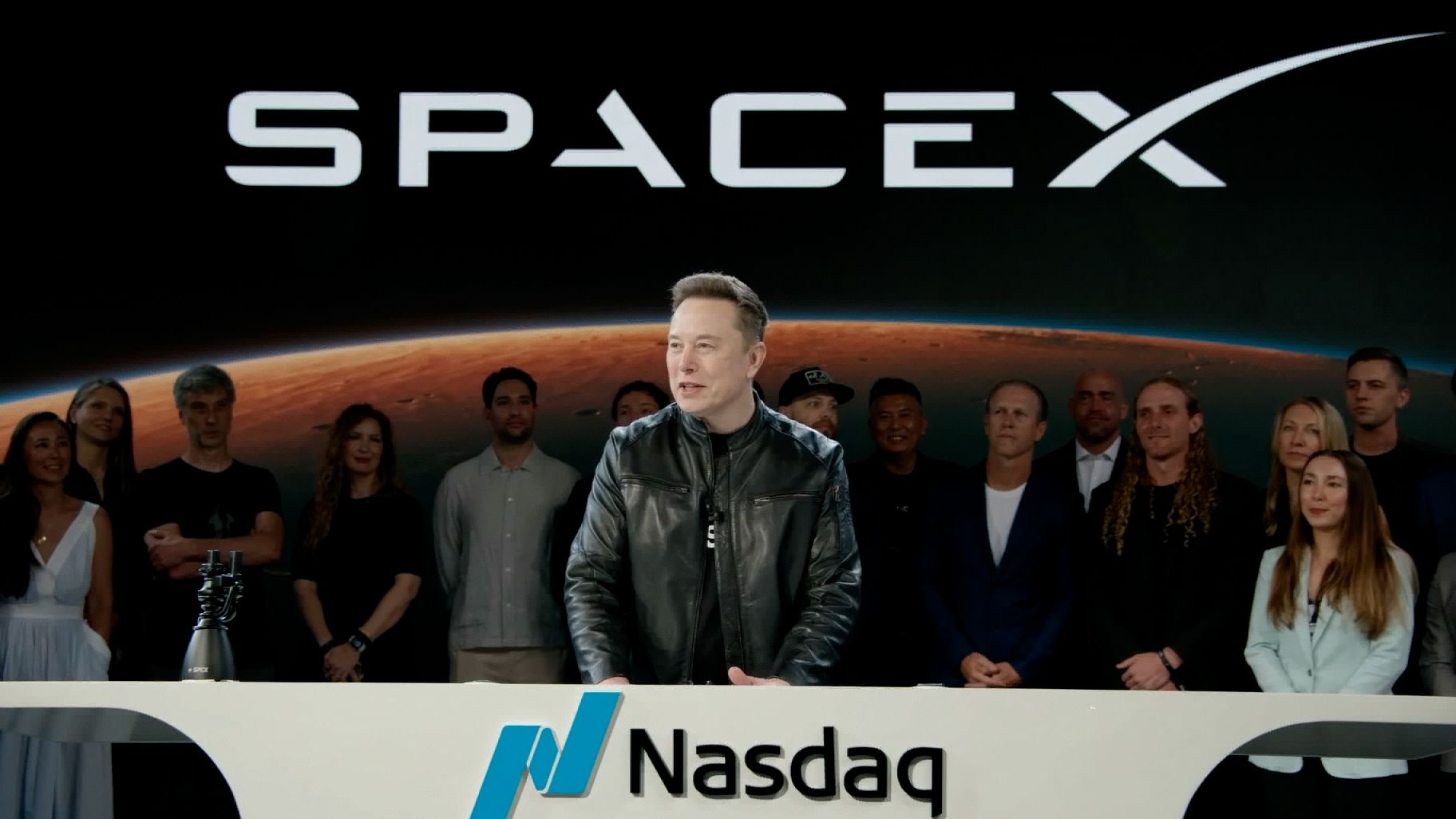
SpaceX shares surged on Friday after the company’s historic market debut, pushing its valuation above $2 trillion and making Elon Musk the world’s first trillionaire.
SpaceX stock traded near $175 after opening at $150 on the Nasdaq. The move lifted the company’s market value to around $1.96 trillion during the session. On Thursday, SpaceX priced its IPO at $135 per share, selling 555.56 million shares and valuing the rocket and spacecraft company at approximately $1.77 trillion.
SpaceX Debut Sets New IPO Benchmark
The SpaceX IPO is being viewed as a major test for the next wave of mega-listings, especially as investors prepare for potential public offerings from artificial intelligence leaders such as OpenAI and Anthropic.
The successful debut came despite SpaceX reporting a loss of nearly $5 billion last year. The company also generates far less revenue than several technology giants with similar valuations.
Elon Musk said earlier in Texas that he once gave SpaceX only a small chance of succeeding. The comment highlighted how far the company has come since its founding.
SpaceX Surpasses Wall Street Giants
SpaceX’s valuation has already moved ahead of several major U.S. companies, including JPMorgan Chase, Berkshire Hathaway, Eli Lilly, Meta Platforms, and Tesla.
Investor demand remained strong even though the company has recently reported losses and lower revenue compared with other mega-cap technology firms.
Before SpaceX, Saudi Aramco held the record for the largest IPO. Its December 2019 listing raised $25.6 billion at a valuation of $1.71 trillion. Adjusted for inflation, Aramco’s offering would be worth about $33.2 billion at a valuation of around $2.21 trillion.
Alphabet Emerges as a Major Winner
Alphabet is one of the biggest indirect beneficiaries of the SpaceX IPO.
The Google parent company holds roughly 4.9% of SpaceX. Based on the latest valuation, that stake is now worth around $105 billion.
This makes Alphabet’s SpaceX investment one of its most successful private-market bets to date.
SpaceX Boosts the Space Economy
Mark Boggett, CEO of space investment firm Seraphim Space, described the SpaceX IPO as a landmark moment for the space economy.
He said the listing could help establish space as a mainstream investment category. It also gives public market investors a clear benchmark for the sector’s long-term potential.
Founded in 2002, SpaceX says its mission is to develop the systems and technologies needed to make life multiplanetary, better understand the universe, and expand human presence beyond Earth.
Starlink Remains the Main Revenue Driver
SpaceX said its launch operations accounted for more than four-fifths of the mass sent into orbit over the past three years.
However, Starlink remains the company’s main source of revenue. The satellite internet service now serves customers across 164 countries, territories, and markets.
The growth of Starlink has become central to SpaceX’s business model and investor expectations.
Retail and Institutional Demand Surges
SpaceX allocated 30% of its IPO shares to retail investors. The company also set the final offering price before the traditional roadshow process usually used by bankers and institutional investors.
Retail demand was reportedly above $100 billion. Institutional demand was also strong, with BlackRock reportedly placing a $5 billion order.
The scale of demand showed how much investor interest there is in SpaceX and the broader space technology sector.
Banks Earn Huge IPO Fees
The banks that underwrote the SpaceX IPO are expected to earn a combined $500 million in fees.
Goldman Sachs and Morgan Stanley are each expected to receive around $100 million. Bank of America, Citigroup, and JPMorgan Chase are each expected to earn roughly $75 million.
Together, the five largest banks are set to collect about 85% of the total IPO fee pool.