Dollar Slips as Markets Await Warsh’s First Fed Decision
The US dollar weakened slightly against the euro on Tuesday as investors prepared for the Federal Reserve’s latest policy decision.
The meeting, which concludes on Wednesday, will be the first led by Fed Chair Kevin Warsh. Markets are closely watching for signals that the central bank could raise interest rates later in 2026.
Fed Meeting Limits Dollar Selling
The dollar has remained relatively resilient despite growing expectations that the United States and Iran could soon reach a lasting peace agreement.
Optimism surrounding the potential end of the conflict has pushed oil prices and US Treasury yields lower. However, investors have remained cautious about selling the dollar before the Federal Reserve announcement.
Adam Button, chief currency analyst at investingLive, said the upcoming decision may be discouraging traders from building larger bearish positions.
He added that some investors believe Warsh could prove more hawkish than he appeared during his confirmation process.
Falling Oil Prices Ease Inflation Concerns
The recent decline in oil prices could reduce inflationary pressure across the US economy.
Lower energy costs may also weaken the case for additional interest-rate increases. Nevertheless, markets still see a meaningful chance that the Federal Reserve will tighten policy before the end of the year.
Current pricing indicates a 59% probability of a rate hike by December.
However, inflation remains well above the Fed’s 2% target. As a result, Warsh could deliver a hawkish message during his first post-meeting press conference.
Fed Expected to Hold Interest Rates Steady
The Federal Reserve is widely expected to leave its benchmark interest rate unchanged within a range of 3.50% to 3.75%.
Still, policymakers could remove their easing bias from the latest monetary policy statement. Such a change would suggest that the Fed is no longer leaning toward future rate cuts.
Instead, the central bank may signal that its next move will depend on inflation, economic growth and employment data.
Dollar Index Edges Lower
The US Dollar Index, which tracks the greenback against a basket of major currencies, declined 0.08% to 99.61.
Meanwhile, the euro gained 0.09% against the dollar to trade near $1.1601.
The modest movement reflected investor caution ahead of the Fed decision rather than a major shift in the broader currency outlook.
Japanese Yen Steady After BoJ Rate Hike
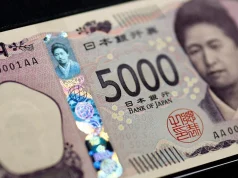
The Japanese yen was largely unchanged at approximately 160.35 per dollar after the Bank of Japan raised interest rates as expected.
The BoJ increased its benchmark rate by 25 basis points to 1%, marking its highest level since 1995.
Policymakers acted to contain inflation risks linked partly to the recent Middle East conflict. However, the board’s 7-1 vote created some uncertainty about when the next increase could arrive.
Bank of Japan Maintains Hawkish Outlook
Derek Halpenny, head of global markets research for Europe, the Middle East and Africa at MUFG, said the Bank of Japan delivered a message that was about as hawkish as markets could reasonably expect.
The central bank highlighted upside risks to inflation and stressed that Japanese monetary policy remains accommodative.
It also maintained previous guidance suggesting that further interest-rate increases remain possible if economic conditions develop as expected.
Australian Dollar Flat After RBA Pause
The Reserve Bank of Australia kept its cash rate unchanged at 4.35% in a unanimous decision.
The move marked the central bank’s first pause of the year after a series of policy increases, even though inflation remains elevated.
The Australian dollar showed little reaction and traded near $0.7072 following the announcement.