Dollar Pauses After Peace Deal as Yen Holds Firm on BoJ Hike
The US dollar traded broadly flat on Tuesday after recording its steepest decline in several weeks. Currency markets shifted their attention from the emerging Middle East ceasefire toward a major series of central bank decisions.
The US Dollar Index showed little movement during London trading. It had fallen to a 10-day low on Monday after a preliminary agreement between the United States and Iran improved investor sentiment and pushed oil prices sharply lower.
Meanwhile, EUR/USD gained approximately 0.2%.
Markets Await Details of the U.S.-Iran Peace Deal
President Donald Trump’s announcement of a preliminary U.S.-Iran peace agreement initially triggered a strong risk-on reaction across global markets.
Oil prices declined sharply, while demand for traditional safe-haven currencies weakened. However, foreign exchange traders have since become more cautious about extending those moves.
Important details remain unclear, including the possible removal of sanctions and the reopening of the Strait of Hormuz. As a result, markets are waiting for further confirmation before fully pricing in a lasting improvement in geopolitical conditions.
Federal Reserve Outlook Limits Dollar Weakness
The Federal Reserve will announce its latest monetary policy decision on Wednesday.
Economists widely expect the central bank to leave its benchmark interest rate unchanged. However, traders are watching for a potentially hawkish shift in the Fed’s updated interest-rate projections, commonly known as the dot plot.
The possibility of stronger guidance has discouraged traders from building larger short positions against the dollar.
Bank of America analysts said the greenback had weakened following the U.S.-Iran peace announcement. Nevertheless, they warned against chasing the move lower.
The bank believes a hawkish surprise from the Federal Open Market Committee is more likely than a dovish one, although risks remain in both directions.
Bank of America also expects US economic data to continue outperforming other major economies. Therefore, it sees the dollar’s near-term path of least resistance as higher.
British Pound Awaits Bank of England Decision
GBP/USD remained largely unchanged ahead of Thursday’s Bank of England policy decision.
The European Central Bank raised interest rates last week in response to renewed inflation pressures. However, traders expect the Bank of England to keep its benchmark rate unchanged.
Weak economic growth and limited government spending capacity have reduced the BoE’s ability to follow other central banks with another rate increase.
The upcoming parliamentary by-election may add further political uncertainty. Meanwhile, a dovish policy statement could weaken the pound’s interest-rate support and leave sterling more vulnerable to stagflation concerns.
Bank of Japan Raises Rates to 31-Year High
The Bank of Japan increased its short-term policy rate by 25 basis points to 1.0%.
The widely expected move lifted Japanese interest rates to their highest level in 31 years. It also marked another step in the BoJ’s gradual effort to normalize monetary policy and control inflation.
However, traders focused less on the latest increase and more on the central bank’s guidance about future tightening.
Japanese Yen Remains Near Key 160 Level
USD/JPY showed little reaction following the Bank of Japan’s decision.
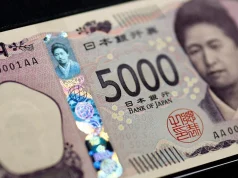
The Japanese yen remained close to the psychologically important level of 160 per dollar, despite expectations that higher domestic interest rates could eventually support the currency.
MUFG analysts said the yen’s direction may depend on how markets interpret comments from the Bank of Japan’s deputy governor.
In particular, traders will closely monitor how strongly policymakers communicate the likely path of future interest-rate increases.
Australian Dollar Flat After RBA Holds Rates
The Australian dollar was also broadly unchanged after the Reserve Bank of Australia kept its cash rate at 4.35%.
The decision ended a three-month run of monetary tightening.
Because the Australian dollar is sensitive to global risk sentiment, traders will continue to assess the outlook for interest rates, commodity prices and the U.S.-Iran peace process.