Dollar Holds Steady as Trump Rejects Iran Peace Proposal
The U.S. dollar traded mostly flat on Monday after pulling back from earlier gains, as markets reacted to President Donald Trump rejecting Iran’s response to a U.S.-backed peace proposal.
The rejection renewed concerns that the Middle East conflict could continue for an extended period, pushing oil prices higher and keeping investors cautious across global markets.
Oil Prices Rise as Strait of Hormuz Remains Disrupted
President Trump’s comments came only days after Washington proposed reopening negotiations with Tehran. Iran responded on Sunday with a proposal focused on ending the conflict across all fronts, including Lebanon, where Israel continues fighting Iran-backed Hezbollah forces.
Following Trump’s rejection of the offer as “unacceptable,” oil markets moved sharply higher amid growing fears over supply disruptions.
U.S. crude oil climbed 1.15% to $96.52 per barrel, while Brent crude rose 1.72% to $103.03 per barrel. Later in the session, Brent prices extended gains to trade roughly 2.5% higher near $103.80 a barrel.
The Strait of Hormuz, a key global energy shipping route, remains largely closed, intensifying concerns about global oil supplies and inflation pressures.
Dollar Index Holds Near Recent Highs
Despite the geopolitical uncertainty, the U.S. Dollar Index (DXY), which tracks the dollar against a basket of major currencies, remained relatively stable.
The index was last little changed around 97.97, while the euro edged slightly higher by 0.01% to $1.1785.
According to Marc Chandler, chief market strategist at Bannockburn Capital Markets, markets are still struggling to determine the broader implications of the latest developments.
Investors appear uncertain whether the rejection of Iran’s proposal signals the collapse of ceasefire efforts or simply marks a new phase of negotiations.
Trump-Xi Meeting in Focus This Week
Markets are also closely watching the upcoming meeting between President Trump and Chinese President Xi Jinping later this week.
According to U.S. officials, discussions are expected to cover several major geopolitical and economic topics, including Iran, Taiwan, artificial intelligence, nuclear weapons, and critical minerals.
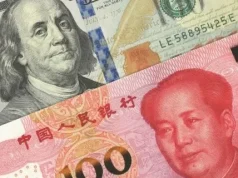
Meanwhile, the Chinese yuan strengthened 0.08% against the U.S. dollar to 6.791 per dollar after touching its strongest level since February 2023.
China Inflation and Trade Data Surprise Markets
Economic data released earlier showed that China’s producer prices surged to a 45-month high in April, largely driven by rising global energy costs.
The figures followed weekend data showing Chinese export growth accelerated last month as manufacturers increased production to meet growing artificial intelligence-related demand.
The stronger Chinese economic data added another layer of complexity for global markets already dealing with geopolitical uncertainty and inflation concerns.
Investors Await Key U.S. Inflation Reports
Attention is now turning toward this week’s major U.S. inflation releases.
The Consumer Price Index (CPI) report is scheduled for Tuesday, while Producer Price Index (PPI) data will follow on Thursday.
Last week’s stronger-than-expected U.S. jobs report also reinforced expectations that the Federal Reserve may keep interest rates elevated for longer. Non-farm payrolls increased by 115,000 in April, significantly above market forecasts.
As a result, investors have reduced expectations for potential Federal Reserve rate cuts later this year.
Sterling Weakens Following UK Political Pressure
The British pound weakened slightly against the dollar, with sterling falling 0.04% to $1.3627.
UK Prime Minister Keir Starmer pledged to take bolder action to improve Britain’s economic outlook after Labour suffered heavy losses in last week’s local elections.
Starmer also urged party members to avoid internal leadership disputes, warning that political instability would create further uncertainty for the country.
Dollar Strengthens Against Japanese Yen
Against the Japanese yen, the U.S. dollar strengthened 0.24% to 157.02 as investors continued favoring the greenback during heightened geopolitical uncertainty.