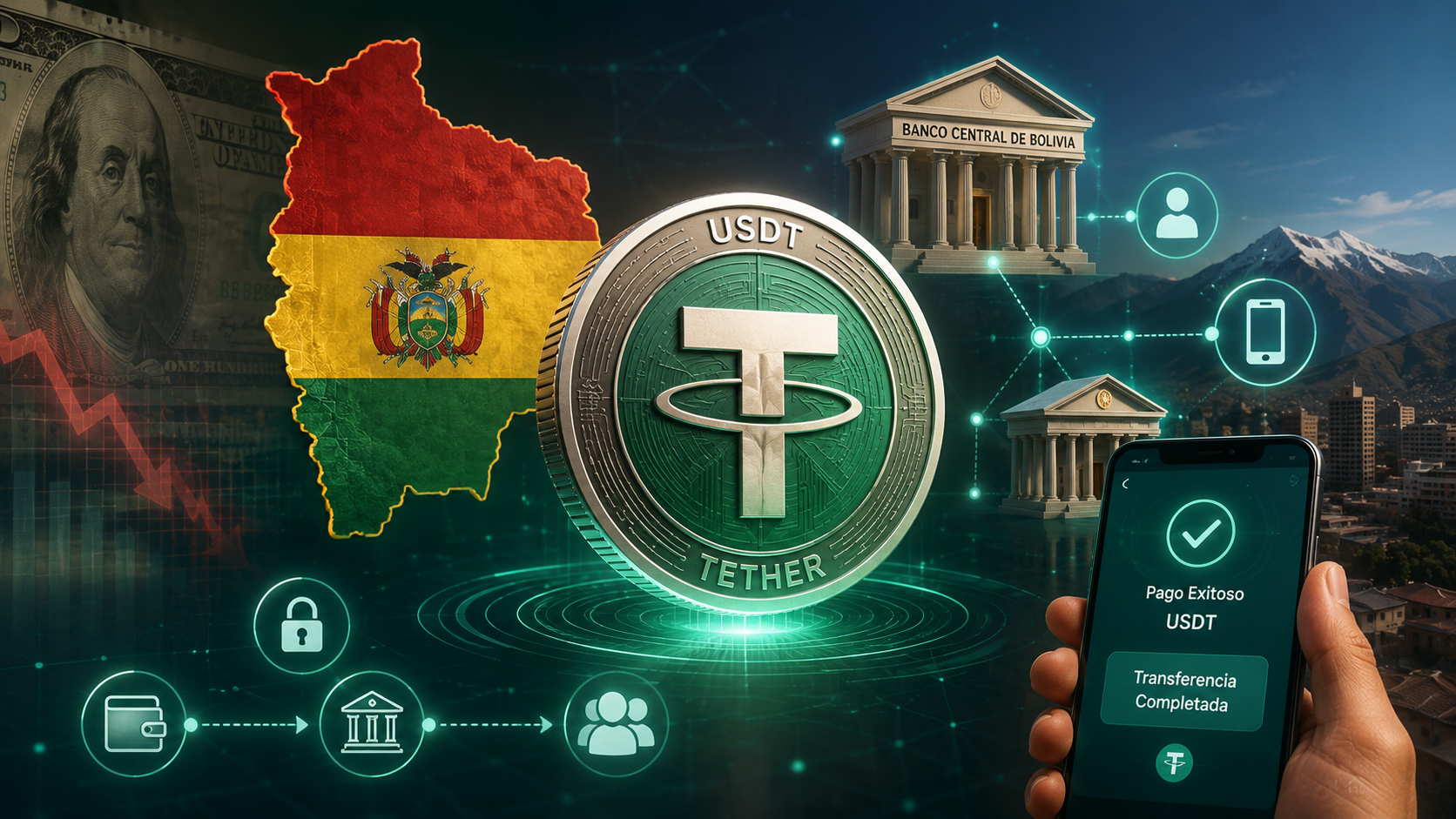
Bolivia is considering whether to officially integrate Tether’s USDT stablecoin into its national payment system.
Under the proposal, USDT could circulate alongside the US dollar and the Bolivian boliviano. The potential policy shift comes as the country continues to face a serious shortage of foreign currency.
Two local banks, Banco Unión and Banco FIE, already provide USDT-related services. Therefore, much of the necessary banking infrastructure may already be available.
Bolivia’s Dollar Shortage Drives USDT Adoption
Bolivia has faced growing pressure on its foreign currency reserves for several years.
Lower natural gas production and weaker exports have reduced the flow of US dollars into the country. As a result, businesses and importers have struggled to access the hard currency needed for international payments.
The government took an important step in March 2025 when it allowed the state-owned energy company YPFB to accept cryptocurrency payments for fuel imports.
That decision showed how seriously the dollar shortage was affecting essential sectors of the economy.
USDT Use Expands Across Bolivian Retail Stores
By June 2025, USDT was becoming more common in everyday transactions.
Tether CEO Paolo Ardoino shared images of Bolivian stores accepting the stablecoin for products such as dairy goods and chocolate.
The growing use of USDT suggested that economic necessity, rather than government regulation, was driving adoption.
Many consumers and businesses began using the digital dollar as an alternative to the boliviano and the increasingly expensive black-market US dollar.
Bolivian Banks Already Support USDT Services
Banco Unión and Banco FIE currently offer services linked to USDT.
This means Bolivia may not need to build a completely new financial infrastructure before introducing the stablecoin more formally.
Official status could provide clearer rules for transactions that are already taking place. It could also help speed up remittances, reduce transaction costs and create a more transparent alternative to the informal dollar market.
What Official USDT Status Could Mean
If Bolivia formally recognizes USDT within its payment system, it could become the first Latin American country to integrate the stablecoin alongside traditional currencies.
Such a move could give businesses easier access to dollar-linked payments during a period of limited US dollar availability.
It may also offer consumers a more stable payment option when confidence in the local currency is under pressure.
However, official adoption would require clear rules covering banking access, consumer protection, taxation and financial supervision.
Tether Seeks Greater Institutional Trust
Tether has also been working to strengthen confidence in USDT among institutions and governments.
According to the original report, the company appointed KPMG in March 2026 to conduct a full audit of its reserves, which were valued at approximately $185 billion.
The move is intended to address long-running questions about the assets supporting USDT and improve transparency.
This effort could become especially important if national governments begin considering stablecoins for official payment systems.
Bolivia Could Influence Other Emerging Markets
Bolivia’s potential adoption of USDT could attract attention from other economies experiencing similar dollar shortages.
Countries in parts of sub-Saharan Africa and Southeast Asia may closely follow the results of Bolivia’s approach.
If the system improves access to payments, reduces costs and limits reliance on black markets, it could provide a model for other emerging economies.
However, any problems involving regulation, reserves or financial stability could also serve as a warning.
Regulatory Details Remain Unclear
Despite growing interest, Bolivia has not yet confirmed a formal framework for USDT integration.
The Central Bank of Bolivia has not announced the exact terms of any potential arrangement. Lawmakers have also not introduced a complete legislative structure for the stablecoin’s official use.
Therefore, the proposal remains under consideration rather than finalized.
Still, the discussion shows that Bolivia’s government is becoming increasingly open to cryptocurrency-based solutions as the country searches for ways to manage its foreign currency crisis.