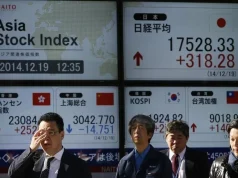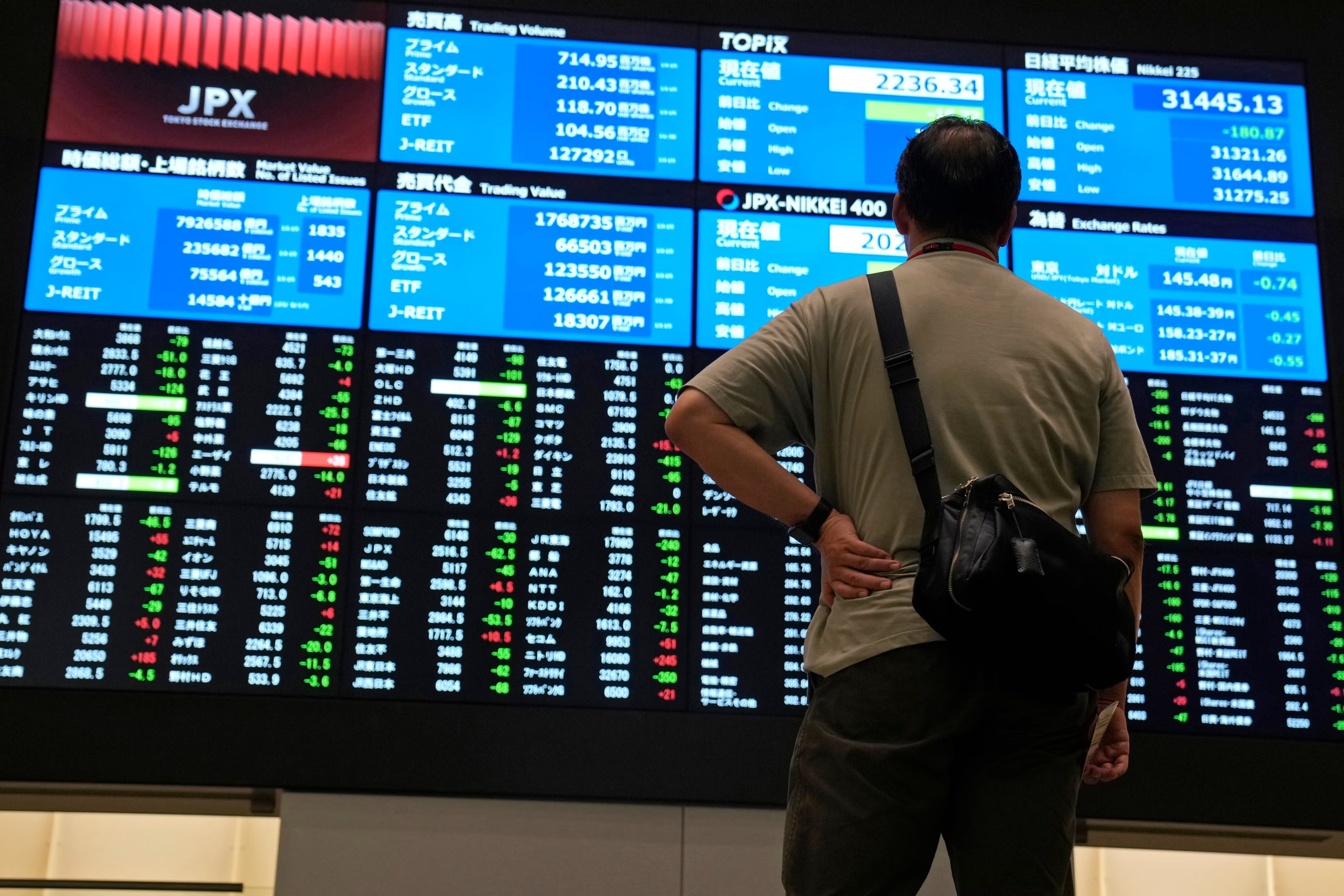
Asian stock markets moved lower on Monday as heavy selling in South Korean technology shares overshadowed improving sentiment surrounding the Middle East.
Falling oil prices and stronger U.S. stock futures offered some support. However, renewed concerns over artificial intelligence valuations continued to weigh on major regional indexes.
Iran Talks Ease Energy Supply Concerns
Oil prices declined after U.S. President Donald Trump said negotiations concerning the Strait of Hormuz would begin on Monday.
The announcement raised hopes that the United States and Iran could achieve a diplomatic breakthrough. It also reduced fears of prolonged disruption to oil supplies through one of the world’s most important shipping routes.
Strong U.S. Earnings Support Wall Street Futures
Positive earnings from Microsoft and Alphabet helped lift U.S. equities on Friday.
The upbeat results continued to support market sentiment during Asian trading. Nasdaq 100 Futures rose around 0.9%, while S&P 500 Futures gained approximately 0.5%.
Nevertheless, these gains were not enough to prevent a broader decline across several Asian markets.
KOSPI Plunges as AI Stocks Resume Sell-Off
South Korea’s KOSPI fell more than 4% after recording a historic 18% rebound on Friday.
Investors returned to selling some of the index’s largest artificial intelligence and semiconductor stocks.
The KOSPI had already fallen 22% in July, marking its steepest monthly decline since the 2008 global financial crisis. Concerns about elevated AI valuations were a major factor behind the correction.
Samsung and SK Hynix Shares Fall Sharply
Samsung Electronics dropped more than 7% despite reporting a dramatic increase in semiconductor operating profit during the previous week.
The company also announced multi-year supply agreements with major data-centre operators. However, those developments failed to calm concerns surrounding the wider AI trade.
SK Hynix also lost around 7% as investors reassessed its record quarterly results. Although earnings were strong, they failed to meet the market’s exceptionally high expectations.
Together, Samsung Electronics and SK Hynix represent more than half of the KOSPI’s total market value. Their declines therefore placed significant pressure on the wider index.
Japanese Stocks Move Lower
Japanese equities also declined after the Bank of Japan kept interest rates unchanged while maintaining expectations for gradual policy normalisation.
The Nikkei 225 fell about 1.6%, while the broader TOPIX dropped more than 2%.
Sony Group declined sharply, while Murata Manufacturing and Renesas Electronics also moved lower. Gains in Kioxia Holdings and TDK were not enough to offset the wider weakness.
The Bank of Japan’s latest decision offered few surprises, leaving investors focused on the possibility of future interest-rate increases.
Chinese Markets Show Greater Resilience
Mainland Chinese stocks performed better than several other regional markets, although technology shares remained under pressure.
The CSI 300 declined around 0.6%, while the Shanghai Composite fell approximately 0.5%. Singapore’s Straits Times Index also slipped around 0.4%.
Hong Kong’s Hang Seng Index moved slightly higher. Alibaba surged more than 5% after introducing a new flagship artificial intelligence model, while Tencent gained over 2%.
Falling Oil Prices Hit Energy Stocks
The decline in crude oil placed pressure on major energy producers across the region.
Australia’s Woodside Energy dropped around 3%, while Santos fell more than 2%. Japan’s INPEX also lost approximately 2%.
Brent crude extended its recent decline as the prospect of negotiations over the Strait of Hormuz reduced fears of another energy-driven inflation shock.
Australian Market Outperforms the Region
Australia’s S&P/ASX 200 rose about 0.5%, outperforming most other Asian benchmarks.
Gains in financial and industrial shares offset losses among energy companies.
However, separate data showed that Australian home prices fell for a second consecutive month in July. Higher borrowing costs and uncertainty surrounding proposed tax changes added pressure to the housing market.
RBI Decision and Economic Data in Focus
Investor attention will now turn to the Reserve Bank of India’s policy decision later this week.
Nifty 50 Futures gained around 0.4% ahead of the announcement. DBS economists expect the central bank to leave interest rates unchanged while maintaining a balanced policy stance.
They argued that easing food inflation gives policymakers more flexibility to wait before adjusting rates.
Markets will also monitor China’s July trade figures, South Korea’s inflation report and Friday’s U.S. nonfarm payrolls data for further clues about the global economic outlook.