Asian Stocks Rally as Chipmakers Rebound
Asian stocks climbed on Friday, led by a strong rebound in semiconductor shares.
Investors looked past renewed Middle East tensions and turned their focus back to the long-term artificial intelligence investment theme. Fresh signs of rising chipmaker spending helped improve market sentiment.
AI Spending Hopes Boost Market Sentiment
The gains came even as geopolitical risks remained elevated.
Fresh U.S. strikes on Iran triggered retaliatory missile and drone attacks against U.S.-aligned countries. This kept concerns around the Strait of Hormuz and global oil supplies in focus.
However, investors were more focused on signs that the AI investment cycle remains strong. Nasdaq 100 futures rose 0.3%, while S&P 500 futures gained 0.1% during Asian trading.
South Korea Leads Regional Gains
The rebound marked a sharp reversal from this week’s technology-led selloff.
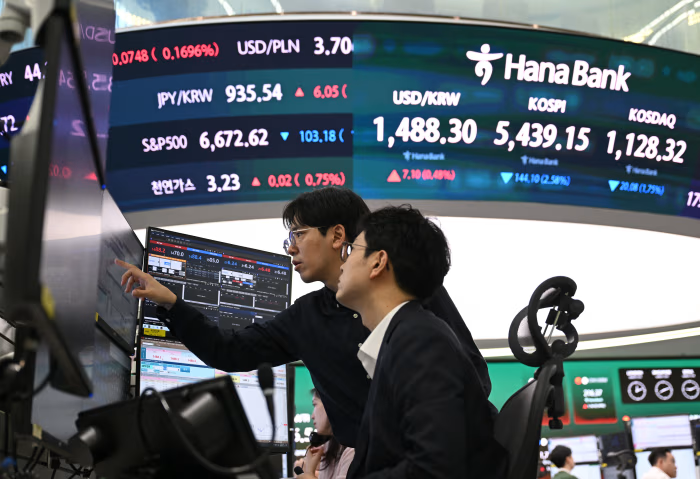
South Korea led the regional rally, with the KOSPI jumping 4.2%. The move helped recover part of the index’s recent losses after it entered bear-market territory on Thursday.
Despite Friday’s rebound, the KOSPI was still on track for a weekly decline of more than 6%.
Samsung and SK Hynix Recover
Samsung Electronics rose 4.9% after leading this week’s selloff.
SK Hynix gained 1.5% after pricing its $26.5 billion U.S. American depositary share offering. Demand for the offering reportedly exceeded the available shares by more than seven times.
The SK Hynix ADSs will trade under the ticker SKHY, giving U.S. investors direct access to one of Nvidia’s key high-bandwidth memory suppliers.
Even after its recent pullback, SK Hynix remains up around 680% over the past 12 months.
Micron Investment Plans Support Chip Stocks
Sentiment improved further after Micron Technology said it plans to increase its U.S. investment to around $250 billion through 2035.
The investment will support the expansion of memory-chip production, adding to optimism around long-term demand for AI-related semiconductors.
Japan Stocks Move Higher
Japanese markets also followed South Korea higher.
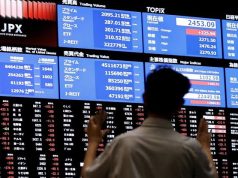
The Nikkei 225 climbed about 2%, reducing its weekly loss to around 0.9%. The TOPIX gained 0.7%.
Investor sentiment was helped by reports that Japan’s Government Pension Investment Fund may increase its allocation to domestic equities.
Japanese Chip Stocks Gain
Technology shares in Japan also moved higher.
Murata Manufacturing rose about 3.9%, while Kioxia Holdings gained roughly 5.7% after Bain Capital completed its exit from the flash-memory maker.
Taiwan markets were closed for a public holiday.
Geopolitical Risks Remain in Focus
Markets continued to monitor renewed U.S.-Iran military exchanges.
The latest strikes and retaliatory attacks added pressure to last month’s fragile ceasefire. Oil prices remained supported, but investors largely looked beyond the geopolitical risks for now.
Instead, attention stayed on corporate investment plans, AI demand, and earnings expectations.
Central Bank Policy Paths Diverge
This week’s central bank decisions highlighted different policy trends across the region.
Bank Negara Malaysia kept its overnight policy rate unchanged at 2.75%.
Meanwhile, the Reserve Bank of New Zealand raised its official cash rate by 25 basis points and signaled that more tightening may be needed.
Data-Heavy Week Ahead
Investors now turn to a busy week of regional economic data.
Key releases include China’s June trade data, second-quarter GDP, retail sales, and industrial production.
Markets will also watch Singapore’s advance GDP estimate, India’s June inflation report, and the Bank of Korea’s policy meeting.
Hong Kong and China Stocks Rise
Hong Kong’s Hang Seng Index climbed 1.8%, reaching its highest level since June 17.
Mainland China’s CSI 300 and Shanghai Composite also rose, gaining 0.2% and 0.4%, respectively.
Investors continued to position for possible policy support from Beijing ahead of upcoming trade data.
Australia Gains on Uranium Optimism
Australia’s S&P/ASX 200 rose 0.7%.
Uranium miners led gains after Australia and India agreed to deepen cooperation on uranium exports.
Paladin Energy rose about 5%, Boss Energy jumped more than 8%, and Deep Yellow gained around 9%.
The move reflected optimism that the agreement could support long-term uranium demand as global nuclear power investment grows.