Wall Street ended a two-week winning streak on Friday as technology shares fell and the artificial intelligence trade continued to lose momentum.
Chip stocks entered bear market territory, while renewed fighting between the United States and Iran pushed oil prices higher and revived inflation concerns.
Wall Street Indexes Close Lower
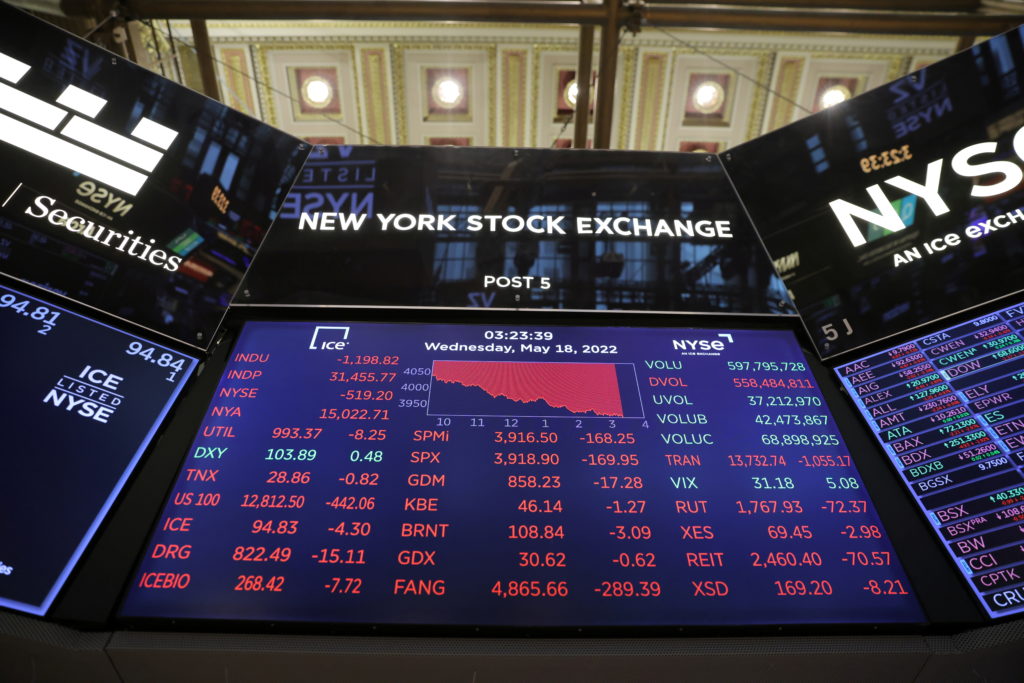
The Nasdaq Composite fell 1.4% to close at 25,520.24 points.
The S&P 500 declined 1.1% to 7,454.74, while the Dow Jones Industrial Average lost 0.8% and finished at 52,146.39.
For the week, the Nasdaq dropped 2.9%. The S&P 500 fell 1.6%, and the Dow declined 0.9%.
Technology was the market’s weakest major sector.
Technology Stocks Lead the Sell-Off
The S&P 500 technology sector initially fell more than 3% shortly after the opening bell.
The decline reflected concerns about growing Chinese competition in artificial intelligence and a sharp post-earnings drop in Netflix shares.
The technology-heavy Nasdaq fell as much as 2.4% during the session before recovering part of its losses.
Although technology stocks improved later in the day, the sector still recorded the market’s worst weekly performance.
Softer Inflation Data Fails to Support Stocks
Positive consumer sentiment and inflation-expectation data helped stabilise the market after the opening sell-off.
Earlier reports showed that US consumer and producer price growth slowed during June.
The cooler inflation readings reduced expectations for a near-term Federal Reserve rate increase.
However, the improved inflation outlook provided limited support for equities.
Steve Sosnick, chief strategist at Interactive Brokers, said strong CPI and PPI reports had only a modest effect on stocks.
He suggested that corporate earnings and geopolitical developments may become the most important market drivers in the coming weeks.
Oil Prices Revive Inflation Concerns
Renewed military escalation between Washington and Tehran pushed crude oil prices higher.
The rise in energy prices raised fears that inflation could remain elevated despite recent improvements in US economic data.
Higher oil prices affect transportation, manufacturing and household energy costs.
As a result, investors became more cautious about the possibility that the Federal Reserve could maintain restrictive monetary policy for longer.
Chinese AI Model Shakes Technology Stocks
China became a major focus for investors after Moonshot AI introduced its latest artificial intelligence model.
The Beijing-based startup unveiled Kimi K3, a reported 2.8-trillion-parameter large language model.
Moonshot said the system could compete with leading US models developed by companies such as Anthropic and OpenAI.
The announcement initially triggered concerns that Chinese AI companies were closing the gap with American industry leaders.
Kimi K3 Sparks a New AI Competition Debate
Morgan Stanley analyst Gary Yu said the positive international response to Kimi K3 suggested that Chinese large language models were catching up in size, performance and pricing.
However, he argued that the model was not an overnight breakthrough.
Instead, he described it as the result of steady progress across China’s artificial intelligence industry.
The launch initially pressured US technology futures, Magnificent Seven stocks and semiconductor companies.
Investors Reassess the Kimi Threat
Market sentiment later became more balanced.
Some investors concluded that Kimi K3’s large size could still require substantial computing capacity.
That interpretation helped shares of hardware and memory companies recover from their early lows.
Vital Knowledge analyst Adam Crisafulli said the story had shifted from a broad negative event for technology stocks to a more complicated competitive development.
A large AI model may support demand for servers, memory chips and data-centre equipment.
However, it could also create market-share risks for OpenAI, Anthropic and cloud providers that depend on those companies.
Meta AI Deal Report Helps Technology Shares Recover
Technology stocks regained some ground after a report suggested that Meta Platforms was discussing a major AI computing agreement with Anthropic.
The New York Times reported that Meta could lease part of its data-centre capacity to the AI startup in a potential $10 billion deal.
Meta shares sharply reduced their losses after the report emerged, although the stock still closed approximately 2.8% lower.
The potential agreement highlighted the growing demand for artificial intelligence computing infrastructure.
AI Rally Begins to Unwind
Artificial intelligence stocks had played a major role in Wall Street’s earlier rally.
Strong enthusiasm for AI helped major indexes return to record highs despite geopolitical uncertainty in the Middle East.
However, profit-taking has increased since the previous month.
Investors have become more concerned about expensive valuations, enormous capital spending and rapidly rising prices for memory chips and other AI components.
Chip Stocks Enter Bear Market Territory
The Philadelphia Semiconductor Index fell enough on Friday to enter a bear market.
A bear market is generally defined as a decline of at least 20% from a recent closing high.
The move highlighted the severity of the recent sell-off across chip stocks.
Even strong earnings from leading companies such as Taiwan Semiconductor Manufacturing and ASML failed to restore investor confidence.
Investors Question AI Valuations
Trade Nation analyst David Morrison said investors were debating whether AI-related companies could justify their elevated valuations.
Demand and earnings trends remain strong across much of the industry.
However, recent profit-taking suggests that some investors are questioning whether the current pace of growth can continue.
The key issue is whether the decline becomes another opportunity to buy technology stocks at lower prices or develops into a broader rush to exit the sector.
South Korean Stocks Also Fall Sharply
South Korea had been one of the largest beneficiaries of the artificial intelligence boom.
The combined valuations of memory-chip producers Samsung Electronics and SK Hynix previously rose above $1 trillion each.
The KOSPI index reached a record high in June after gaining more than 122% since the beginning of the year.
However, the index has since fallen more than 25% from that peak, placing it firmly in bear market territory.
Netflix Shares Drop After Earnings
Netflix added further pressure to the technology sector after issuing weaker-than-expected guidance.
The streaming company’s quarterly results were broadly in line with forecasts.
However, its outlook for third-quarter revenue and profit disappointed investors.
Netflix shares fell sharply as traders questioned the company’s future growth strategy.
Netflix Forecast Raises Growth Concerns
AJ Bell investment director Russ Mould said Netflix’s guidance suggested its weakest revenue growth in three years.
He argued that the forecast added to concerns about competition and the company’s long-term strategy.
The disappointing outlook followed a poorly received first-quarter report, increasing fears that weaker guidance may be becoming a recurring issue for Netflix.
US Consumer Sentiment Improves
Economic data released on Friday offered some positive news.
The University of Michigan’s preliminary consumer sentiment index rose to 54.4 in July.
That represented a 9.9% increase from June and marked the highest reading since February.
Lower gasoline prices helped improve household confidence.
One-year inflation expectations also eased to 4.2% from 4.6%.
Federal Reserve Officials Remain Concerned
Despite the softer inflation data, several Federal Reserve officials continued to express concern about persistent price pressures.
Dallas Fed President Lorie Logan called for modestly higher interest rates.
Cleveland Fed President Beth Hammack said inflation remained the more serious risk, while the labour market was close to maximum employment.
She also said businesses were increasingly asking policymakers to take stronger action against inflation.
US-Iran Fighting Intensifies
Geopolitical tensions remained a major source of uncertainty.
The United States continued striking Iranian targets for a sixth consecutive night.
The US military said it destroyed a port surveillance tower allegedly used by Iran to monitor commercial vessels moving through the Strait of Hormuz.
The waterway is one of the world’s most important routes for energy shipments.
Markets Watch for Wider Military Escalation
An Axios report said the United States had informed Israel that it was sending additional refuelling aircraft ahead of a possible expansion of operations against Iran.
The report cited US and Israeli officials familiar with the discussions.
President Donald Trump had also warned that further attacks on Iranian infrastructure could follow if Tehran refused to return to negotiations.
These developments increased concerns about energy supplies, inflation and financial-market stability.
Wall Street Outlook Turns More Uncertain
Investors now face several competing risks.
Technology valuations remain under pressure, chip stocks have entered a bear market and geopolitical tensions are pushing oil prices higher.
At the same time, softer inflation and stronger consumer sentiment offer some support to the economic outlook.
Upcoming corporate earnings, Federal Reserve comments and developments in the Middle East are likely to determine whether the market stabilises or extends its recent decline.