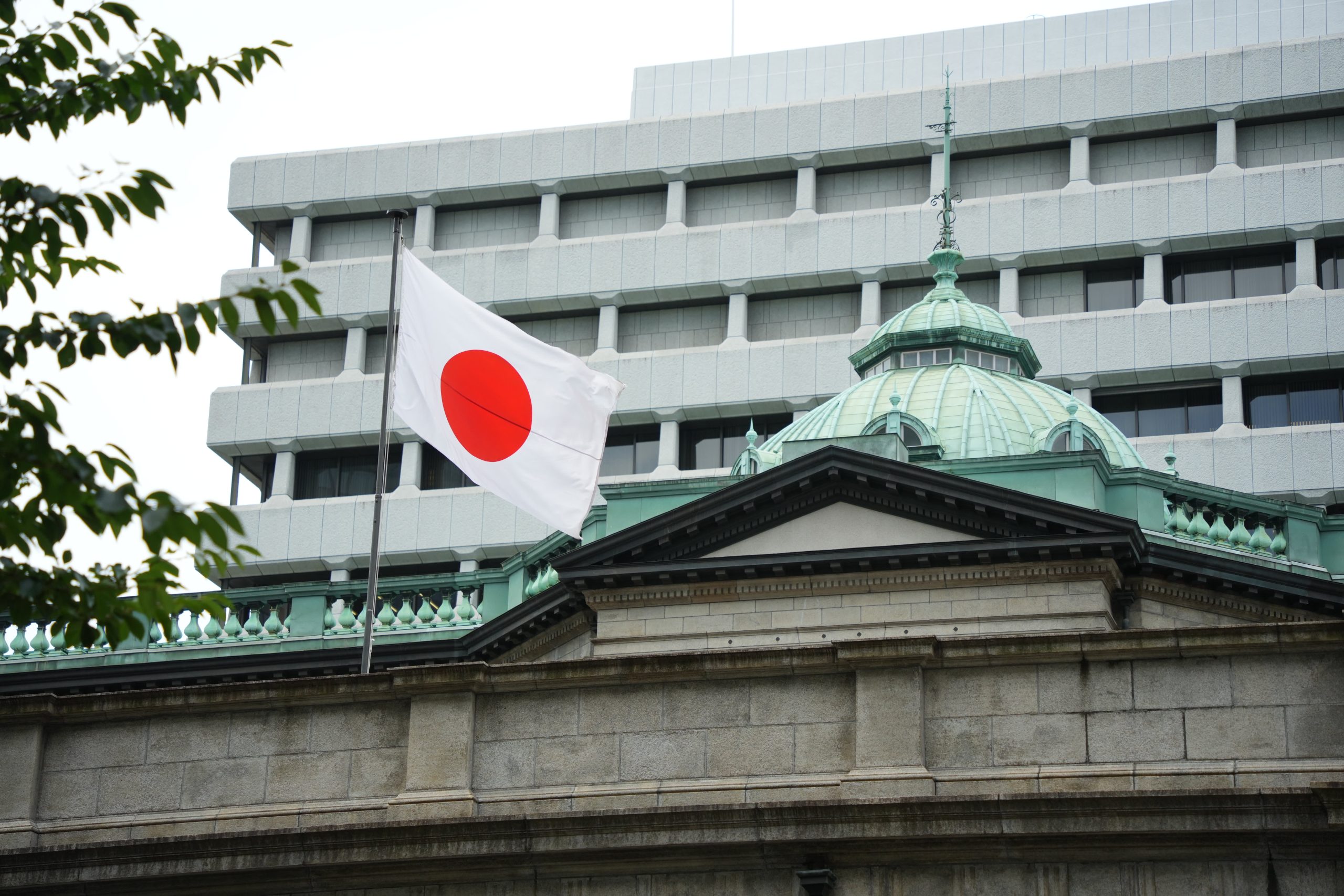
The Bank of Japan (BOJ) appears increasingly likely to raise interest rates in December 2026, although uncertainty surrounding Japan’s neutral interest rate continues to complicate its longer-term monetary policy outlook.
BOJ Governor Kazuo Ueda has delivered strong signals that another rate increase is approaching. However, investors remain uncertain about how far the central bank will tighten monetary policy after decades of exceptionally low borrowing costs.
The central challenge is determining how quickly Japanese households and businesses can adjust to higher interest rates without undermining the country’s fragile economic recovery.
Bank of Japan Signals December Interest Rate Hike
The Bank of Japan recently indicated that its prolonged struggle to achieve sustainable inflation has entered a new phase.
After spending approximately 14 years working toward its 2% inflation target, policymakers are now increasingly focused on preventing excessive price increases.
This change has reinforced expectations that the BOJ will continue raising borrowing costs.
Ueda explained that the central bank postponed an immediate rate increase to assess economic conditions and inflation developments more thoroughly.
His comments resembled statements made in July, shortly before the BOJ increased interest rates in September.
The governor also indicated that policymakers would pay particular attention to upside inflation risks at their next meeting.
These remarks have strengthened market expectations that Japan’s benchmark interest rate could rise from 1.25% to 1.5% in December.
Japan’s Economic Growth and Inflation Support Further Tightening
Recent economic indicators have strengthened the case for additional monetary policy tightening.
Japan’s economy expanded at an annualized rate of 1.4% during the second quarter, supported by continued corporate investment despite economic uncertainty linked to the Middle East conflict.
Meanwhile, annual core consumer inflation reached 2.1% in September, exceeding the Bank of Japan’s 2% target.
Persistent underlying price pressures outweighed the inflation-reducing effects of government fuel subsidies.
Nobuyasu Atago, a former BOJ official and current chief economist at Rakuten Securities Economic Research Institute, believes a December rate increase is now highly probable.
However, Atago suggested that the central bank faces a much more complicated decision regarding further increases in 2027.
Another rate hike after December would bring the policy rate to 1.75%, potentially placing borrowing costs close to levels considered neutral for Japan’s economy.
Uncertainty Over Japan’s Neutral Interest Rate Clouds BOJ Outlook
One of the biggest challenges facing the Bank of Japan is determining the country’s neutral interest rate.
The neutral rate represents the level at which monetary policy neither stimulates nor restricts economic activity.
BOJ research estimates that Japan’s nominal neutral interest rate could fall anywhere between 1.1% and 2.5%.
This unusually broad range makes it difficult for policymakers to determine how much additional tightening the economy can tolerate.
Like other central banks, the BOJ cannot directly observe the neutral rate. Instead, officials must estimate it using economic models that can produce different results.
Consequently, the central bank has avoided committing to a fixed schedule of future interest rate increases.
Although policymakers continue warning about inflation risks, they also recognize that excessive tightening could weaken economic growth.
Ueda has emphasized the importance of monitoring lending conditions for businesses and households.
He has specifically highlighted signs that smaller companies are experiencing tighter borrowing conditions, while maintaining that Japan’s overall financial environment remains supportive.
Decades of Low Interest Rates Create a Unique Challenge
Japan’s prolonged experience with deflation and ultra-low interest rates makes its current monetary policy transition particularly difficult.
For roughly three decades, businesses and households have operated in an environment characterized by exceptionally affordable borrowing.
As a result, even relatively modest interest rate increases could have a greater economic impact than policymakers anticipate.
With the BOJ’s policy rate currently at 1.25%, officials face pressure to move borrowing costs closer to neutral levels to prevent persistent inflation.
However, raising rates too aggressively could undermine business investment, household spending, and economic confidence.
The central bank also has limited historical experience managing a sustained tightening cycle.
Since becoming independent in 1998, the BOJ has spent most of its history combating weak inflation or outright deflation.
Its current shift toward controlling stronger inflation therefore represents a significant departure from previous monetary policy conditions.
BOJ Policymakers Divided Over Future Rate Increases
Disagreements within the Bank of Japan’s policy board further complicate the interest rate outlook.
Some policymakers favor raising borrowing costs more quickly to prevent inflation from becoming entrenched.
Naoki Tamura, one of the board’s more hawkish members, believes Japan’s neutral interest rate is likely close to 2%.
He has advocated continued monetary tightening to bring borrowing costs toward that level.
Fellow policymaker Hajime Takata has also supported faster rate increases.
Takata recently proposed raising the benchmark rate to 1.5%, although his proposal failed to secure sufficient support.
Other board members have adopted a more cautious approach.
Former academic Junko Koeda has suggested that the neutral interest rate is probably considerably above 1%, without identifying a more precise level.
Meanwhile, two dovish policymakers appointed by Prime Minister Sanae Takaichi appear less enthusiastic about rapid tightening.
Both opposed the September interest rate increase, highlighting the differences within the central bank’s leadership.
Could Japan’s Interest Rates Reach 1.75% in 2027?
Despite disagreements over the appropriate pace of tightening, some economists expect the Bank of Japan to continue raising rates into early 2027.
Mari Iwashita, executive rates strategist at Nomura Securities, believes policymakers probably still consider the current benchmark rate to be below neutral.
That assessment could support another increase to 1.75% by approximately March 2027.
However, the central bank may then decide to pause and assess the economic consequences of higher borrowing costs.
Such a pause would allow policymakers to evaluate inflation trends, business investment, household borrowing, and broader financial conditions.
The outlook remains uncertain because the BOJ has yet to establish a clear consensus on the neutral rate or the appropriate endpoint for its tightening cycle.
Bank of Japan Faces Critical Monetary Policy Decisions
The Bank of Japan is entering a decisive period as it moves away from decades of ultra-accommodative monetary policy.
A December interest rate hike to 1.5% appears increasingly likely, supported by persistent inflation and relatively resilient economic activity.
Nevertheless, uncertainty surrounding Japan’s neutral interest rate makes the longer-term outlook considerably less predictable.
Policymakers must balance the risk of allowing inflation to remain elevated against the possibility that excessive monetary tightening could weaken economic growth.
For investors, the BOJ’s upcoming decisions could have important implications for Japanese government bonds, the yen, equity markets, and global capital flows.
The December meeting may provide greater clarity on the immediate policy direction. However, the central bank’s approach to further interest rate increases in 2027 is likely to remain a major focus for financial markets.