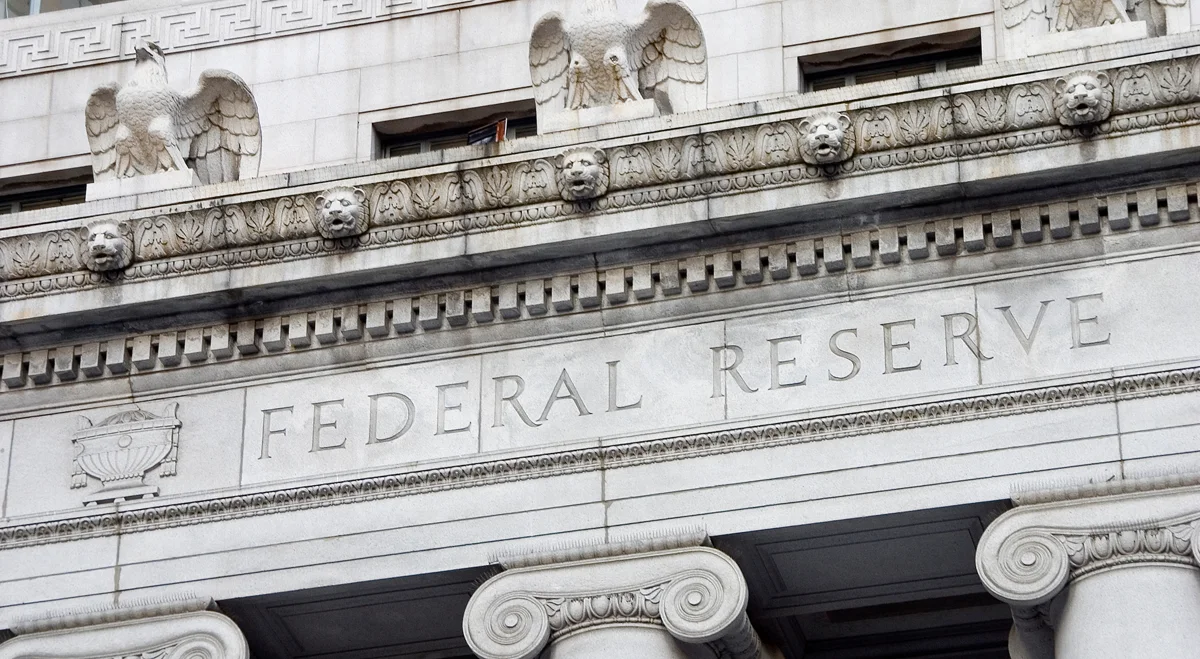
UBS expects the Federal Reserve to deliver two additional interest rate hikes by mid-2027, following September’s 25-basis-point increase and hawkish signals from Fed Chair Kevin Warsh.
Despite anticipating further monetary tightening, the Swiss banking giant remains optimistic about the US economy and stock market. Its latest outlook suggests that easing inflation could eventually allow the Federal Reserve to resume interest rate cuts toward the end of 2027.
UBS Expects Two More Fed Rate Hikes by Mid-2027
Under its baseline scenario, UBS anticipates that the Federal Reserve will raise borrowing costs twice more before the middle of 2027.
However, the bank expects inflationary pressures to gradually decline, potentially creating room for renewed monetary easing later that year.
Meanwhile, UBS believes the US economy will remain resilient, supported by continued investment in artificial intelligence, government spending, and healthy credit growth.
These factors could help sustain corporate earnings despite relatively restrictive monetary conditions.
US Economic Growth Expected to Remain Resilient
UBS forecasts US economic growth of approximately 2% in both 2026 and 2027.
However, the outlook for energy-importing economies appears less favorable. The bank expects regions such as Europe and parts of Asia to experience below-trend growth amid ongoing energy market challenges.
UBS also anticipates a gradual recovery in shipping activity through the Strait of Hormuz.
Regarding oil prices, the bank expects Brent crude to trade within a relatively narrow range before declining modestly by mid-2027.
Together, these developments could help stabilize inflation expectations and support broader financial markets.
UBS Predicts S&P 500 Could Reach 8,400 by June 2027
Despite expectations for additional Federal Reserve rate hikes, UBS maintains a positive outlook for global equities.
The bank believes major stock market indices could advance approximately 10% by mid-2027, supported by resilient economic activity and corporate earnings growth.
For the S&P 500, UBS has established a baseline target of 8,400 points by June 2027.
Nevertheless, the bank acknowledges considerable uncertainty surrounding its forecasts, particularly regarding inflation, interest rates, and artificial intelligence investment.
UBS considers the overall balance of risks relatively even, with meaningful possibilities for both stronger and weaker market outcomes.
UBS Outlines Bullish and Bearish S&P 500 Scenarios
Beyond its baseline outlook, UBS has developed several alternative scenarios reflecting different economic and market conditions.
Bullish Scenario — S&P 500 at 9,500
UBS assigns a 25% probability to its optimistic scenario.
Under these conditions, inflation returns toward normal levels faster than expected, while artificial intelligence delivers substantial productivity improvements.
This combination could allow the Federal Reserve to keep interest rates unchanged rather than implement additional increases.
Consequently, the S&P 500 could climb toward 9,500 points.
Yield Reset Scenario — S&P 500 at 7,000
The bank assigns a 15% probability to a scenario involving renewed inflationary pressures.
Higher inflation could force investors to anticipate more aggressive monetary tightening, pushing bond yields upward and weighing on equity valuations.
In this environment, the S&P 500 could decline toward 7,000 points.
AI Bear Market Scenario — S&P 500 at 5,500
UBS also identifies a 10% probability of a significant downturn driven by disappointing artificial intelligence investment returns.
If companies reduce AI-related spending or fail to generate sufficient returns from their investments, market sentiment could deteriorate sharply.
Under this scenario, the S&P 500 could fall as low as 5,500 points.
Artificial Intelligence Investment Remains a Major Market Risk
UBS emphasizes that the scale of planned artificial intelligence investment is historically unprecedented.
Technology companies continue committing substantial capital to AI infrastructure, including data centers, computing equipment, and related technologies.
Although these investments could support long-term productivity and earnings growth, they also introduce considerable financial risks.
Any slowdown in AI capital expenditure or signs that expected returns are failing to materialize could have consequences extending beyond the technology sector.
Industries connected to infrastructure development, energy demand, and technology supply chains could also experience significant effects.
Fed Policy and AI Spending Will Shape the Market Outlook
Looking ahead, UBS expects the direction of financial markets to depend heavily on inflation developments, Federal Reserve monetary policy, and the sustainability of AI investment.
While its baseline forecast points toward additional interest rate increases and further stock market gains, alternative scenarios highlight the potential for substantial volatility.
For investors, upcoming inflation reports, corporate earnings releases, and changes in AI capital spending could provide important signals about which scenario is becoming more likely.
Ultimately, UBS maintains a constructive outlook for equities through mid-2027, while acknowledging that economic uncertainty and evolving monetary policy could significantly influence market performance.