European stock markets traded mostly higher on Monday as declining oil prices provided some relief to investors following a difficult week for regional equities.
Renewed diplomatic efforts aimed at easing tensions between Iran and Western powers helped improve market sentiment. However, uncertainty surrounding upcoming central bank decisions and major technology earnings continued to limit gains.
The pan-European STOXX 600 index remained largely unchanged after losing more than 1% last week. Rising energy prices, weakness in technology stocks, and political uncertainty in France had contributed to the previous decline.
Investors are now closely monitoring developments in the Middle East, inflation expectations, and corporate earnings for signs of the market’s next direction.
European Stocks Recover as Major Indexes Post Gains
Several major European stock indexes recorded modest gains during Monday’s trading session.
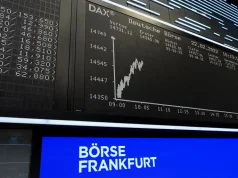
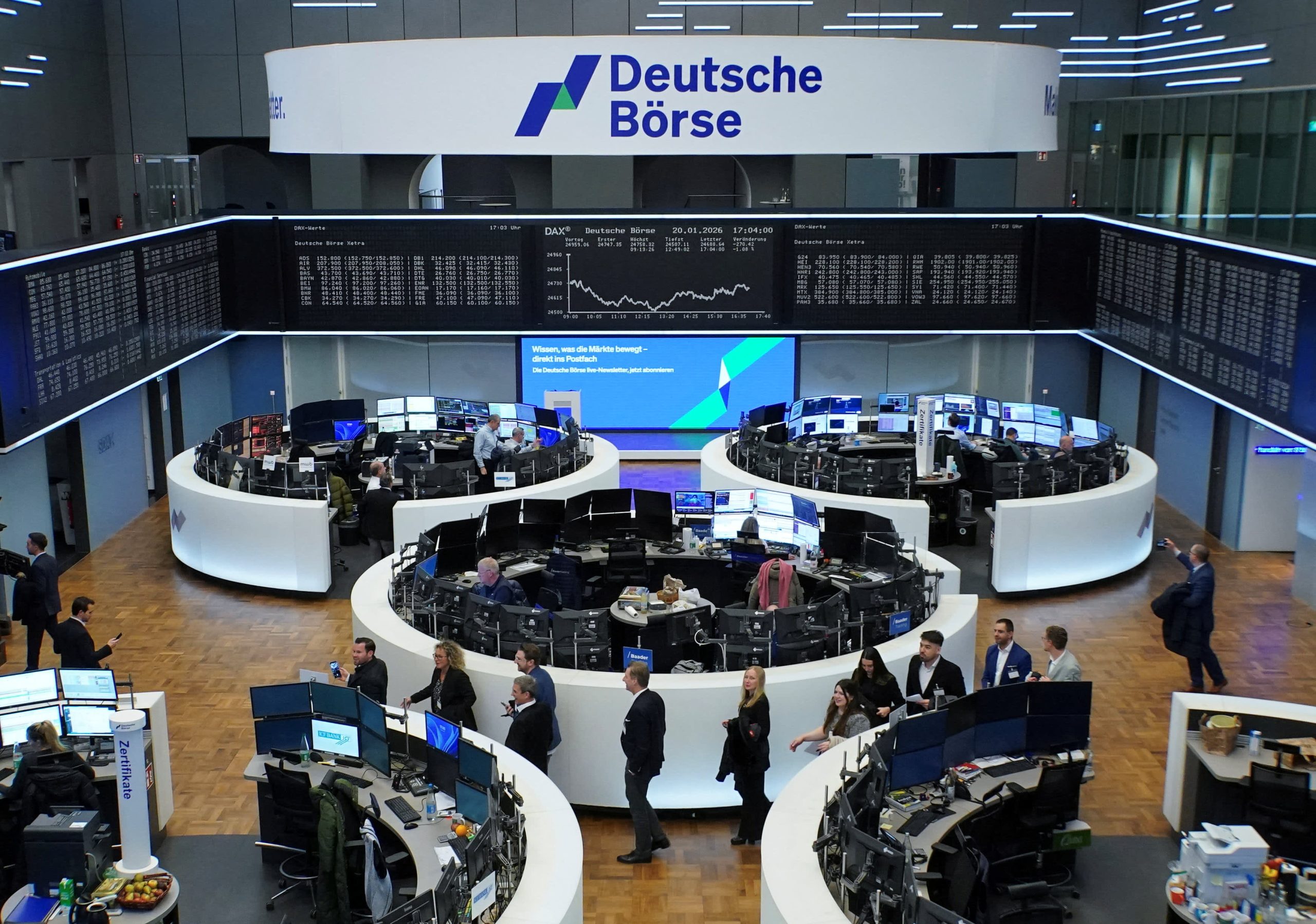
Germany’s DAX advanced 0.4%, while France’s CAC 40 climbed 0.6% as investors reassessed the outlook for the region’s largest economies.
Italy’s FTSE MIB also strengthened, gaining approximately 0.5%.
However, London’s FTSE 100 declined 0.1%, partly reflecting weakness among major energy companies.
Shares of BP and Shell faced pressure as oil prices retreated ahead of their upcoming quarterly earnings announcements.
The mixed performance highlighted a cautious recovery across European equities following last week’s market volatility.
Oil Prices Fall as Iran Diplomatic Talks Ease Supply Fears
Lower crude oil prices provided support for European stock markets on Monday, particularly for sectors exposed to energy costs.
Oil futures declined approximately 1% following reports of renewed diplomatic efforts to reduce tensions in the Middle East.
Qatari representatives reportedly visited Tehran on Sunday as part of discussions aimed at easing regional hostilities, with diplomatic coordination involving Washington.
The developments offered some relief after Brent crude surged 6.2% last week, reaching its highest weekly closing level since mid-2022.
The rally followed Houthi missile and drone attacks against Saudi Arabian energy and transportation infrastructure.
These attacks increased concerns about potential disruptions to global oil supplies.
Although crude prices retreated on Monday, the broader geopolitical situation remains uncertain.
For European economies that depend heavily on imported energy, lower oil prices could help reduce inflationary pressure and improve the outlook for corporate operating costs.
Federal Reserve and ECB Rate Decisions in Focus
Investors are also preparing for an important week of central bank policy announcements.
The US Federal Reserve, European Central Bank (ECB), and Bank of Japan (BOJ) are all scheduled to announce their latest interest rate decisions.
Markets widely expect the Federal Reserve to maintain its benchmark interest rate range at 3.75% to 4.00%.
However, traders remain concerned that persistent inflation could encourage policymakers to adopt a more restrictive stance.
According to interest rate swap pricing cited in the report, markets assigned approximately an 80% probability to a 25-basis-point Federal Reserve rate increase in December.
The ECB and BOJ are also expected to leave interest rates unchanged at their upcoming meetings.
Nevertheless, expectations of additional tightening before the end of the year or during the following quarter remain an important consideration for investors.
Higher Energy Costs Complicate the Inflation Outlook
Despite Monday’s decline in crude oil prices, elevated energy costs continue to present challenges for monetary policymakers.
Higher fuel and electricity prices can increase production expenses, transportation costs, and consumer inflation.
These pressures may make it more difficult for central banks to justify lower interest rates.
As a result, investors will pay particular attention to central bank statements for indications of future borrowing costs.
A more hawkish policy outlook could weigh on European equities by increasing financing expenses and reducing the appeal of riskier investments.
Microsoft, Alphabet and Amazon Earnings Take Center Stage
Another major focus for global financial markets is the upcoming quarterly earnings season.
Approximately one-third of companies in the S&P 500 index are expected to report financial results this week.
Among the most closely watched businesses are Microsoft, Alphabet, and Amazon.
Investors are particularly interested in their artificial intelligence investments and cloud computing operations.
The companies have committed substantial capital to expanding data centers, acquiring advanced computing equipment, and developing AI services.
However, concerns have increased about whether these investments will generate sufficient financial returns.
Recent weakness in global technology stocks reflects growing uncertainty surrounding the profitability of large-scale AI infrastructure spending.
European Semiconductor Stocks Face an Important Test
The upcoming US technology earnings could also influence European semiconductor companies.
Dutch chip equipment manufacturers ASML and ASM International are particularly sensitive to changes in global semiconductor investment expectations.
Their business outlooks depend partly on continued demand for advanced chip manufacturing equipment.
Strong earnings and encouraging AI spending guidance from major US technology companies could support confidence in the semiconductor sector.
Conversely, disappointing results or reduced capital expenditure forecasts could renew selling pressure across European technology stocks.
France Avoids Moody’s Credit Rating Downgrade
Political and fiscal developments in France remain another important factor influencing European financial markets.
Investors have been monitoring domestic unrest and political disagreements surrounding President Emmanuel Macron’s proposed budget.
These tensions have increased concerns about France’s public finances and its ability to reduce government borrowing.
However, financial markets received some relief after Moody’s decided against downgrading France’s sovereign credit rating on Friday.
The agency maintained France’s Aa3 credit rating with a negative outlook, providing temporary reassurance to investors.
The decision followed a period of rising borrowing costs, during which French government bond yields came under considerable pressure.
France’s benchmark 10-year government bond yield had climbed above 5%, reaching its highest level since 2002.
Although Moody’s decision reduced immediate concerns about a downgrade, political uncertainty and fiscal challenges remain significant risks for French assets.
Further developments surrounding government spending and budget negotiations could continue influencing investor confidence.
European Stock Market Outlook: What Investors Should Watch
European equities face several important developments that could influence trading over the coming days.
Diplomatic progress involving Iran may help ease concerns about energy supply disruptions and reduce pressure on oil prices.
However, persistent geopolitical risks could quickly reverse the recent decline in crude prices.
Meanwhile, central bank announcements will provide further insight into the outlook for inflation and interest rates.
Quarterly earnings from major US technology companies could also determine whether confidence in AI-related investments improves or weakens.
In France, political developments and government borrowing costs will remain important considerations for European investors.
For now, European stock markets are showing signs of stabilization, although uncertainty surrounding energy prices, monetary policy, and corporate profitability continues to shape market sentiment.