Asian stock markets traded mostly lower on Monday as renewed concerns about artificial intelligence spending weighed on semiconductor companies. Meanwhile, investors prepared for a busy week of corporate earnings and major central bank decisions.
Technology stocks faced selling pressure as market participants questioned whether substantial investments in AI infrastructure would generate sustainable profits.
The weakness followed losses on Wall Street on Friday, when rising energy prices and uncertainty surrounding the AI investment boom dampened investor confidence.
US stock index futures were mixed during Asian trading as of 06:45 GMT, with Nasdaq futures edging lower.
Asian Stock Markets Decline as Semiconductor Shares Fall
Japan’s Nikkei 225 index declined 0.8% on Monday, while the broader TOPIX managed a modest gain of 0.2%.
Japanese semiconductor companies were among the biggest losers. Renesas Electronics (TYO:6723) and Tokyo Electron (TYO:8035) each dropped more than 3.5%.
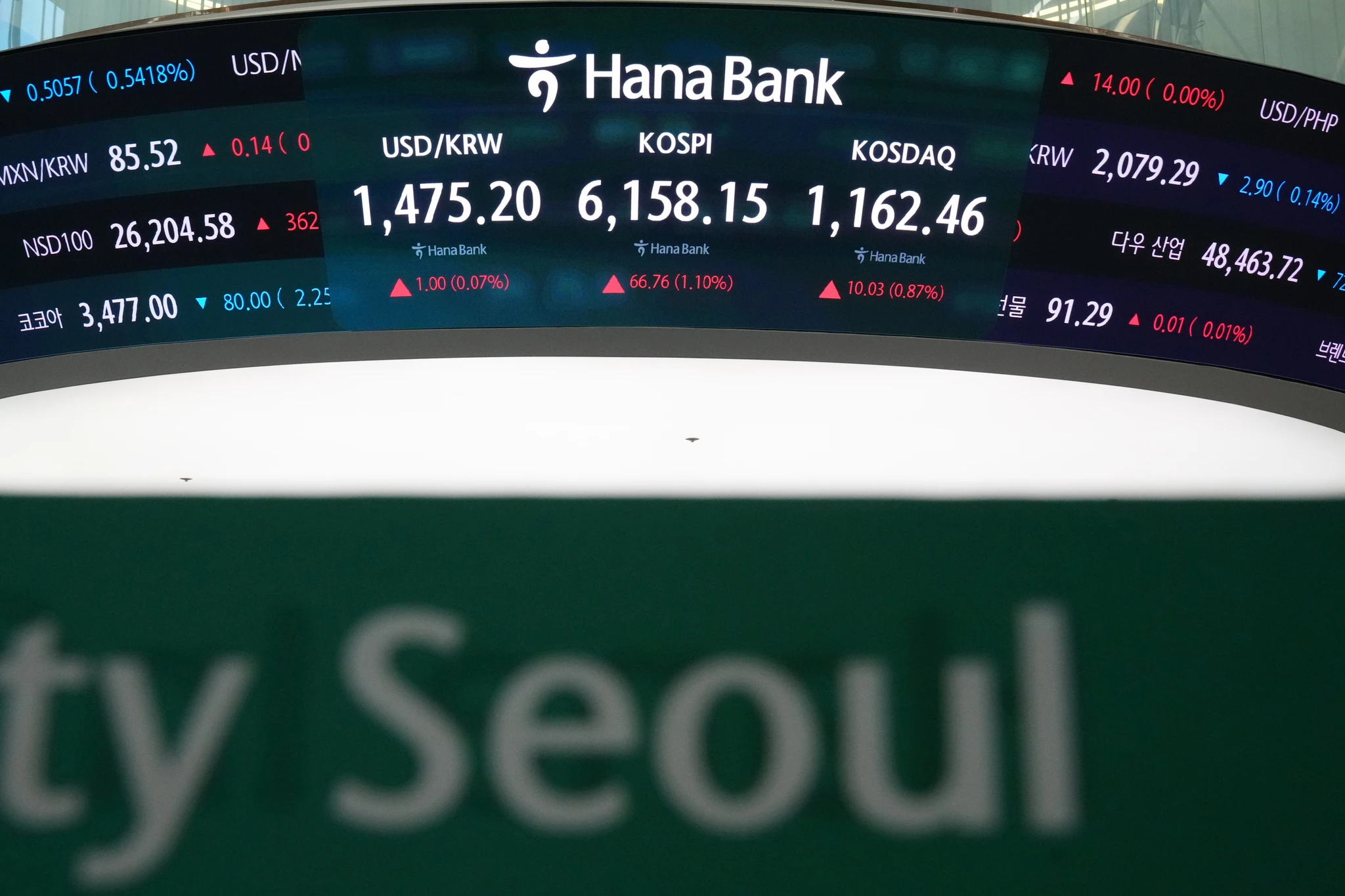
In South Korea, the benchmark KOSPI index finished 1.5% lower, weighed down by weakness in technology stocks.
Samsung Electronics (KS:005930), one of the world’s largest semiconductor manufacturers, declined 1.2%.
Chinese stock markets also struggled to gain momentum. The Shanghai Shenzhen CSI 300 index slipped 0.3%, while the Shanghai Composite remained largely unchanged.
Hong Kong’s Hang Seng index advanced 0.4%, although several major semiconductor companies recorded significant losses.
SMIC (HK:0981) fell 2.6%, while Hua Hong Grace Semiconductor (HK:1347) declined more than 5%.
The mixed performance reflects increasing uncertainty surrounding the outlook for semiconductor demand and global technology investment.
AI Spending Concerns Weigh on Semiconductor Stocks
The recent decline in Asian technology stocks follows renewed selling pressure across the US technology sector.
Investors are becoming increasingly cautious about the enormous amounts of capital being invested in artificial intelligence infrastructure.
Major technology companies have committed substantial resources to building data centers, purchasing advanced processors, and expanding computing capacity.
However, questions remain about whether these investments will translate into sufficient revenue growth and profitability.
Companies supplying semiconductor equipment and memory chips are particularly sensitive to changes in expectations for AI infrastructure spending.
Although demand for advanced computing technology remains an important growth driver, concerns about investment returns have increased market volatility.
As a result, investors are closely watching corporate earnings for evidence that AI-related expenditure is producing measurable financial benefits.
Microsoft, Alphabet and Amazon Earnings in Focus
The upcoming quarterly earnings reports from major US technology companies could influence sentiment across global equity markets.
Investors will closely examine results from Microsoft (NASDAQ), Alphabet (NASDAQ), and Amazon (NASDAQ).
Particular attention will focus on revenue growth, profitability, and the financial performance of their cloud computing and artificial intelligence operations.
Markets will also assess whether expanding data center investments are delivering sufficient returns to justify continued spending.
Positive earnings results and encouraging guidance could help restore confidence in technology stocks.
Conversely, weaker-than-expected results or signs of slowing AI-related revenue growth could intensify concerns about the sustainability of the current investment cycle.
Asia Faces One of Its Busiest Corporate Earnings Weeks
Asian stock markets are also preparing for a particularly active earnings period.
According to Bloomberg data, approximately 550 of the 1,200 companies included in the MSCI Asia-Pacific index are expected to release financial results this week.
That represents nearly half of the index’s constituent companies.
Among the most closely watched businesses are South Korean semiconductor manufacturers SK Hynix (KS:000660) and Samsung Electronics.
Their earnings reports could provide valuable insight into global memory-chip demand, semiconductor pricing, and investment trends associated with artificial intelligence.
Strong financial results could support sentiment toward Asian technology companies, while disappointing earnings may increase selling pressure.
Federal Reserve, ECB and Bank of Japan Decisions Approach
Beyond corporate earnings, investors are preparing for several important central bank meetings this week.
The US Federal Reserve, European Central Bank (ECB), and Bank of Japan (BOJ) are scheduled to announce monetary policy decisions.
The Federal Reserve is widely expected to maintain its current interest rates.
However, investors will closely analyze policymakers’ statements for indications of future changes in borrowing costs.
Persistent inflation and elevated energy prices have complicated the monetary policy outlook, potentially limiting the ability of central banks to ease financial conditions.
Meanwhile, the Bank of Japan is expected to keep its benchmark interest rate unchanged at 1.25%, following an increase in September.
Market participants will monitor the BOJ’s guidance for clues about whether additional monetary tightening could occur later in the year.
New Zealand’s central bank is also expected to raise interest rates on Wednesday, adding another important event to the global economic calendar.
Other Asian Markets Show Mixed Performance
Elsewhere in the region, India’s Nifty 50 index declined 0.1%, reflecting cautious investor sentiment.
Singapore’s Straits Times Index also weakened, falling 0.3%.
However, Australia’s S&P/ASX 200 index finished 0.2% higher, outperforming several regional markets.
New Zealand’s NZX 50 index ended the session 0.1% lower.
These movements highlight the uneven performance across Asian equity markets as investors balance company-specific developments against broader economic risks.
Oil Prices Retreat but Inflation Risks Persist
Energy markets provided some relief to investors on Monday as crude oil prices retreated from recent highs.
Brent crude had surged 6.2% during the previous week, reaching its highest levels in approximately six months.
The rally followed attacks by Yemen’s Houthi militants against Saudi Arabia, which raised concerns about potential disruptions to global oil supplies.
Although oil prices eased on Monday, they remained elevated compared with earlier levels.
Higher energy costs can increase inflationary pressures and complicate central bank decisions.
Consequently, developments in oil markets remain an important factor influencing investor expectations for interest rates and global economic growth.
Asian Stock Market Outlook: Earnings and Rate Decisions Take Center Stage
Asian equities face several important catalysts as the trading week progresses.
Corporate earnings from major technology companies could determine whether concerns about AI infrastructure spending intensify or begin to ease.
At the same time, monetary policy announcements from the Federal Reserve, ECB, and Bank of Japan could influence global liquidity conditions and investor risk appetite.
Oil prices and geopolitical developments will also remain important market drivers.
For now, weakness among semiconductor stocks suggests that investors are becoming more selective as they assess the sustainability of AI-related growth and the broader economic outlook.