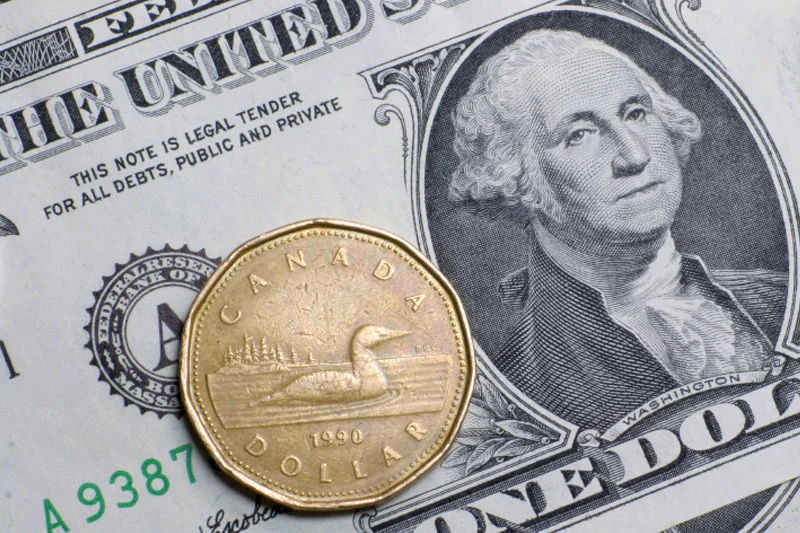
The Canadian dollar was heading toward its first weekly gain in six weeks on Friday, supported by a weaker U.S. dollar and rising crude oil prices. Investors also reassessed the outlook for American interest rates, providing additional support for the Canadian currency.
The loonie traded near C$1.4170 per U.S. dollar, equivalent to approximately 70.57 U.S. cents. Meanwhile, the greenback declined around 0.13% against its Canadian counterpart during the morning session.
The recovery comes after five consecutive weeks of losses, during which disappointing Canadian employment figures and shifting interest-rate expectations weighed on the currency.
Canadian Dollar Rebounds as US Dollar Weakens
The Canadian dollar benefited from a broader retreat in the U.S. dollar, which was heading for a weekly decline against several major currencies.
Comments from Federal Reserve Chair Kevin Warsh strengthened expectations that the central bank could keep interest rates unchanged at its October policy meeting.
These developments encouraged investors to reconsider the near-term outlook for U.S. monetary policy, reducing some of the greenback’s recent strength.
Meanwhile, weak Canadian employment data released the previous week had reduced expectations of a Bank of Canada interest-rate increase. The disappointing figures pushed the loonie to an 18-month low before its latest recovery.
Rising Oil Prices Provide Additional Support
Higher crude oil prices also helped strengthen the Canadian currency, reflecting Canada’s position as a major global energy exporter.
Brent crude gained approximately 1.4% during the week, reaching $106.28 per barrel. Meanwhile, U.S. West Texas Intermediate (WTI) crude climbed 6.4% to $97.78 per barrel.
The gains followed growing concerns about potential supply disruptions in the Middle East and a substantial decline in U.S. crude oil inventories.
Because energy exports represent an important part of Canada’s economy, stronger oil prices can increase demand for Canadian dollars and improve the country’s trade outlook.
However, the relationship is not always straightforward. Changes in global risk sentiment, interest-rate expectations, and U.S. dollar movements can sometimes outweigh the positive influence of rising crude prices.
What Could Sustain the Canadian Dollar’s Recovery?
Several oil-market developments could provide continued support for the loonie in the coming weeks.
Persistent supply concerns in the Middle East could help maintain elevated crude prices, particularly if geopolitical tensions threaten major production or transportation routes.
Further declines in U.S. crude inventories could also strengthen expectations of tightening supply conditions.
Additionally, resilient global energy demand and restrained production growth could provide further support for oil prices.
Nevertheless, any easing of supply concerns or signs of weakening economic activity could reverse the recent gains and limit the Canadian dollar’s recovery.
USD/CAD Heads for First Weekly Decline in Six Weeks
The USD/CAD exchange rate had fallen approximately 0.6% from its October 9 closing level of C$1.4257.
This movement placed the Canadian dollar on course for a weekly advance of roughly 0.6%, potentially ending its five-week losing streak.
During the previous week, the loonie declined 0.2%, marking its fifth consecutive weekly loss against the U.S. currency.
The latest recovery suggests that changing expectations for U.S. interest rates and stronger energy markets are beginning to offset some of the pressure created by weaker Canadian economic data.
US Inflation Data Adds Uncertainty to Interest Rate Outlook
Investors were also evaluating fresh inflation figures from the United States.
U.S. producer prices increased 1.3% in September, marking their largest monthly rise in approximately four and a half years.
The sharp increase raised concerns that elevated energy costs could sustain inflationary pressures and complicate the Federal Reserve’s monetary policy decisions.
Persistent inflation could encourage policymakers to maintain restrictive interest rates for longer, potentially supporting the U.S. dollar and limiting further Canadian dollar gains.
For now, the Canadian dollar remains on track to end its five-week losing streak, with oil prices, central bank expectations, and upcoming economic data likely to determine whether its recovery can continue.