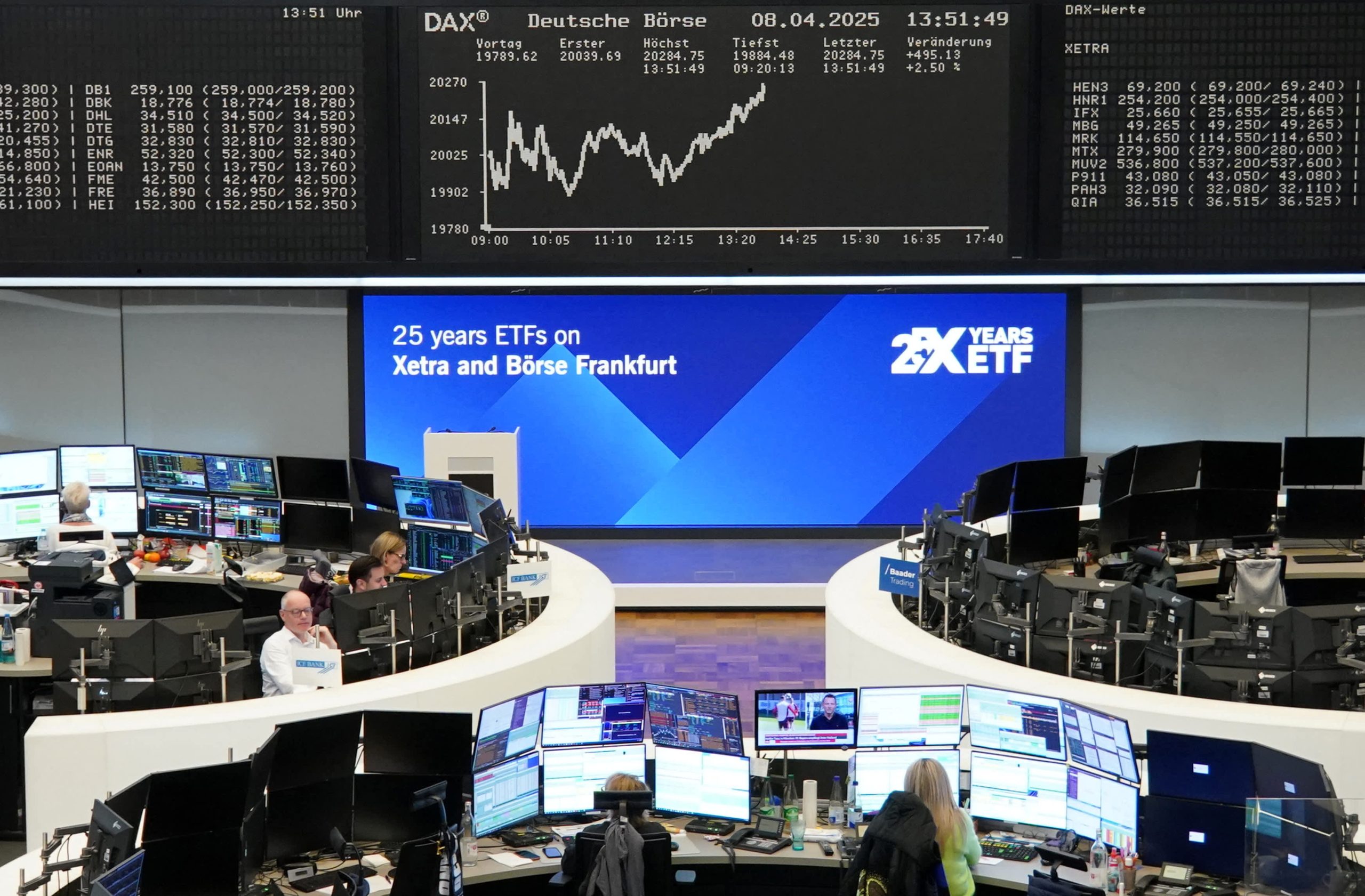
European stocks moved higher on Monday as investors assessed falling oil prices, geopolitical uncertainty and the upcoming third-quarter corporate earnings season. Hopes surrounding a possible Russia-Ukraine energy ceasefire helped improve market sentiment, although doubts about the proposed agreement remained.
The pan-European STOXX Europe 600 Index gained 0.5% during early trading, recovering some stability following the previous week’s volatile market movements.
Major European stock indexes also recorded gains. Germany’s DAX and France’s CAC 40 both advanced 0.5%, while London’s FTSE 100 climbed 0.6%.
Meanwhile, Spain’s IBEX 35 outperformed its regional counterparts, rising 1.4%.
Lower crude oil prices provided some relief to European equities, helping offset concerns about geopolitical tensions and the outlook for global economic growth.
European Stocks Rise as Oil Prices Retreat
European stock markets benefited from declining energy prices after US President Donald Trump announced a proposed ceasefire between Russia and Ukraine targeting attacks on energy infrastructure.
The announcement raised expectations that disruptions to global oil and fuel supplies could ease if both countries agreed to suspend strikes on critical energy facilities.
However, investors remained cautious because the proposed arrangement had not been independently confirmed.
Brent crude futures for December delivery dropped 1.8% to $102.84 per barrel, reversing part of the previous week’s 3% increase.
That earlier rally had been driven by mounting geopolitical risks and fears of further disruptions to global energy supplies.
The latest decline in oil prices offered some support to European equities, particularly as investors continued monitoring inflation and borrowing costs.
Nevertheless, uncertainty surrounding the proposed energy ceasefire prevented a stronger improvement in market confidence.
Trump’s Russia-Ukraine Energy Ceasefire Faces Major Obstacles
President Trump’s announcement included a proposal for Russia to increase diesel exports to the United States and international markets.
However, significant logistical and operational challenges could complicate those plans.
Repeated Ukrainian drone attacks on major Russian oil refineries have reportedly reduced the country’s refining capacity.
As a result, market participants questioned whether Moscow could substantially increase diesel exports while continuing to meet domestic fuel requirements.
These concerns suggest that any improvement in global energy supplies could take time, even if a ceasefire agreement is eventually reached.
Furthermore, uncertainty remains over whether Russia and Ukraine are prepared to implement and maintain a lasting suspension of attacks on energy infrastructure.
Continued Russia-Ukraine Attacks Raise Doubts About Ceasefire
Despite the optimistic tone of Trump’s announcement, reports of additional military operations highlighted the fragility of the proposed agreement.
Russia reportedly conducted further strikes targeting Ukrainian electricity infrastructure over the weekend.
Meanwhile, Ukrainian attacks were reported deeper inside Russian territory, including incidents involving technology infrastructure linked to Russian technology company Yandex.
The reported disruptions affected regional online services and banking operations, adding to concerns about the conflict’s broader economic consequences.
These developments reinforced investor skepticism about whether the proposed energy ceasefire would lead to meaningful reductions in hostilities.
Financial market participants also recalled a similar ceasefire framework announced by Washington in September.
That earlier initiative failed to produce a verified suspension of military activity, raising questions about the effectiveness of the latest proposal.
Consequently, traders remain reluctant to assume that lower oil prices will persist without clearer evidence of diplomatic progress.
European Markets Shift Focus to Q3 Corporate Earnings
Beyond geopolitical developments, investors are preparing for the beginning of the third-quarter corporate earnings season.
Major US banks are scheduled to release their financial results on Tuesday, providing an important early indication of business performance and economic conditions.
European investors will pay particular attention to corporate earnings guidance and management commentary.
The reports could reveal how companies are managing elevated borrowing costs, changing input prices and persistent economic uncertainty.
Profit margins will also be closely monitored as businesses navigate higher financing expenses and shifting consumer demand.
Stronger-than-expected earnings could support equity valuations and improve investor confidence.
Conversely, disappointing results or cautious corporate forecasts could increase volatility across European and global stock markets.
US Inflation Data Could Influence European Stocks
The upcoming US Consumer Price Index (CPI) report represents another major event for financial markets.
Scheduled for Wednesday, the inflation release could provide important clues about the Federal Reserve’s next monetary policy decision.
Investors will examine whether consumer price pressures are easing or remaining elevated.
A stronger-than-expected inflation reading could reinforce expectations that the Fed will maintain restrictive monetary policy or consider additional interest rate increases.
Higher US interest rates can influence global bond yields, borrowing costs and investor appetite for equities.
As a result, persistent inflation could create additional challenges for European stocks, particularly companies with substantial financing requirements.
On the other hand, softer inflation data could reduce concerns about monetary tightening and provide support for risk-sensitive assets.
The CPI report could therefore become a key driver of global stock market sentiment throughout the week.
European Stock Market Outlook: Oil, Earnings and Inflation in Focus
European equities started the week positively, supported by declining crude oil prices and cautious optimism surrounding a possible Russia-Ukraine energy ceasefire.
However, geopolitical uncertainty remains a significant risk as investors await confirmation that the proposed agreement will lead to an actual reduction in attacks on energy infrastructure.
Continued military activity could quickly reverse the recent decline in oil prices and renew inflation concerns.
Meanwhile, the approaching corporate earnings season will test whether company profits can support current stock market valuations.
The upcoming US inflation report will also play an important role in shaping expectations for Federal Reserve policy and global borrowing costs.
For now, European stocks remain moderately higher as investors balance easing energy prices against unresolved geopolitical risks.
The next major direction for European equity markets will likely depend on developments in the Russia-Ukraine conflict, third-quarter earnings results and Wednesday’s US inflation data.