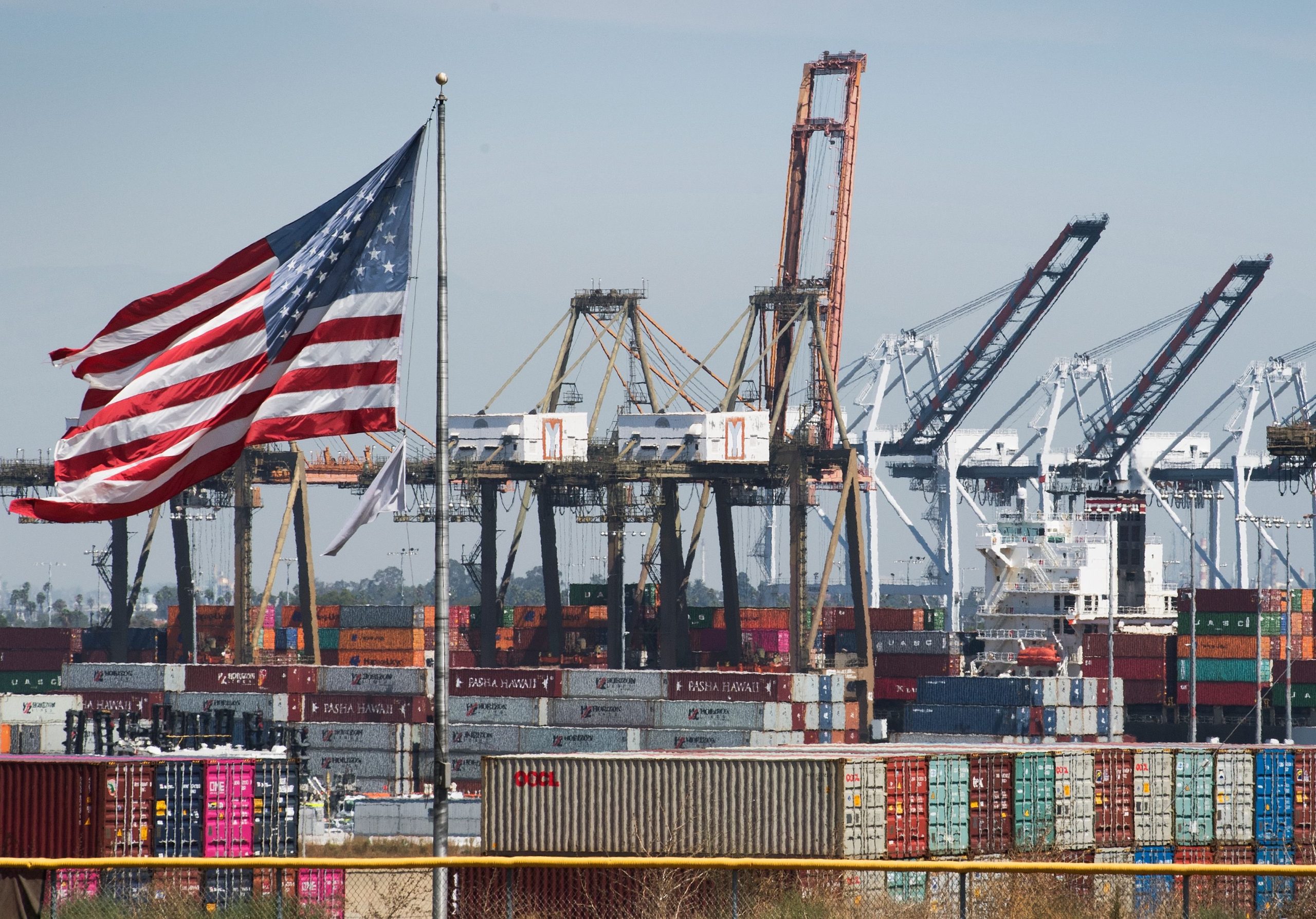
The U.S. trade deficit widened more than expected in August as imports surged, driven partly by strong demand for equipment supporting the artificial intelligence boom.
The gap between U.S. imports and exports increased by 13.7% from the previous month to $105.6 billion, according to data from the Commerce Department.
Economists had expected the U.S. trade deficit to reach around $100.8 billion.
U.S. Imports Rise Sharply in August
Imports climbed 4.3% in August to $420.8 billion.
Much of the increase came from semiconductors, industrial machinery and other equipment entering the United States.
Strong investment in artificial intelligence infrastructure has contributed to higher demand for advanced technology and related industrial equipment.
The rise in imports also suggests that domestic demand remains relatively strong despite elevated borrowing costs and broader economic uncertainty.
U.S. Exports Post a Smaller Increase
U.S. exports also increased during August, although at a much slower pace.
Exports rose 1.4% to $315.2 billion.
Higher shipments of crude oil and fuel oil supported the increase. However, those gains were partly offset by weaker exports of civilian aircraft and pharmaceutical products.
Because imports grew significantly faster than exports, the overall U.S. trade deficit expanded during the month.
Trade Could Weigh Heavily on Third-Quarter GDP
International trade has already reduced U.S. gross domestic product growth for three consecutive quarters.
Economists estimate that net trade could subtract as much as 2.5 percentage points from GDP growth during the July-to-September quarter.
The sharp increase in imports is particularly important because imports are deducted when calculating GDP.
Despite this pressure, the U.S. economy is still expected to record relatively strong overall growth during the third quarter.
U.S. Economic Growth Still Expected to Remain Solid
Third-quarter U.S. GDP growth is broadly expected to remain above a 3% annualized rate, supported by resilient consumer spending.
For comparison, the U.S. economy expanded at an annualized rate of 2.2% during the second quarter.
Strong household spending could therefore offset at least some of the negative impact caused by the widening trade deficit.
However, the latest trade figures have increased uncertainty around the strength of third-quarter economic growth.
Economists Lower GDP Expectations
Ariane Curtis, Senior North America Economist at Capital Economics, warned that net trade could become a considerably larger drag on third-quarter GDP than previously expected.
Imports are currently on track to rise between 25% and 30% on an annualized basis, while exports could decline slightly.
As a result, Capital Economics believes U.S. GDP growth could come in closer to 2.5% annualized rather than its previous estimate of 4%.
The latest figures show that while domestic demand remains strong, rapidly rising imports could significantly reduce the contribution of trade to overall U.S. economic growth.