Asian stocks traded mixed on Friday as investors turned cautious ahead of key U.S. labor-market data that could influence expectations for the Federal Reserve’s interest-rate outlook.
Elevated bond yields and high oil prices also weighed on investor sentiment across the region.
Wall Street ended slightly higher on Thursday after a sharp rise in U.S. Treasury yields eased later in the session.
U.S. stock futures also moved modestly higher during Asian trading.
Hang Seng Drops 3%
Hong Kong was the weakest major market in Asia.
The Hang Seng Index fell around 3% to an 11-week low near 23,900 points as investors returned from Thursday’s holiday.
The selloff followed a sharp rise in global bond yields and renewed concerns about oil supply risks.
Technology shares also came under pressure.
The Hang Seng TECH Index fell around 2.5%, adding to broader weakness in Hong Kong equities.
Nikkei and TOPIX Move Lower
Japanese stocks also declined.
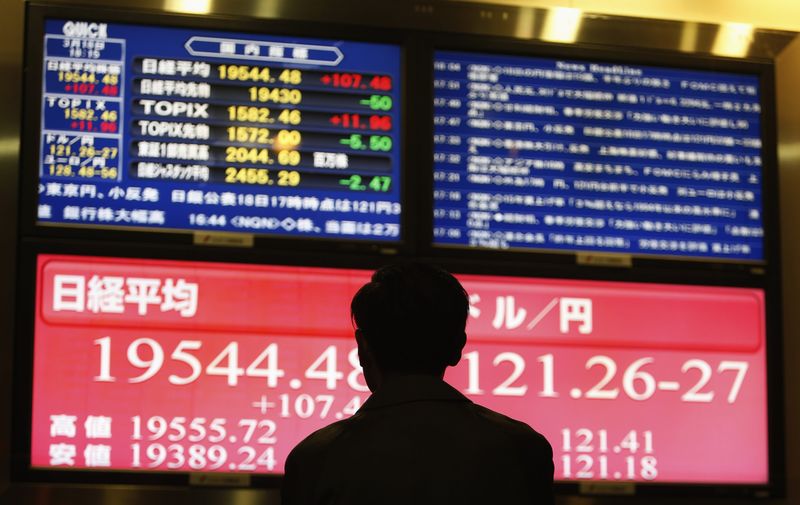
The Nikkei 225 dropped around 0.9%, while the broader TOPIX index slipped approximately 1.1%.
Investors were assessing fresh inflation data from Tokyo as expectations for additional Bank of Japan interest-rate hikes continued to build.
Other Asian Markets Trade Mixed
South Korea’s KOSPI edged around 0.3% higher after moving between gains and losses during the session.
Australia’s S&P/ASX 200 gained about 0.5%.
Singapore’s Straits Times Index, however, declined approximately 0.3%.
Mainland Chinese markets remained closed for the National Day Golden Week holiday and are scheduled to reopen on October 8.
Indian financial markets were also closed on Friday for Mahatma Gandhi Jayanti.
Tokyo Inflation Beats Expectations
Tokyo’s core consumer price index rose 2.7% year-on-year in September.
That was significantly higher than the 1.8% increase recorded in August and also exceeded market expectations of 2.4%.
The stronger reading added to expectations that the Bank of Japan could continue tightening monetary policy.
Bank of Japan Rate Hike Expectations Grow
A summary of the Bank of Japan’s September meeting showed that some policymakers believed faster interest-rate hikes may be necessary as inflation risks increase.
The BOJ has already raised its policy rate to 1.25%.
Investors are now considering the possibility of another rate increase at either the October or December policy meeting.
U.S. Nonfarm Payrolls Take Center Stage
Attention is now shifting toward the September U.S. nonfarm payrolls report.
Economists expect the U.S. economy to have added around 89,000 jobs during the month.
The unemployment rate is forecast to remain unchanged at 4.1%.
The data could play an important role in shaping expectations for the Federal Reserve’s next interest-rate decision.
Fed Rate Hike Odds Decline
Markets are currently pricing in around a 25% probability of a Federal Reserve rate hike in October.
That is significantly lower than the roughly 69% probability seen a week earlier.
However, expectations for another rate increase later in the year remain elevated.
Investors will therefore be watching the payrolls report closely for signs of continued strength or weakness in the U.S. labor market.
Treasury Yields Pressure Stock Valuations
Bond markets remain a major source of volatility for global equities.
The U.S. 10-year Treasury yield climbed as high as 5.34% on Thursday, reaching its highest level since 2002.
The yield later eased back toward 5.25% during Asian trading.
Higher long-term borrowing costs can pressure equity valuations by making bonds more attractive and increasing financing costs for companies.
Oil Prices Add to Inflation Concerns
Elevated oil prices are creating another challenge for financial markets.
Brent crude remained above $102 per barrel as investors monitored growing geopolitical risks in the Middle East.
Reports that the United States could increase its military presence in the region added to concerns about potential supply disruptions.
China’s decision to halt certain oil-product exports also contributed to worries about tighter global energy markets.
Asian Markets Await the Next Catalyst
Asian markets remain caught between strong inflation pressures, elevated bond yields and uncertainty surrounding global interest rates.
Hong Kong stocks suffered the sharpest losses, while Japan also traded lower.
The next major catalyst is likely to be the U.S. jobs report, which could determine whether expectations for further Federal Reserve tightening strengthen or weaken.