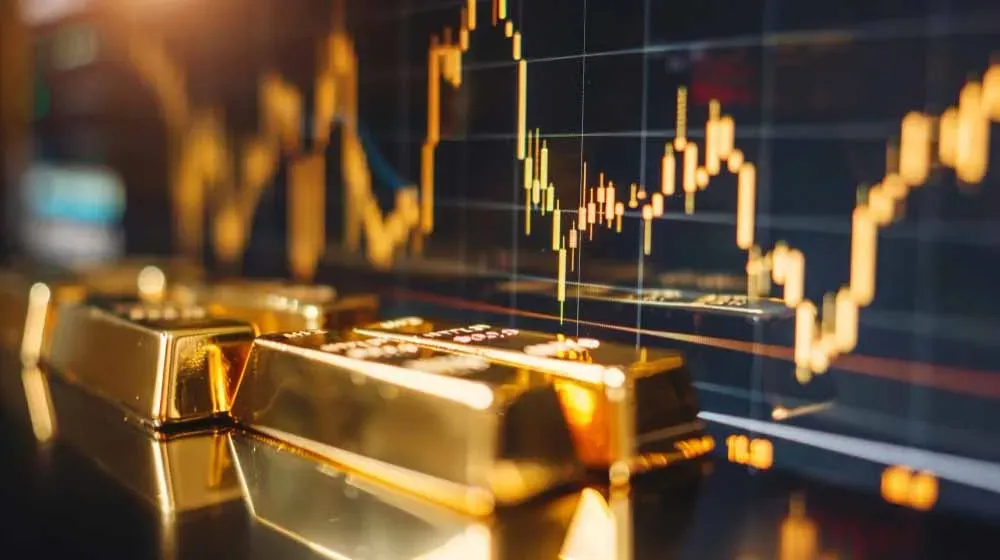
Gold prices moved slightly lower on Tuesday as the U.S. dollar strengthened and investors turned their attention back to the Federal Reserve’s interest rate outlook.
At 09:58 ET, spot gold was down 0.2% at around $4,337.42 an ounce. Gold futures also fell 0.2% to approximately $4,374.26 an ounce.
Stronger Dollar Pressures Gold Prices
The U.S. dollar index, which measures the greenback against a basket of major currencies, edged higher to around 100.50.
A stronger dollar tends to weigh on gold because it makes the metal more expensive for buyers using other currencies.
This dynamic added modest pressure to bullion during Tuesday’s session.
Lower Oil Prices Ease Inflation Concerns
Gold’s losses remained limited as oil prices pulled back sharply from recent highs.
The decline in energy prices helped reduce some concerns about inflation, although Brent crude later recovered and remained above $100 per barrel.
Lower energy costs could reduce the need for aggressive monetary tightening, which would generally support non-yielding assets such as gold.
Fed Rate Outlook Remains in Focus
Investors are now assessing how quickly the Federal Reserve may continue raising interest rates after last week’s hike.
The central bank has indicated that additional increases could be considered before the end of the year if energy-driven inflation remains elevated.
Higher interest rates typically create headwinds for gold because they increase the opportunity cost of holding an asset that does not generate interest.
Deutsche Bank analysts said improving inflation expectations had reduced expectations for extremely rapid rate increases, although markets still expect further tightening in the coming months.
Fed Officials Signal Further Tightening
Federal Reserve officials are scheduled to deliver new comments on monetary policy this week.
St. Louis Fed President Alberto Musalem said on Monday that the central bank may need to move quickly with additional rate increases.
He warned that delaying further action could allow inflation to remain well above the Fed’s 2% target.
These comments reinforced expectations that U.S. borrowing costs could stay elevated for longer.
US-Iran Diplomacy Adds to Market Uncertainty
Investors are also monitoring potential diplomatic developments between the United States and Iran during the United Nations General Assembly in New York.
Any progress could affect energy prices and broader market sentiment.
Meanwhile, fighting between Iran-backed Houthi forces and Saudi-backed groups in Yemen continues to add uncertainty.
The conflict has focused attention on the Bab el-Mandeb Strait, a strategically important shipping route for Saudi Arabian oil exports.
The combination of a firmer dollar, changing rate expectations and geopolitical uncertainty is likely to remain an important driver for gold prices in the near term.