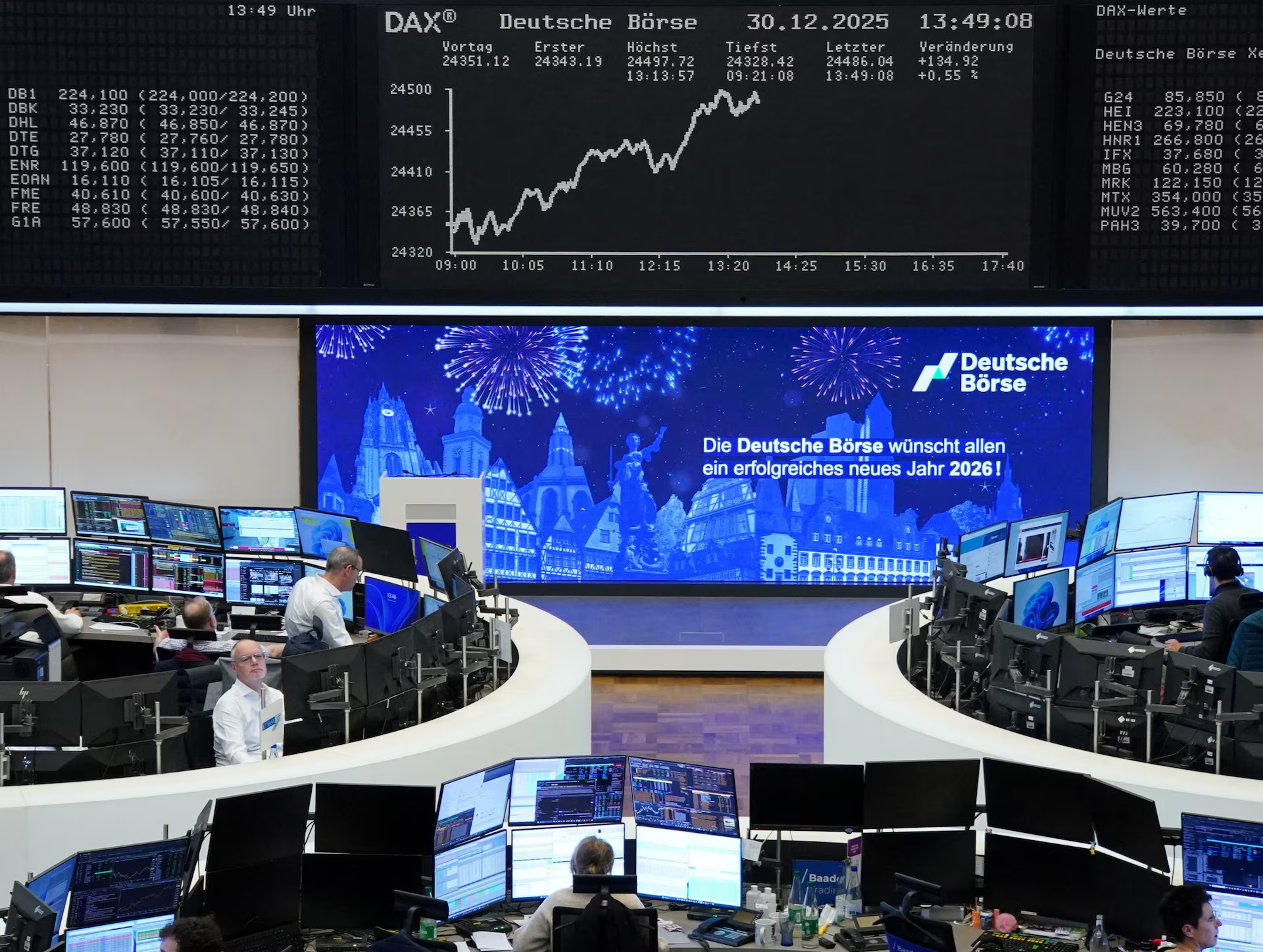
European stocks moved slightly higher on Tuesday, extending the strong rebound seen at the start of the week.
Lower crude oil prices and renewed diplomatic efforts in the Middle East supported market sentiment. However, rising concerns over French government debt continued to weigh on investor confidence in Paris.
The pan-European STOXX 600 gained around 0.15%, marking its second consecutive session of advances.
The index had climbed about 1% in the previous session, its strongest one-day gain since July 2.
Major European Markets Trade Cautiously
Germany’s DAX, the UK’s FTSE 100 and Spain’s IBEX 35 were broadly flat.
The modest gains across European equities were supported mainly by lower energy prices.
Falling oil costs can reduce pressure on corporate expenses and improve expectations for company profit margins.
Oil Prices Fall as U.S.-Iran Diplomacy Returns
Brent crude futures edged lower on Tuesday after dropping around 3% in the previous session.
Market sentiment improved after U.S. President Donald Trump said he was open to direct talks with Iranian President Masoud Pezeshkian.
Pezeshkian is expected to arrive in New York this week for the United Nations General Assembly.
The possibility of renewed diplomacy has raised hopes that tensions in the Middle East could ease.
Alternative Energy Routes Ease Supply Concerns
Reports that shipping companies are successfully using alternative pipeline routes and ship-to-ship transfers from the Persian Gulf also helped reduce fears over crude supply disruptions.
These developments have lowered some of the geopolitical risk premium that had built up in energy markets during the prolonged regional conflict.
As a result, oil prices have moved lower and provided additional support to European stocks.
French Sovereign Risk Climbs
Despite the broader improvement in market sentiment, investors remained cautious about France.
The cost of insuring French government debt against default rose sharply on Monday.
Credit default swaps, or CDS, reached their highest level since March 2020, according to Reuters.
The increase reflects growing concerns about France’s fiscal deficit, political uncertainty and long-term public finances.
French government bonds have consequently been among the weaker-performing sovereign debt markets across major developed economies this year.
France’s Fiscal Outlook Remains a Concern
Investors are increasingly focused on whether France can improve its fiscal position while dealing with political gridlock.
Higher sovereign borrowing costs could also place pressure on French financial markets and the broader European investment outlook.
The CAC 40 therefore remained under close scrutiny as concerns over government debt offset some of the positive momentum seen elsewhere in Europe.
Central Bank Policy Supports Market Stability
European equities also continue to receive support from a more stable monetary policy environment.
The Federal Reserve’s interest rate increase last week reinforced expectations that policymakers remain focused on controlling inflation.
Meanwhile, European Central Bank President Christine Lagarde has maintained a data-dependent approach to future policy decisions.
Investors are therefore balancing the risk of higher interest rates for longer against relatively resilient corporate earnings.
UN Summit Keeps Geopolitics in Focus
With global leaders gathering in New York for the United Nations summit, investors remain focused on geopolitical developments.
Markets are watching closely to see whether diplomatic efforts can produce a lasting reduction in Middle East tensions and energy-market risks.
At the same time, persistent fiscal concerns in major European economies could test equity valuations as markets move toward the final quarter of the year.