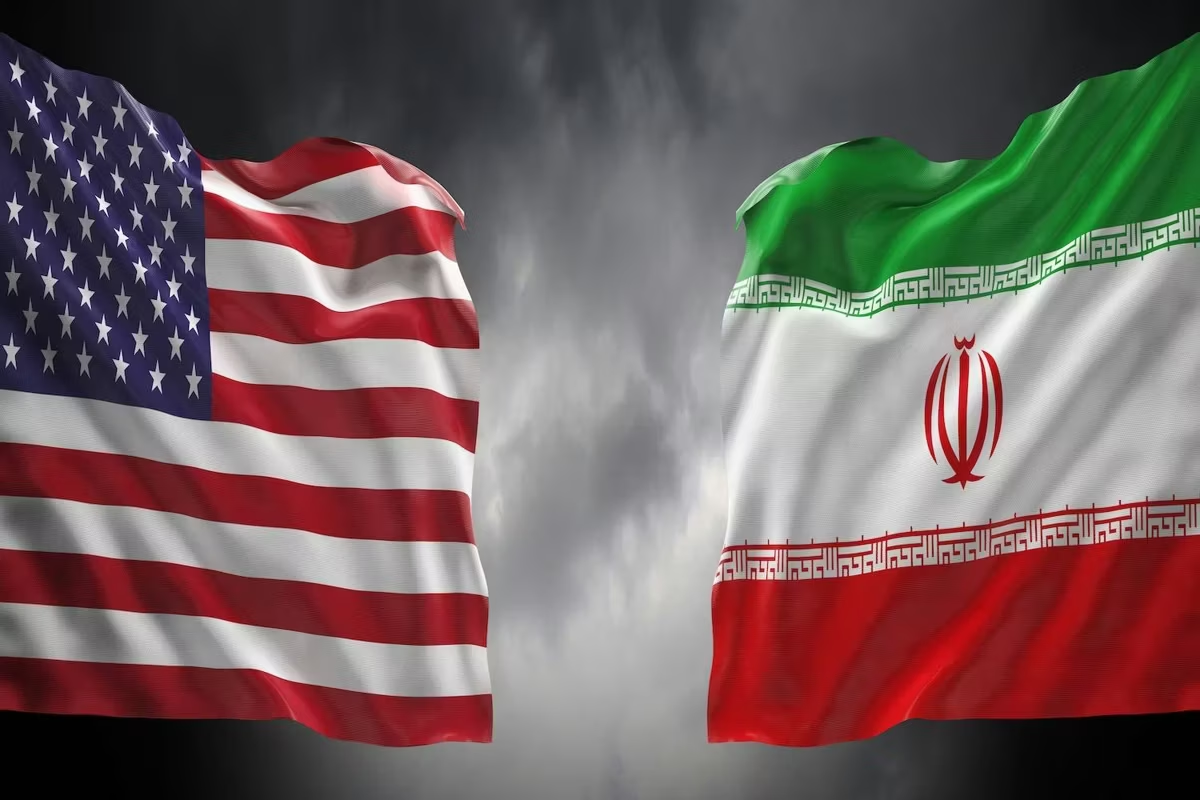
Iran and the United States exchanged fresh warnings on Sunday as tensions across the Middle East continued to rise.
U.S. President Donald Trump warned Iran of severe economic consequences if Tehran failed to reach an agreement with Washington. Meanwhile, Iran’s military threatened a strong response to any new attack on the country.
The confrontation has remained largely deadlocked for months. Neither side has shown clear signs of making major concessions, while the conflict has disrupted energy markets, damaged Iran’s economy and contributed to further instability across the region.
Trump Signals Both Pressure and Possible Diplomacy
Trump delivered his latest warning during a phone conversation with a Fox News reporter.
According to the reporter, Trump said Iranian leaders faced a choice between reaching an agreement, suffering continued economic deterioration or facing further military consequences.
However, Trump also left the door open to diplomacy.
Iranian President Masoud Pezeshkian is expected to attend the United Nations General Assembly in New York this week. Trump said he would be open to meeting the Iranian president during the gathering.
The comments come after months of military tensions that began with U.S. and Israeli strikes on Iran on February 28.
Iran Warns of Retaliation Against New Attacks
Iran’s military central command issued its own warning on Sunday.
It said any new attack on Iran could trigger sustained retaliation against U.S. military bases and other American interests in the region.
The Iranian military also warned that regional countries supporting a new U.S. attack could be treated as parties to the conflict. Tehran said it had received information suggesting another attack could be under preparation, although it did not provide details about the intelligence.
Houthi Attacks Bring Conflict Closer to Saudi Arabia
The broader regional confrontation intensified over the weekend after Yemen’s Iran-aligned Houthi movement launched missile and drone attacks toward Saudi Arabia.
The Houthis said they targeted sensitive sites in Riyadh as well as an energy facility in Yanbu on the Red Sea coast.
Reuters footage showed a large plume of black smoke rising near Riyadh’s main international airport after explosions were heard in the area.
Saudi-led coalition forces said air defenses intercepted a missile heading toward Riyadh and prevented several other attacks.
U.S. Issues Security Alert as Regional Risks Increase
The U.S. State Department responded to the escalating Houthi attacks with a security warning for Americans in the region.
The alert highlighted the possibility of further escalation and urged U.S. citizens to remain vigilant. Disruptions to air travel and temporary airspace closures were also identified as potential risks.
The latest attacks leave Saudi Arabia facing a difficult security situation.
Riyadh must balance military action against Houthi forces in Yemen with the risk that further fighting could trigger additional missile or drone strikes against Saudi cities and critical infrastructure.
Bab el-Mandeb and Strait of Hormuz Raise Energy Concerns
The conflict is also increasing concerns over two of the world’s most strategically important shipping routes.
Recent Houthi advances along Yemen’s Red Sea coast have strengthened the group’s position around the Bab el-Mandeb Strait, a major route connecting the Red Sea with the Gulf of Aden and Asian markets.
At the same time, shipping through the Strait of Hormuz remains heavily disrupted, creating additional risks for Gulf energy exports. Reuters reported that the combination of the two crises poses a growing threat to global oil supplies.
Iran’s own oil exports have also been affected by U.S. restrictions and the ongoing conflict, adding further pressure to the Iranian economy.
Ceasefire Prospects Remain Uncertain
Despite mounting economic pressure and regional instability, there has been little evidence of an immediate return to the interim ceasefire agreement reached in June.
That arrangement collapsed in July following disagreements over its implementation.
Iran reiterated on Sunday that it would not fully reopen the Strait of Hormuz unless the conditions of the June agreement, as Tehran interprets them, are fulfilled.
Iranian Parliament Speaker Mohammad Baqer Qalibaf also said Tehran would continue combining military pressure with negotiations as it seeks to protect its position and pursue its objectives through diplomacy.
With tensions involving Iran, the United States, Saudi Arabia and the Houthis continuing to rise, developments around regional shipping routes and renewed diplomatic contacts are likely to remain closely watched by global markets.