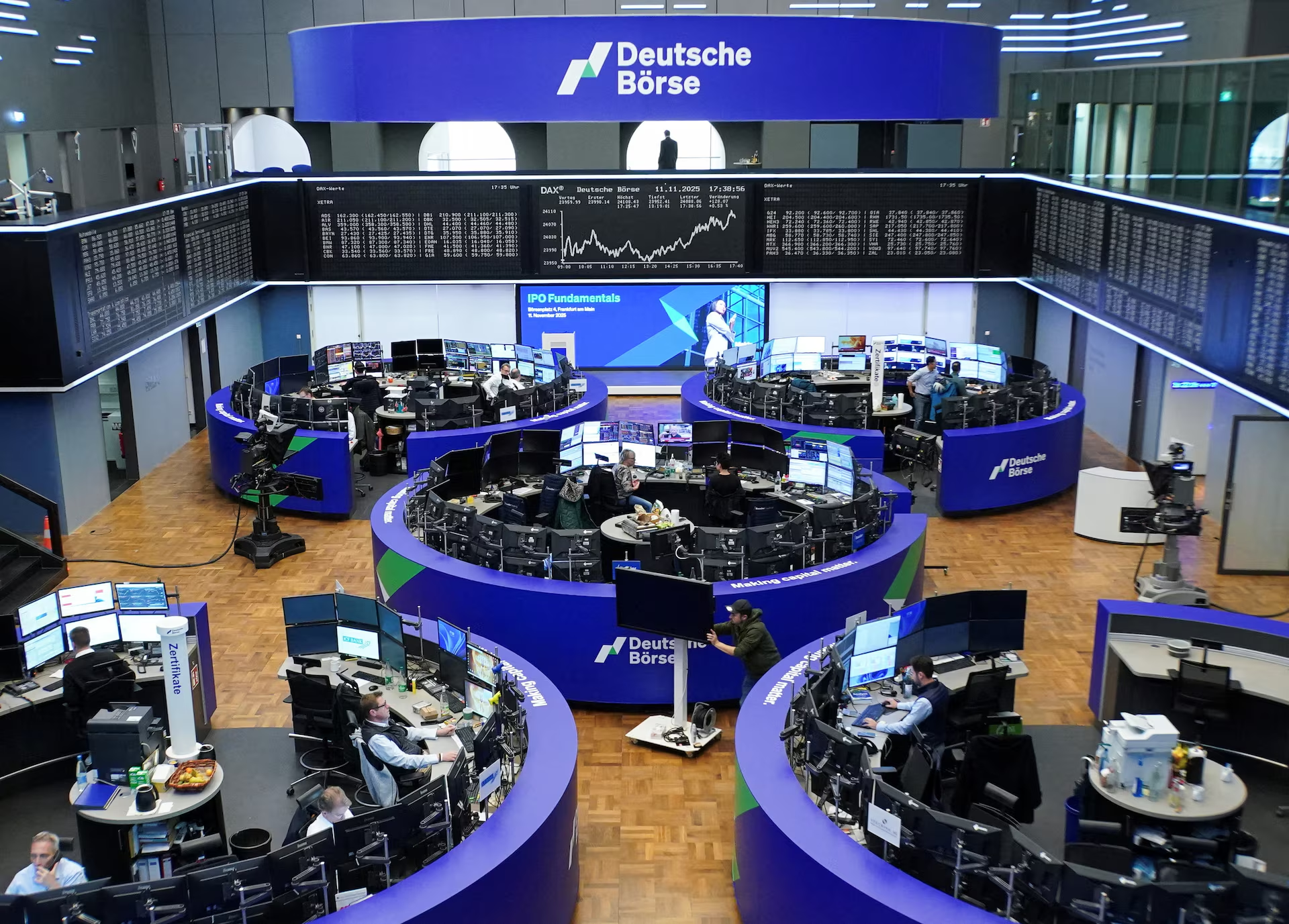
European stocks edged lower on Friday after their strongest daily rally in more than two months.
Despite the modest pullback, regional markets remained on course for their first weekly gain in three weeks as investors welcomed the Federal Reserve’s firm stance on inflation.
The Stoxx Europe 600 slipped 0.2%, easing from the more than one-week high reached during Thursday’s broad market rally.
European Stocks Pause After Strong Rally
Germany’s DAX fell around 0.4%, while France’s CAC 40 also declined 0.4%.
London’s FTSE 100 slipped roughly 0.3%.
Even with Friday’s weakness, the Stoxx 600 was still set to gain around 0.5% for the week.
That would mark a recovery from a difficult start to the week, when European equities fell to their lowest levels in around three months.
Oil Shock Sends Markets Lower Earlier in the Week
European markets faced heavy selling pressure on Tuesday.
The Stoxx 600 fell to its lowest level since June as investors reacted to rising geopolitical and energy risks.
A targeted attack on Saudi Arabia’s East-West pipeline raised concerns about possible disruptions to global oil supplies.
Fresh Houthi attacks in the Red Sea added further pressure.
As a result, Brent crude surged above $113 per barrel, while the US 10-year Treasury yield climbed above 5% for the first time since 2007.
Higher oil prices increased fears that inflation could accelerate again across major economies.
Fed Rate Hike Helps Restore Market Confidence
Sentiment improved sharply on Thursday after the Federal Reserve raised interest rates by 25 basis points.
The move lifted the federal funds rate to a range of 3.75% to 4.00% and marked the Fed’s first rate increase since mid-2023.
Rather than triggering another selloff, the decision helped reassure investors that the central bank remained committed to controlling inflation.
Fed Chair Kevin Warsh maintained a firm stance on price pressures, particularly those linked to higher energy costs.
His comments helped trigger the Stoxx 600’s strongest daily performance in more than two months.
Bank of England Keeps Rates Unchanged
The Bank of England also contributed to a calmer market backdrop.
The central bank kept its benchmark interest rate unchanged at 3.75% following a 6-3 vote.
However, policymakers warned that persistent increases in global energy prices could require another rate hike.
The Bank of England suggested that rates could potentially rise to 4.00% at its November meeting if disruption around the Persian Gulf continues.
Brent Crude Falls but Remains Strong for the Week
Oil prices eased on Friday, offering some relief to European markets.
Brent crude fell around 1.5% to near $104 per barrel.
However, the benchmark remained almost 15% higher for the week after briefly approaching multi-year highs.
The decline came as shipping companies and energy producers explored alternative export routes around Persian Gulf bottlenecks.
Additional crude shipments through Oman have helped reduce some concerns about supply disruption.
Lower Oil Prices Ease Inflation Concerns
Falling crude prices helped calm fears about another sharp acceleration in global inflation.
Energy costs have become a major concern for both investors and central banks.
A sustained decline in oil prices could reduce pressure on inflation expectations and bond yields.
That would also provide some support to equities, particularly sectors that are sensitive to interest rates.
Rate-Sensitive European Sectors Under Pressure
Despite the broader improvement in sentiment, some European sectors remained under pressure on Friday.
Luxury and personal goods stocks fell around 0.4%, making them among the weaker areas of the market.
Higher bond yields remain a challenge for companies with elevated valuations because rising risk-free rates reduce the present value of future earnings.
European Market Outlook Remains Focused on Fed and Oil
European stocks are finishing a volatile week on a firmer footing despite Friday’s modest decline.
Investors are now balancing tighter monetary policy against signs that oil market pressures may be easing.
The outlook for European equities will likely remain closely tied to Federal Reserve policy, oil prices, Treasury yields and geopolitical developments.
Further declines in energy prices could support market sentiment, while another escalation in Middle East tensions could quickly revive inflation concerns.