The Federal Reserve raised its benchmark interest rate on Wednesday, as widely expected, delivering its first monetary policy tightening since July 2023. At the same time, the central bank’s updated dot plot suggested that another rate hike could follow before the end of the year.
Fed Raises Rates as Economic Growth Remains Resilient
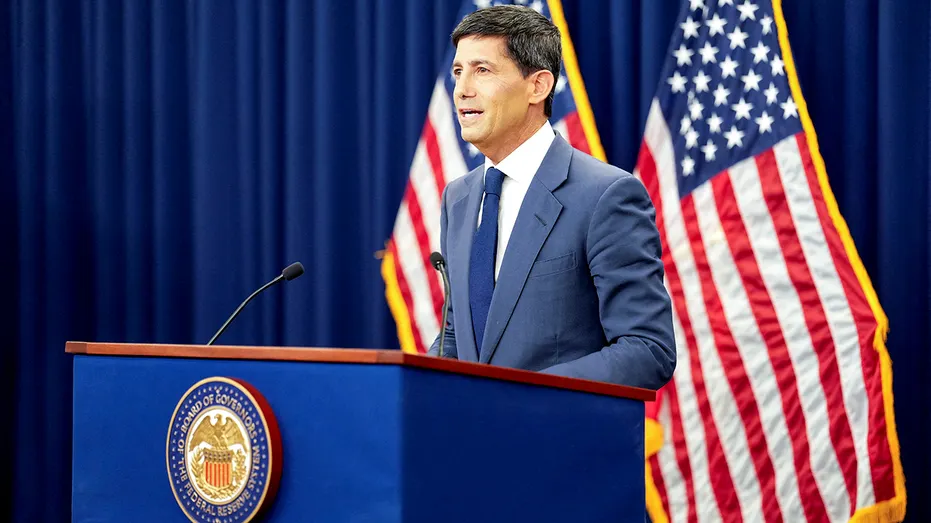
Federal Reserve Chair Kevin Warsh said the decision reflected several factors, including a strengthening U.S. economy, stubborn inflation during the summer months, and growing geopolitical risks.
Warsh added that members of the Federal Open Market Committee (FOMC) agreed that broader financial conditions were not restrictive enough to bring inflation sustainably back toward the Fed’s target.
However, he again avoided offering clear forward guidance on the future path of interest rates. Warsh also did not include his own individual rate projections in the Fed’s updated dot plot.
The FOMC voted unanimously to raise the federal funds rate to a range of 3.75%-4.00%, up from 3.50%-3.75%.
Fed Dot Plot Signals Another Possible Rate Hike
The Federal Reserve’s latest Summary of Economic Projections (SEP) showed a median federal funds rate of 4.1% at the end of 2026. That projection suggests policymakers currently expect at least one additional rate increase.
According to the updated projections, at least 12 FOMC participants expect one more rate hike this year. Four members projected two additional increases, while two members expect rates to remain unchanged from current levels.
Expectations for another Fed rate hike had been increasing ahead of Wednesday’s announcement.
Concerns over inflation intensified as oil prices surged amid an expanding conflict in the Middle East. At the same time, a sharp sell-off in the U.S. bond market pushed yields higher.
Recent economic data also continued to show resilient U.S. growth, a strong labor market, and persistent inflation pressures.
Warsh Says Fed Made Its Own Decision
Markets had priced in roughly a 90% probability of a rate hike ahead of the announcement.
During his press conference, Warsh was asked whether financial markets had effectively pushed the Fed toward raising rates.
“Today was our decision,” Warsh said.
He added that the FOMC based its decision on its own assessment of economic conditions, rather than expectations already reflected in financial markets.
“Sometimes the market tries to prejudge our outcomes,” he said.
U.S. Inflation Remains Well Above Fed Target
Inflation remains one of the biggest challenges facing the Federal Reserve.
The personal consumption expenditures (PCE) price index, the Fed’s preferred inflation measure, increased 3.7% year over year in August. That remains well above the central bank’s long-term target of 2%.
The PCE inflation rate has now remained above the 2% level for 65 consecutive months.
Meanwhile, the U.S. Consumer Price Index (CPI) increased 3.4% year over year in August. More than one-third of that increase was linked to higher gasoline prices.
Energy prices could create additional inflation pressure in the coming months.
As the Middle East conflict expands and important Gulf shipping routes face increasing risks, oil prices have climbed above $100 per barrel. Higher crude prices could eventually feed through to transportation, manufacturing, and consumer costs.
Fed Says Inflation Is Still Too High
The FOMC emphasized its commitment to restoring price stability following Wednesday’s rate hike.
“Inflation remains elevated,” the committee said in its policy statement, adding that the latest action should support a faster return toward its 2% inflation goal.
Warsh delivered an even clearer message during his press conference.
“The plain fact is that inflation is too high and has been for too long,” he told reporters.
His comments reinforced expectations that the Federal Reserve remains focused on inflation even as policymakers monitor economic growth and labor market conditions.
Hawkish Fed Officials Supported Higher Rate Expectations
Comments from several FOMC officials had already helped increase expectations for tighter monetary policy before Wednesday’s meeting.
Cleveland Fed President Beth Hammack, Minneapolis Fed President Neel Kashkari, and Dallas Fed President Lorie Logan had previously dissented from the central bank’s decision to keep interest rates unchanged in July.
Warsh also adopted a hawkish tone during his Jackson Hole speech in August. At the time, he argued that underlying U.S. inflation trends had not “meaningfully improved.”
He repeated that assessment on Wednesday.
“Trends matter, data points are noisy,” Warsh said.
He added that the Fed was not placing excessive importance on any single economic report released since its July meeting, including the latest U.S. retail sales figures and CPI data.
Trump Pressure Raises Questions Over Fed Independence
Political pressure surrounding U.S. interest rates has also increased.
President Donald Trump earlier this month called on the Federal Reserve to lower interest rates. His comments represented one of his strongest attempts to pressure the central bank since Warsh became Fed chair.
When asked about his discussions with the president, Warsh stressed the importance of Federal Reserve independence.
“I don’t have anything for you on discussions with the president and I’m not a Wall Street newsletter,” he said.
“Part of the independence of the Federal Reserve is we stay in our lane.”
Wall Street Reverses Course During Warsh Press Conference
U.S. stocks initially maintained their gains after the Federal Reserve announced the rate hike and released its updated projections.
Treasury yields also remained lower at first as a bond rally continued.
However, market sentiment changed during Warsh’s press conference.
Wall Street gradually surrendered its earlier gains, while Treasury yields reversed course and moved higher.
The benchmark S&P 500 was last down around 0.8%, while the U.S. 10-year Treasury yield increased by roughly 1.6 basis points to 5.012%.
The market reaction suggests investors are now assessing the possibility that U.S. interest rates could remain higher for longer, particularly if inflation remains elevated and the Federal Reserve proceeds with another rate hike later this year.