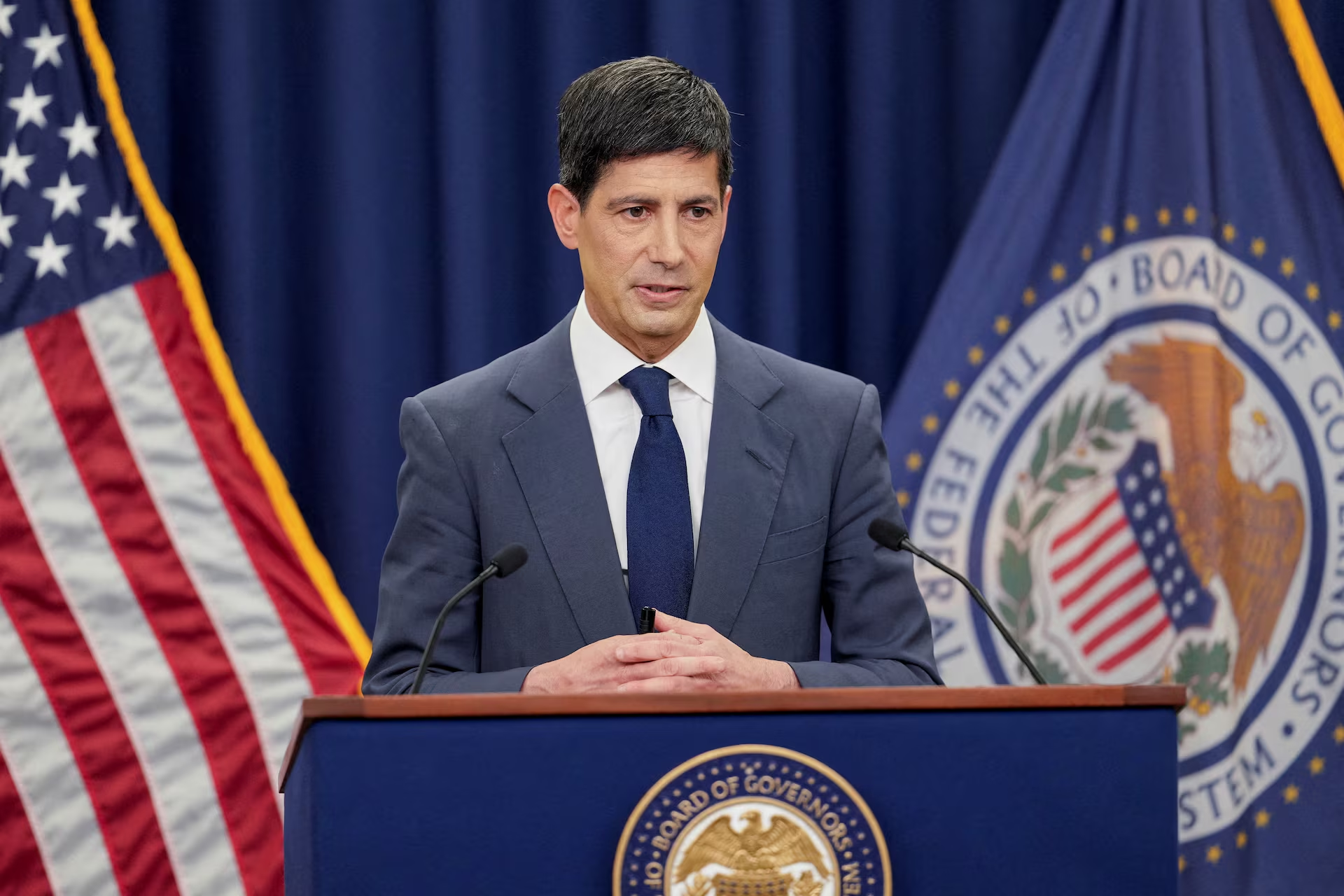
The Federal Reserve could face growing pressure to raise interest rates in September after Chair Kevin Warsh signaled a more hawkish stance on inflation, according to Citi Research.
However, softer economic data could still convince the central bank to keep rates unchanged.
What Is the Warsh Shadow Rate?
Citi has created a new indicator called the “Warsh shadow rate.”
The measure is based on the economic and financial indicators that Warsh emphasized during his Jackson Hole speech.
According to Citi, the gauge is currently close to historical levels that have often been associated with previous Federal Reserve rate-hiking cycles.
The indicator also tends to move ahead of two-year U.S. Treasury yields.
That suggests financial markets may be correctly pricing a greater chance of renewed monetary tightening.
Why the Warsh Shadow Rate Matters
Warsh’s comments have brought the Federal Reserve’s next policy move back into focus.
A stronger-than-expected August inflation report could make the September meeting a genuine rate-hike decision.
If the Fed raises rates, Treasury yields could move higher while gold may come under pressure.
U.S. stocks could prove more resilient, although rising interest rates combined with higher market volatility would create additional risks.
Warsh Focuses on Different Inflation Signals
Warsh appears to be placing greater importance on several specific economic indicators.
These include underlying inflation, money supply, labor-market claims, financial conditions and stock-market indicators.
At the same time, he has placed less emphasis on inflation expectations, wage growth and headline nonfarm payroll figures.
Citi said most of the indicators Warsh appears to favor are currently sending a relatively hawkish signal.
By contrast, several of the indicators receiving less attention have recently weakened.
August CPI Could Decide the September Fed Meeting
The next major test will be the August consumer price inflation report.
Citi economists still do not expect the Federal Reserve to raise rates in September.
However, the outcome could depend heavily on the core CPI reading.
According to Citi, a 0.3% or higher monthly increase in core CPI would likely increase the probability of a September rate hike.
A softer 0.1% increase could encourage the Fed to wait.
Meanwhile, a 0.2% reading would leave the outlook more uncertain.
Treasury Yields Face Additional Pressure
A more hawkish Federal Reserve could create challenges for the U.S. Treasury market.
Higher expectations for interest-rate increases have already placed upward pressure on Treasury yields.
The 10-year Treasury yield has been particularly sensitive, while elevated oil prices have added further pressure to longer-term bond yields.
Citi warned that keeping the 30-year Treasury yield below 5.3% could become more difficult if the Fed begins raising rates in September.
Higher Rates Could Challenge Scott Bessent
The situation also creates an additional challenge for U.S. Treasury Secretary Scott Bessent.
Higher long-term yields increase government borrowing costs and can tighten financial conditions across the economy.
If the Federal Reserve adopts a more aggressive tightening cycle, managing longer-term Treasury yields could become increasingly difficult.
Stocks and Bonds Could React Differently to a Fed Hike
Citi’s historical analysis suggests that U.S. stocks and bonds may react differently after the first rate increase in a new tightening cycle.
Equities have typically experienced weakness for around 50 trading days following an initial Fed hike before recovering.
Bond returns, however, have often remained under pressure for a much longer period.
That means a renewed Federal Reserve hiking cycle could create a more persistent challenge for fixed-income markets than for stocks.
Overall, the Warsh shadow rate offers investors another way to assess how the Federal Reserve may interpret economic conditions.
Its current position suggests that rate-hike risks remain elevated, but upcoming inflation data could still determine whether the Fed moves in September or stays on hold.