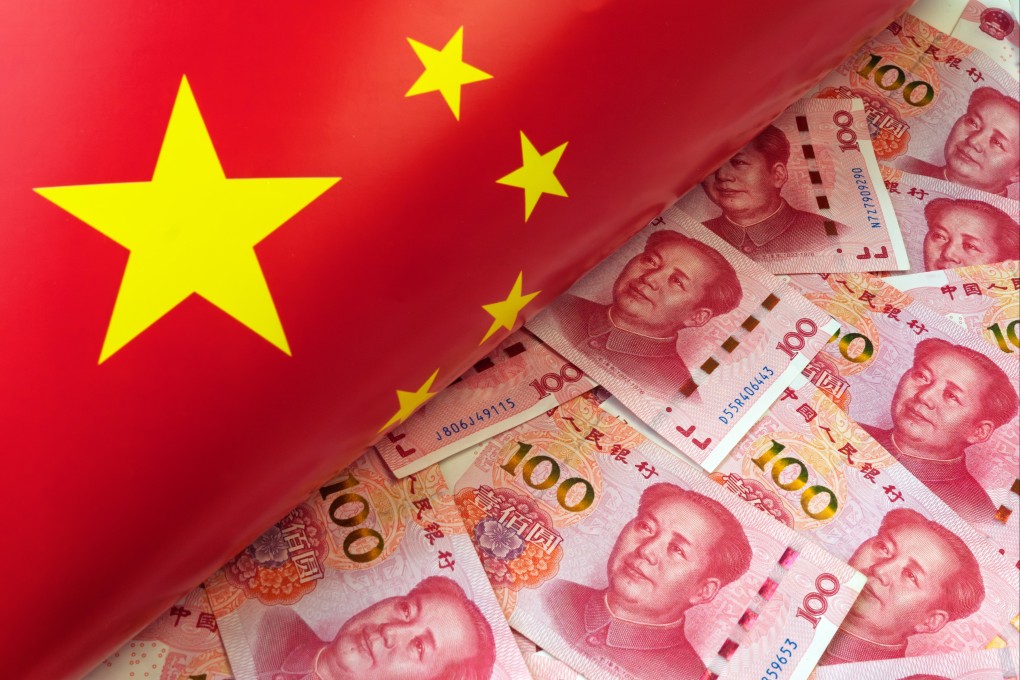
China plans to issue 300 billion yuan, or about $45 billion, in special treasury bonds to strengthen the capital positions of eight major state-owned financial institutions.
The Ministry of Finance said the funds will be used to replenish core Tier 1 capital, helping banks and insurers improve their balance sheets and support lending across the economy.
China Targets Eight Major Financial Institutions
The capital injection will support several of China’s largest state-owned financial groups.
These include Industrial and Commercial Bank of China, Agricultural Bank of China, China Export-Import Bank, China Export & Credit Insurance Corp., People’s Insurance Company of China, China Life Insurance, China Taiping Insurance Group and China Reinsurance Group.
The Ministry of Finance described the institutions as financially stable, with sound asset quality and regulatory indicators remaining within safe levels.
ICBC and Agricultural Bank Plan Major Capital Raises
The announcement follows separate capital-raising plans revealed by major Chinese lenders.
Agricultural Bank of China plans to raise as much as 160 billion yuan, while Industrial and Commercial Bank of China is seeking around 100 billion yuan through A-share placements to selected investors.
Both banks said the proceeds will be used entirely to strengthen their core Tier 1 capital.
Chinese Banks Face Record-Low Margins
The recapitalization comes as Chinese banks face mounting pressure from historically low net interest margins.
Lower margins reduce the amount of profit banks can retain and use to rebuild capital.
According to Bloomberg, the sector’s average capital adequacy ratio stood at 15.26% at the end of June, while the average core Tier 1 capital ratio was approximately 10.72%.
These pressures have increased the importance of direct government support.
Beijing Expands Earlier Bank Recapitalization Efforts
The latest bond plan forms part of a broader policy initiative that began in 2024.
China has been working to strengthen the capital base of its largest financial institutions as economic growth slows and credit risks remain elevated.
Last year, Bank of China and Postal Savings Bank of China were among four lenders that received a combined $69 billion capital injection financed through sovereign bonds.
The new 300 billion yuan plan extends that strategy to more banks and major insurers.
Insurers Also Face Pressure From Low Interest Rates
China’s insurance sector has faced its own profitability challenges.
A prolonged period of low interest rates has reduced the gap between investment returns and the cost of long-term liabilities.
That has made it more difficult for insurers to generate strong returns while maintaining adequate capital buffers.
The new government injections are intended to provide additional financial stability.
Government to Take Large Stakes in Capital Placements
The Chinese government plans to subscribe to significant portions of the new capital raisings.
It will invest around 130 billion yuan in Agricultural Bank’s placement and approximately 70 billion yuan in ICBC’s offering.
China National Tobacco is also expected to be a major investor in both transactions.
The Ministry of Finance will fully subscribe to People’s Insurance’s 15 billion yuan placement.
It also plans to provide 30 billion yuan to China Eximbank, 35 billion yuan to China Life, 7 billion yuan to China Taiping, 3 billion yuan to China Reinsurance and 10 billion yuan to China Export & Credit Insurance Corp.
China Wants Banks to Support Lending and Growth
Stronger balance sheets should give Chinese banks and insurers more capacity to support the broader economy.
The institutions are expected to provide additional financing to households, businesses, infrastructure projects, strategic industries and private companies.
However, weak credit demand and shrinking lending margins continue to limit traditional banking profitability.
Property and Local Government Debt Remain Key Risks
Beijing is also trying to reduce financial risks linked to the property downturn, local government debt and weak household demand.
At the same time, policymakers want the financial sector to continue supporting economic growth.
The new recapitalization plan is therefore aimed at improving stability while preserving the ability of banks and insurers to provide credit.
Market Reaction Remains Limited
The immediate market response was relatively muted.
ICBC shares fell about 0.78% in early Hong Kong trading, while Agricultural Bank declined roughly 0.69%.
People’s Insurance shares were little changed.
The limited reaction suggests investors are still assessing how much the capital injections will improve profitability and lending conditions across China’s financial sector.