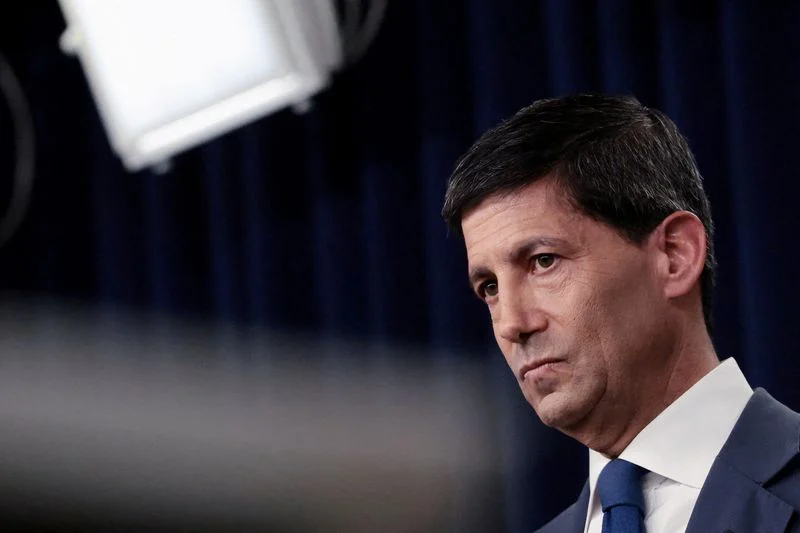
U.S. inflation remains stubbornly high, putting Federal Reserve Chair Kevin Warsh under growing pressure to explain how the central bank plans to bring price growth back under control.
In July, U.S. auto prices increased at an annualized pace of roughly 5%. Housing and utility costs rose by more than 3.5%, while recreational goods recorded double-digit price growth.
Overall, the cost of living climbed by around 3.7%, remaining well above the Federal Reserve’s long-term 2% inflation target.
Fed Has Missed Its Inflation Target for Years
The Federal Reserve has now remained above its inflation objective for 65 consecutive months.
The current inflation cycle began when prices surged during the COVID-19 pandemic in 2021, eventually reaching their highest levels in around four decades.
Inflation moved closer to the Fed’s target during 2024. However, price pressures have since accelerated again, leaving policymakers with limited progress over the past year and a half.
That backdrop makes Warsh’s upcoming speech particularly important for financial markets.
Jackson Hole Speech Becomes a Major Test for Warsh
Warsh is scheduled to speak Friday at the Kansas City Federal Reserve’s annual economic symposium in Jackson Hole, Wyoming.
Investors and economists are looking for an answer to a central question: Does the Federal Reserve still view inflation as a serious threat, and if so, what is it prepared to do?
The speech represents one of Warsh’s first major opportunities to clearly outline his monetary policy approach since becoming Fed chair.
So far, Warsh has repeatedly emphasized the Fed’s commitment to price stability but has provided relatively little detail about how policymakers intend to achieve the 2% inflation target.
Instead, much of his public commentary has focused on longer-term structural issues being examined by different Fed working groups.
Fed Communication Faces Growing Scrutiny
Some economists believe Warsh now needs to communicate more clearly about the central bank’s short-term policy outlook.
Gregory Daco, chief economist at EY-Parthenon, has argued that vague communication could raise questions about the Fed’s independence.
One concern is whether Warsh may be reluctant to discuss potential interest rate increases because of political pressure from President Donald Trump or because higher rates could conflict with efforts by Treasury Secretary Scott Bessent to reduce government borrowing costs.
For a new Federal Reserve chair, maintaining a clear separation between monetary policy, the White House and the Treasury Department is particularly important for credibility.
Warsh Must Balance Guidance With Flexibility
Major speeches from Federal Reserve leaders often require a careful balance.
If Warsh provides too much guidance, markets could interpret his comments as a commitment that may later become difficult to reverse.
However, offering too little detail could also damage his credibility and allow other Fed officials to play a larger role in shaping market expectations.
The Jackson Hole address will be Warsh’s first major speech outside the press conferences that followed the Fed’s June and July policy meetings.
During those appearances, he avoided providing detailed forecasts for interest rates or the economy.
While uncertainty can justify a more cautious communication strategy, some investors believe Warsh may have taken his reluctance to provide forward guidance too far.
Sticky Inflation Raises Rate-Hike Expectations
Persistent inflation is making the Fed’s policy decision increasingly difficult.
July’s Personal Consumption Expenditures Price Index, the central bank’s preferred inflation measure, reinforced concerns that price pressures may decline too slowly.
Even if inflation continues cooling, policymakers may decide that the pace is not fast enough to justify keeping interest rates unchanged.
Following the latest inflation report, investors increased expectations for another Fed rate hike.
Markets began assigning greater probability to an increase as early as the September 15-16 Federal Reserve meeting, while expectations for at least one increase by the end of 2026 strengthened further.
Fed Officials Are Becoming More Hawkish
At the Fed’s July 28-29 policy meeting, policymakers kept the benchmark interest rate unchanged within the 3.50%-3.75% range.
However, three officials dissented and favored an interest rate increase.
Minutes from the meeting also suggested that support for tighter monetary policy extended beyond those three policymakers.
Several Fed officials have since indicated that their patience with persistent inflation may be running out.
The concern is not simply about higher prices. Federal Reserve officials also want to protect the institution’s credibility.
If policymakers repeatedly promise to return inflation to 2% without taking additional action, households and investors could begin questioning whether the Fed is truly committed to its target.
Treasury Policy Adds Another Complication
Warsh also faces growing uncertainty surrounding the U.S. Treasury market.
Treasury Secretary Scott Bessent recently announced an expansion of an existing government debt buyback program after long-term U.S. bond yields moved higher.
The decision adds another layer of complexity for Warsh.
He has previously argued that bond markets should be allowed to determine borrowing costs with limited government intervention.
However, the Treasury’s decision to become more active in the bond market could make that approach harder to maintain.
Rising U.S. Debt Keeps Bond Yields in Focus
Investors have demanded higher yields to hold long-term U.S. government debt as federal deficits remain elevated.
The U.S. budget deficit is running at close to 6% of gross domestic product, an unusually high level outside periods of major economic weakness or recession.
Steven Blitz, chief U.S. economist at TS Lombard, argued that rising yields reflect deeper concerns about federal debt, weak real economic growth and the country’s continued need for foreign capital.
Government spending may also be contributing to persistent inflation, creating a challenge that monetary policy alone cannot easily solve.
Fed Has Limited Time Before September Meeting
Only a small amount of major economic data remains before the Federal Reserve’s September meeting.
Policymakers will receive one additional employment report and another inflation reading before making their next rate decision.
That leaves the Fed with limited time to determine whether inflation is moving convincingly toward its 2% target.
Boston Fed President Susan Collins has indicated that further tightening may become necessary if clear and sustained progress on inflation fails to materialize.
Her comments reflect the increasingly hawkish tone emerging from parts of the Federal Reserve.
Warsh Faces a Crucial Credibility Test
The Jackson Hole speech could therefore become a defining early moment for Kevin Warsh’s leadership of the Federal Reserve.
Markets want greater clarity on whether persistent inflation still represents the central bank’s main concern and whether another rate hike is becoming necessary.
If Warsh signals a tougher stance, Treasury yields and the U.S. dollar could receive additional support. A more cautious message, however, could revive expectations that the Fed is willing to tolerate inflation above target for longer.
Either way, the debate over U.S. inflation, Federal Reserve policy and interest rates is entering an important stage ahead of the September meeting.