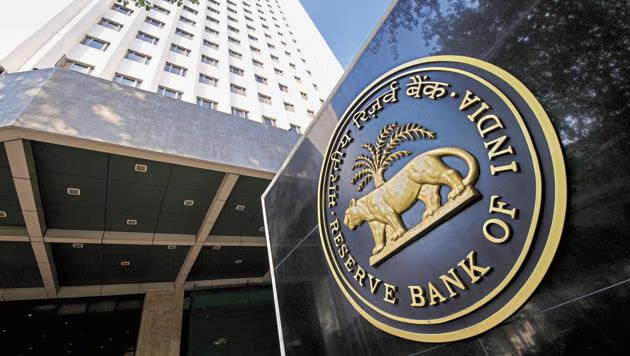
India’s central bank has left the door open to possible interest rate hikes as policymakers assess whether supply-driven inflation is beginning to spread across the wider economy.
Minutes from the Reserve Bank of India’s latest monetary policy meeting, released on Wednesday, showed that officials remain cautious about rising inflation risks.
RBI Keeps Repo Rate Unchanged at 5.25%
The Reserve Bank of India’s Monetary Policy Committee voted unanimously on August 5 to keep the policy repo rate unchanged at 5.25%.
Policymakers also maintained their monetary policy stance at “neutral,” giving the central bank flexibility to respond if inflationary pressures intensify.
For now, the RBI appears to be taking a wait-and-see approach while monitoring both domestic and global economic developments.
Oil Prices Increase Inflation Concerns
One of the main risks facing India is the sharp rise in oil prices linked to the Iran war.
Higher energy costs could push up transportation, production and other input expenses across the economy. This, in turn, may create broader inflationary pressure.
The rise in oil prices has also weighed on the Indian rupee, adding another challenge for policymakers.
Financial markets are increasingly considering the possibility that the RBI may need to raise interest rates if inflation continues to strengthen.
India Inflation Rises to 4.45%
India’s headline consumer inflation reached 4.45% in July.
The figure remains within the Reserve Bank of India’s official tolerance range of 2% to 6%. However, it is slightly above the central bank’s medium-term inflation target of 4%.
The increase has therefore attracted greater attention from policymakers as they assess whether recent price pressures could become more persistent.
RBI Governor Warns of Broader Inflation Risks
RBI Governor Sanjay Malhotra said that there are currently only limited signs of widespread inflation.
However, he noted that headline inflation appears to be moving away from the relatively low levels seen previously.
Malhotra warned that policymakers need to monitor the possibility that higher food, fuel and input prices could spread through the broader economy.
If those pressures become more widespread or begin to affect inflation expectations, the central bank may need to tighten monetary policy.
RBI Signals Limited Room for Further Rate Cuts
Deputy Governor Poonam Gupta also highlighted the uncertainty surrounding the economic outlook.
She indicated that there is currently little room for additional monetary policy easing because of risks related to global developments and weather conditions.
Instead, Gupta suggested that policymakers should continue monitoring incoming economic data before making further changes to interest rates.
India Rate Hike Outlook Remains in Focus
For now, the RBI is keeping its policy stance neutral while closely watching inflation, oil prices and the broader economic environment.
Although inflation remains within the central bank’s target range, stronger energy costs and the risk of wider price increases could eventually push policymakers toward tighter monetary policy.
Investors will therefore be watching upcoming inflation data, oil prices and movements in the Indian rupee for further clues about the RBI’s next interest rate decision.