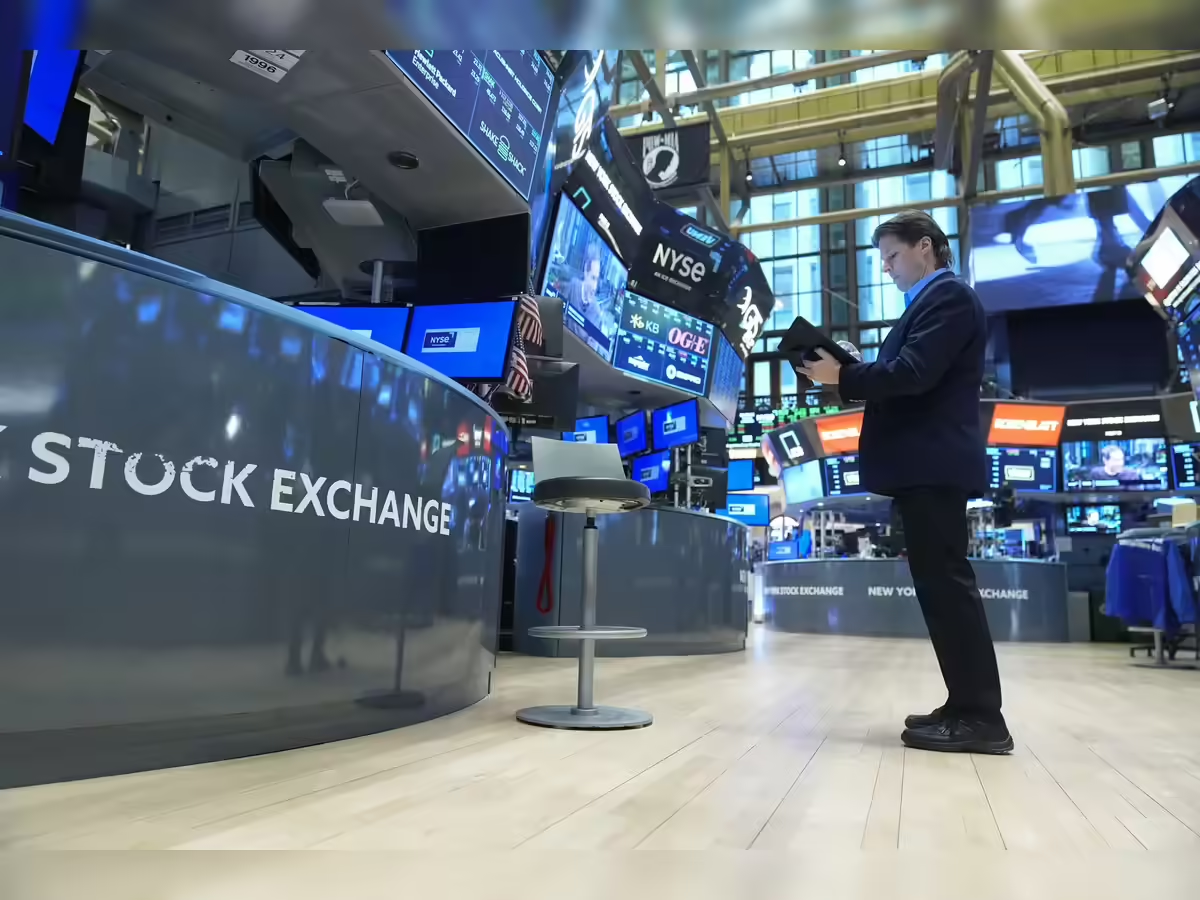
Wall Street opened modestly higher on Tuesday as investors tracked volatile oil prices and awaited key U.S. inflation data later this week.
Markets were also reacting to more positive comments around talks between Iran and Oman over the Strait of Hormuz, a crucial route for global oil shipments.
Major U.S. Indexes Edge Higher
At 09:30 ET, the S&P 500 rose 0.1% to 7,763.21 points.
The Nasdaq Composite also gained 0.1% to 26,633.42 points, while the Dow Jones Industrial Average climbed 0.1% to 54,037.65 points.
The small gains followed a weaker session on Monday. The S&P 500 slipped 0.1%, the Nasdaq fell 0.3%, and the Dow lost 0.1%.
Oil Prices Remain Volatile
Oil prices moved unevenly on Tuesday after jumping sharply the previous day.
Qatar’s Foreign Ministry spokesperson said talks between Iran and Oman over the Strait of Hormuz had reached an advanced stage. Qatar has been acting as a mediator in efforts to reduce tensions in the Middle East.
The comments helped calm some market concerns, but traders remained cautious because negotiations were described as being at a critical point.
Hormuz Uncertainty Keeps Inflation Risks Alive
Oil prices had surged on Monday after President Donald Trump said he would seek compensation from Iran as part of any peace agreement.
Iran also demanded reparations and other concessions.
The dispute raised fears that any prolonged disruption to energy supplies could push oil prices higher. That would create fresh inflation pressure and potentially influence the Federal Reserve’s next policy move.
Nvidia Confirms Major AI Infrastructure Deal
Investors were also watching Nvidia after the company confirmed a major AI infrastructure agreement with several large financial firms.
The group includes Apollo, BlackRock, Goldman Sachs, and KKR. The deal aims to help Nvidia mobilize more than $500 billion in third-party capital to support AI infrastructure development.
Nvidia shares fell more than 2% after the Financial Times first reported the announcement on Monday.
AI Valuation Concerns Continue
Analysts at Vital Knowledge said the deal showed Nvidia is continuing to use its balance sheet to support AI infrastructure demand.
This comes as investors remain cautious about whether the AI boom can continue at its current pace.
Strong corporate earnings have helped support the broader market. However, concerns about AI spending, valuations, and long-term returns have weighed on sentiment in recent weeks.
CPI Data Becomes the Main Market Focus
Markets are now focused on Wednesday’s U.S. Consumer Price Index report for July.
The inflation data could play a major role in shaping expectations for Federal Reserve policy.
The report has become even more important after the U.S. economy unexpectedly lost 23,000 jobs in July. Payroll numbers for the previous two months were also revised sharply lower, suggesting the labor market may be weaker than previously believed.
Fed Outlook Remains Uncertain
After the weak jobs report, traders reduced bets that the Fed could raise rates soon.
However, higher energy prices could complicate the picture.
If oil prices continue to rise, inflation could remain sticky. That may force the Fed to keep rates higher for longer, even as the labor market shows signs of cooling.
Risk Appetite Holds Up
Despite these concerns, risk appetite has remained relatively strong.
Analysts at Deutsche Bank said market sentiment has held up better than in similar early-August periods in recent years, when recession fears and risk-off moves were more common.
For now, investors are waiting to see whether inflation data confirms a cooling trend or brings new pressure back to stocks, bonds, and interest rate expectations.