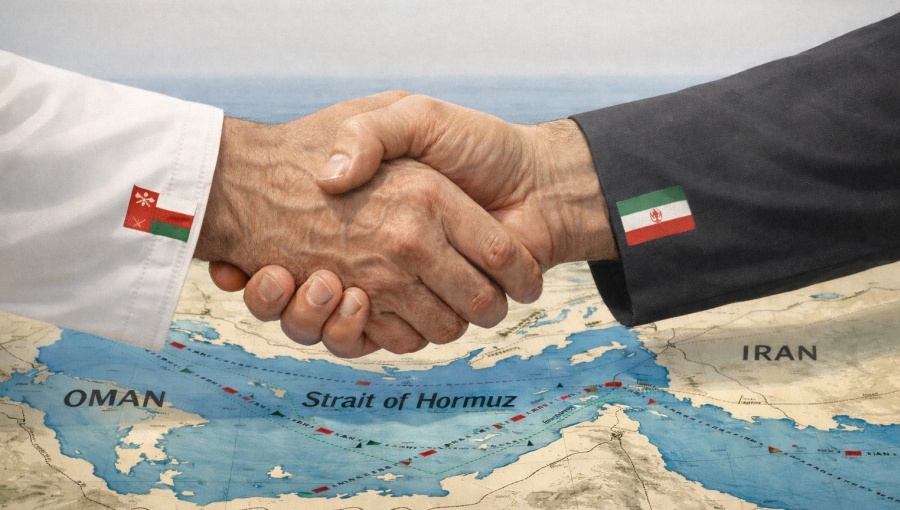
Iran and Oman are reportedly approaching the final stage of an agreement concerning shipping through the Strait of Hormuz.
At the same time, U.S. President Donald Trump said negotiations involving Tehran appeared to be moving forward.
Speaking on Wednesday evening, Trump claimed that Iran had asked the United States to cancel a major military operation planned for the previous weekend.
He said Iran wanted negotiations and suggested that the discussions were progressing well. However, he also acknowledged that an agreement was not guaranteed.
Trump Warns Iran Over Possible New Attacks
Earlier this week, Trump said an agreement to reopen the Strait of Hormuz could be reached soon.
However, he also warned that Iran could face further military action if it refused to accept a deal.
Iran has reportedly responded by warning Gulf countries that any renewed U.S. attack on Iranian territory could lead to strikes against critical energy infrastructure across the region.
These warnings have increased concerns that another confrontation could threaten oil facilities, shipping routes and wider regional stability.
Tehran Disputes Trump’s Account
Iran has rejected Trump’s version of events.
Tehran said it was negotiating only through mediators in Oman rather than holding direct talks with Washington.
Iranian officials also warned that progress could be delayed while a U.S. naval blockade remains in place.
According to Tehran, Iran and Oman have already agreed on the geographic coordinates of a proposed shipping corridor through the Strait of Hormuz.
A joint announcement on the arrangement is reportedly in its final preparation stage.
Investors Remain Cautious About De-Escalation
Financial markets have responded with cautious optimism to the possibility of a prolonged reduction in tensions.
However, investors remain uncertain because the months-long conflict has repeatedly moved between military threats, diplomatic discussions and temporary pullbacks.
Analysts have highlighted this pattern as a reason to avoid assuming that a lasting settlement has already been secured.
Any collapse in negotiations could quickly restore concerns about regional conflict and disruptions to global energy supplies.
Oil Prices React to Hormuz Developments
Oil prices moved slightly higher on Thursday, trading near $80 per barrel.
Nevertheless, crude prices have fallen by more than 9% during the past week as hopes increased that the Strait of Hormuz could reopen fully.
The waterway is one of the world’s most important routes for oil and liquefied natural gas shipments.
Last month, Iran’s effective restrictions on tanker traffic through the strait briefly pushed crude prices towards $100 per barrel.
A confirmed agreement could reduce fears of supply disruption and place further downward pressure on oil prices.
In contrast, renewed military escalation could quickly drive energy prices higher.
Trump Rejects Reports of U.S. Weapons Shortages
In a separate development, Trump denied reports that the United States was running low on weapons and ammunition.
He said the country continued to hold large quantities of munitions and added that additional supplies were being manufactured.
Trump also criticised officials accused of leaking information about U.S. weapons stockpiles.
In a social media post, he said those responsible were being investigated and could face lengthy prison sentences.
Reports Raise Concerns About U.S. Stockpiles
Several media reports have raised questions about the condition of U.S. weapons inventories.
NBC News reported that the Pentagon held an emergency meeting to discuss a possible weapons shortage.
The Washington Post also reported that Trump had disagreed with Defense Secretary Pete Hegseth over concerns about munitions availability.
Separately, Reuters reported that the United States had used nearly all of its available long-range precision missiles during the conflict with Iran.
These reports have increased scrutiny of Washington’s ability to sustain prolonged military operations while maintaining sufficient reserves for other global security commitments.
Hormuz Deal Could Influence Global Markets
A final agreement between Iran and Oman could have broad consequences for energy markets, inflation and investor sentiment.
Reopening the Strait of Hormuz would reduce the risk of supply disruptions and could help lower oil prices.
That, in turn, could ease inflation pressure and influence expectations for interest rates in major economies.
However, the outlook remains uncertain until Iran, Oman and the United States confirm the terms of any agreement.