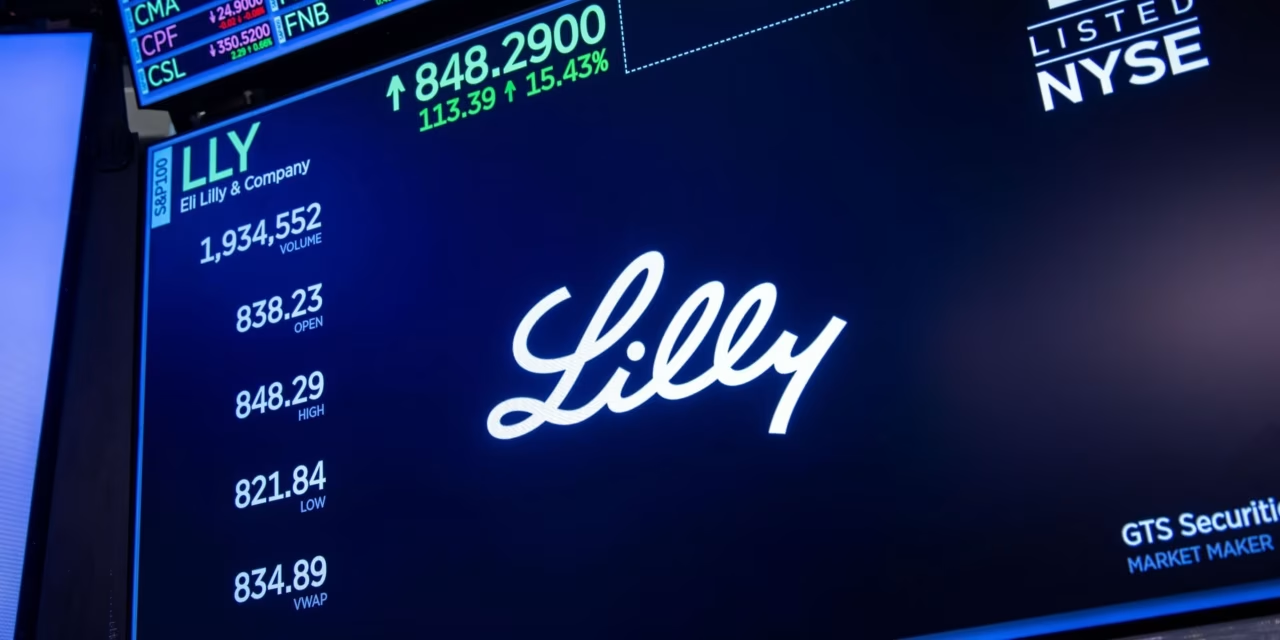
Eli Lilly shares rose more than 6% after Wednesday’s market open as strong demand for its weight-loss and diabetes treatments encouraged the pharmaceutical company to raise its annual revenue forecast.
The company reported rapid sales growth across its leading medicines, particularly Mounjaro and Zepbound. However, quarterly earnings per share came in below Wall Street expectations due partly to acquisition-related research and development charges.
Eli Lilly Raises 2026 Revenue Guidance
Eli Lilly increased its full-year 2026 revenue forecast to between $85 billion and $87 billion.
The company had previously expected annual revenue of $82 billion to $85 billion. The midpoint of the new range is also above the analyst consensus estimate of approximately $85.4 billion.
Strong demand for the company’s obesity and diabetes treatments was the main driver behind the improved outlook.
Adjusted Earnings Forecast Also Increases
Eli Lilly raised its underlying adjusted earnings guidance by $2.78 per share at the midpoint.
However, this improvement was more than offset by $3.03 per share in acquired in-process research and development charges linked to second-quarter business development activity.
As a result, the company now expects adjusted earnings of between $35.50 and $36.50 per share for the full year.
Profit Margin Outlook Improves
The pharmaceutical group also increased its performance margin forecast.
Eli Lilly now expects its margin to reach between 49% and 50.5%. This compares with its previous projection of 47% to 48.5%.
The stronger forecast suggests that higher sales, improved manufacturing efficiency, and a favourable product mix are supporting profitability.
Quarterly Revenue Surges 48%
Eli Lilly generated second-quarter revenue of $22.97 billion, representing annual growth of 48%.
The result comfortably exceeded the Wall Street estimate of $20.56 billion.
Quarterly earnings reached $8.38 per share. However, this came in below the analyst forecast of $8.84.
The revenue beat was primarily driven by higher sales volumes for Mounjaro and Zepbound.
Mounjaro Sales Nearly Double
Revenue from Mounjaro climbed 91% from the previous year to $9.94 billion.
The diabetes treatment exceeded market expectations as demand continued to increase across major markets.
BMO Capital Markets analysts said Mounjaro sales came in approximately 12% above consensus forecasts, making it one of the main contributors to Eli Lilly’s quarterly revenue beat.
Zepbound Revenue Reaches $4.93 Billion
Zepbound, Eli Lilly’s obesity treatment, generated revenue of $4.93 billion.
Sales increased by 56% from the same quarter one year earlier and exceeded market forecasts by more than 6%, according to BMO analysts.
Together, Mounjaro and Zepbound remain central to Eli Lilly’s growth strategy as global demand for weight-management medicines expands.
Broader Drug Portfolio Supports Growth
Revenue from Eli Lilly’s key products increased to $15.7 billion during the quarter.
The company also recorded strong growth across its immunology, oncology, and neuroscience businesses. Combined revenue from these treatment areas increased by 121% year over year.
This broader performance reduced Eli Lilly’s dependence on its leading weight-loss and diabetes medicines.
However, BMO analysts noted that Foundayo continued to face challenges as some patients prioritised treatment effectiveness over convenience.
The analysts maintained their Outperform rating on Eli Lilly shares.
Gross Margin Climbs to 86.3%
Adjusted gross profit increased by 50% to $19.8 billion.
Gross margin as a percentage of revenue rose by 1.3 percentage points to 86.3%.
Lower production costs and a more profitable product mix supported the improvement. However, lower realised prices partially offset those benefits.
Eli Lilly Invests in Future Treatments
Chief Executive David Ricks said the company’s momentum remained strong following its 48% revenue increase and upgraded annual guidance.
He also highlighted Eli Lilly’s next-generation weight-loss medicine, retatrutide, as an important part of its future growth strategy.
The company has completed the treatment’s clinical data package and is preparing additional manufacturing capacity.
Eli Lilly is also expanding its development pipeline through acquisitions and other business development agreements.
Acquisition Charges Weigh on Earnings
The company recorded $2.8 billion in acquired in-process research and development charges during the second quarter.
That figure was significantly higher than the $154 million reported in the same period last year.
Most of the charges were connected to Eli Lilly’s acquisitions of Orna Therapeutics and Ajax Therapeutics.
Although these expenses reduced near-term earnings, the acquisitions could strengthen the company’s long-term drug pipeline.
Research and Marketing Spending Increase
Research and development expenses rose by 14% to $3.8 billion, equivalent to approximately 17% of quarterly revenue.
The increase reflected continued investment in both early-stage and late-stage drug programmes.
Marketing, selling, and administrative expenses climbed 25% to $3.4 billion.
Eli Lilly attributed the rise to promotional spending for existing treatments and preparations for future drug launches.
Weight-Loss Drugs Drive Eli Lilly’s Outlook
Eli Lilly’s quarterly results showed that demand for Mounjaro and Zepbound remains strong.
The company’s revenue significantly exceeded expectations, while margins improved and management raised its annual forecast.
Despite the earnings miss and substantial acquisition-related charges, investors focused on the strength of the company’s commercial performance and its expanding weight-loss drug portfolio.