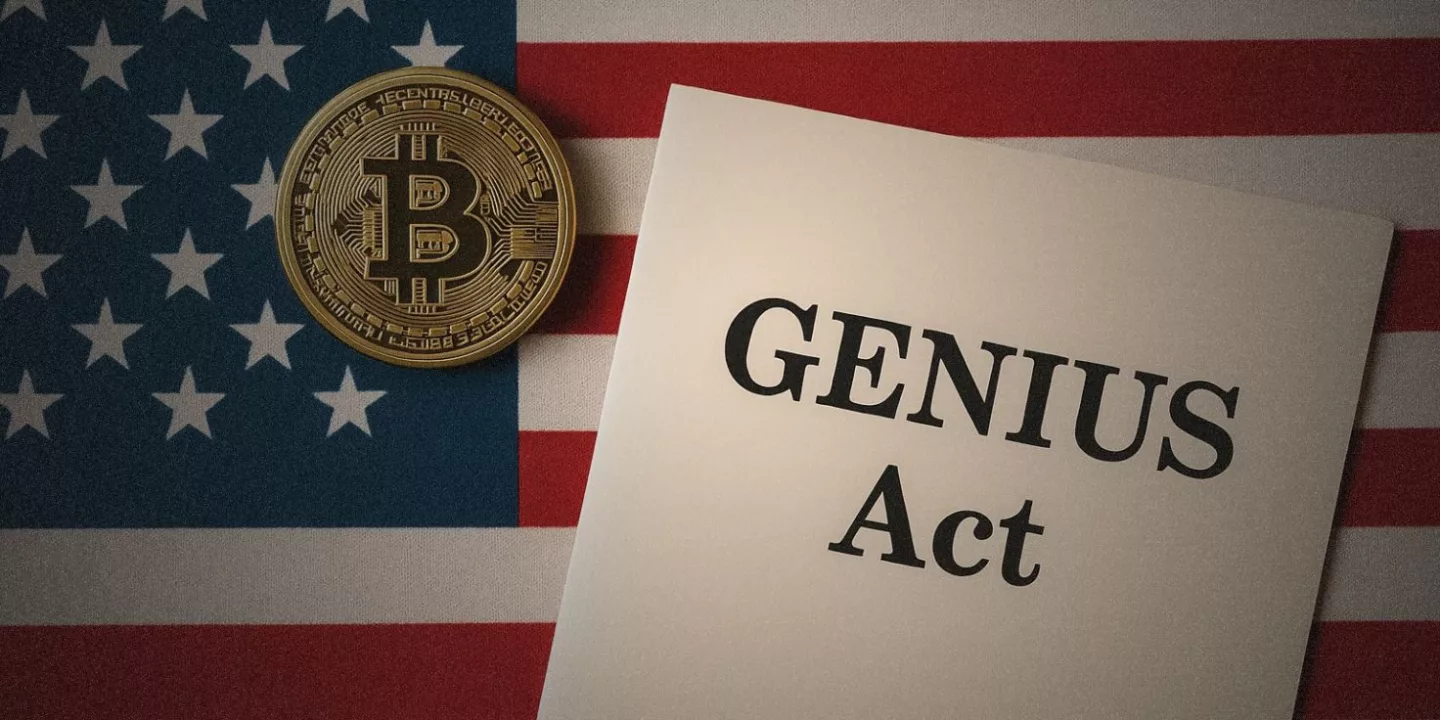
The United States has updated UK regulators on the implementation of the GENIUS Act, its new federal framework for payment stablecoins.
Officials discussed the legislation during the 13th US–UK Financial Regulatory Working Group meeting in London on July 8, 2026. A joint statement published on August 4 confirmed that stablecoin regulation was one of the main topics.
The meeting also covered digital asset market structure, tokenization, and the G20 Cross-Border Payments Roadmap.
Although no binding regulations were announced, both countries emphasized the need to support financial innovation without weakening market stability.
What the GENIUS Act Requires From Stablecoin Issuers
The GENIUS Act is the first comprehensive US federal law focused specifically on payment stablecoins. President Donald Trump signed the legislation into law in July 2025.
Under the framework, stablecoin issuers must maintain reserves equal to the full value of the tokens they issue.
These reserves must consist of high-quality and liquid assets. Eligible assets may include cash and short-term US Treasury securities.
Issuers must also separate customer reserves from their own corporate assets. In addition, they must process redemptions promptly and comply with the Bank Secrecy Act and anti-money laundering requirements.
These rules aim to increase confidence in stablecoins and reduce the risk of issuers being unable to return customers’ funds.
US Agencies Miss GENIUS Act Regulatory Deadline
Implementation of the GENIUS Act remains incomplete.
Several US agencies have published proposed regulations, including the Treasury Department, Office of the Comptroller of the Currency, Federal Deposit Insurance Corporation, Federal Reserve, and National Credit Union Administration.
However, none of these agencies have issued final rules.
The legislation gave regulators one year to complete the rulemaking process. That deadline expired on July 18, 2026.
As a result, the full stablecoin framework is now expected to become effective in early 2027.
During the London meeting, US officials briefed their UK counterparts on the current status of the regulatory process.
BlackRock Launches Tokenized Money Market Funds
Institutional interest in GENIUS Act-compliant assets is already increasing.
BlackRock introduced two tokenized money market funds one day before the joint US–UK statement was released.
The funds are designed to hold assets that could qualify as stablecoin reserves under the GENIUS Act.
The launch suggests that major financial institutions are preparing for the new regulatory environment before the final rules take effect.
For asset managers, reserve eligibility could create new opportunities as regulated stablecoin issuers look for approved and liquid investment products.
UK Advances Its Own Stablecoin Framework
The UK also shared updates on its Wholesale Financial Markets Digital Strategy.
In addition, the government announced Christopher Woolard CBE as the new Wholesale Digital Markets Champion.
The Bank of England has continued developing regulations for stablecoins that could become important to the wider financial system.
Under its updated proposal, the central bank replaced earlier holding limits with a temporary issuance cap of £40 billion for each stablecoin issuer.
It also adjusted the rules governing the type and composition of assets that issuers may hold as reserves.
These developments show that both the US and UK are working toward clearer standards for regulated digital currencies.
US and UK Seek Greater Stablecoin Alignment
Regulatory cooperation between the US and UK could become increasingly important for global stablecoin markets.
Both countries previously outlined a shared approach in a July 14 statement from the Transatlantic Taskforce.
The proposed model focused on three key areas: full reserve backing, reliable redemption rights, and compliance with anti-money laundering rules.
The August 4 statement confirms that regulators on both sides of the Atlantic are continuing this work.
Greater alignment could reduce the regulatory differences facing companies that operate in both markets.
It may also create a clearer environment for regulated issuers such as Circle and Paxos.
Why Transatlantic Cooperation Matters for Stablecoin Markets
The US and UK are two of the world’s largest financial centers.
Therefore, similar regulations could help stablecoin companies expand cross-border services without having to follow completely different standards in each country.
A coordinated framework could also improve the use of stablecoins for international payments, institutional settlements, and tokenized financial transactions.
For regulated issuers, compliance with the GENIUS Act may become a competitive advantage.
Companies that meet strict reserve and redemption standards could gain more trust from banks, asset managers, businesses, and institutional investors.
The US–UK approach is also developing alongside the European Union’s Markets in Crypto-Assets regulation, commonly known as MiCA.
Together, these frameworks could influence how stablecoins are regulated in other countries.
Tokenization Becomes a Shared Regulatory Priority
Tokenization was another major subject at the July 8 meeting.
Both the United States and the United Kingdom identified tokenized financial assets as an important area for future development.
Tokenization allows traditional assets, such as government bonds or money market funds, to be represented and transferred through blockchain-based systems.
Supporters believe this technology could make financial transactions faster, more transparent, and more efficient.
BlackRock’s new funds highlight the growing connection between tokenized assets and stablecoin reserves.
As regulated stablecoins expand, issuers may increasingly use tokenized funds and government-backed assets to support their reserves.
Stablecoin Market Reaches Record $323 Billion
The GENIUS Act reached its first anniversary as stablecoin adoption continued to rise.
According to the report, the total stablecoin market capitalization has reached a record $323 billion.
Meanwhile, the value of tokenized real-world assets has climbed above $28.9 billion, despite weaker prices across the broader cryptocurrency market.
These figures suggest that institutional demand for blockchain-based financial products continues to grow.
Stablecoins are increasingly being used for trading, payments, transfers, and settlement between financial institutions.
What Comes Next for US and UK Stablecoin Regulation
The next meeting of the US–UK Financial Regulatory Working Group is expected to take place in early 2027.
By then, US agencies may have completed the final rules required to implement the GENIUS Act.
Officials are expected to review the progress of both countries’ stablecoin frameworks.
They may also discuss whether regulated digital dollar products could receive greater access to markets on both sides of the Atlantic.
Any agreement on mutual market access could support the wider adoption of stablecoins in international finance.
However, the final impact will depend on the regulations issued by US agencies and the standards adopted by UK authorities.