Gold prices moved slightly lower on Monday as conflicting reports about potential U.S.-Iran negotiations weakened the metal’s earlier advance.
Traders also remained cautious ahead of several important U.S. economic releases, including the July employment report.
Gold Retreats From Its Intraday High
Gold initially climbed to an intraday high near $4,084 per ounce before giving back part of its gains.
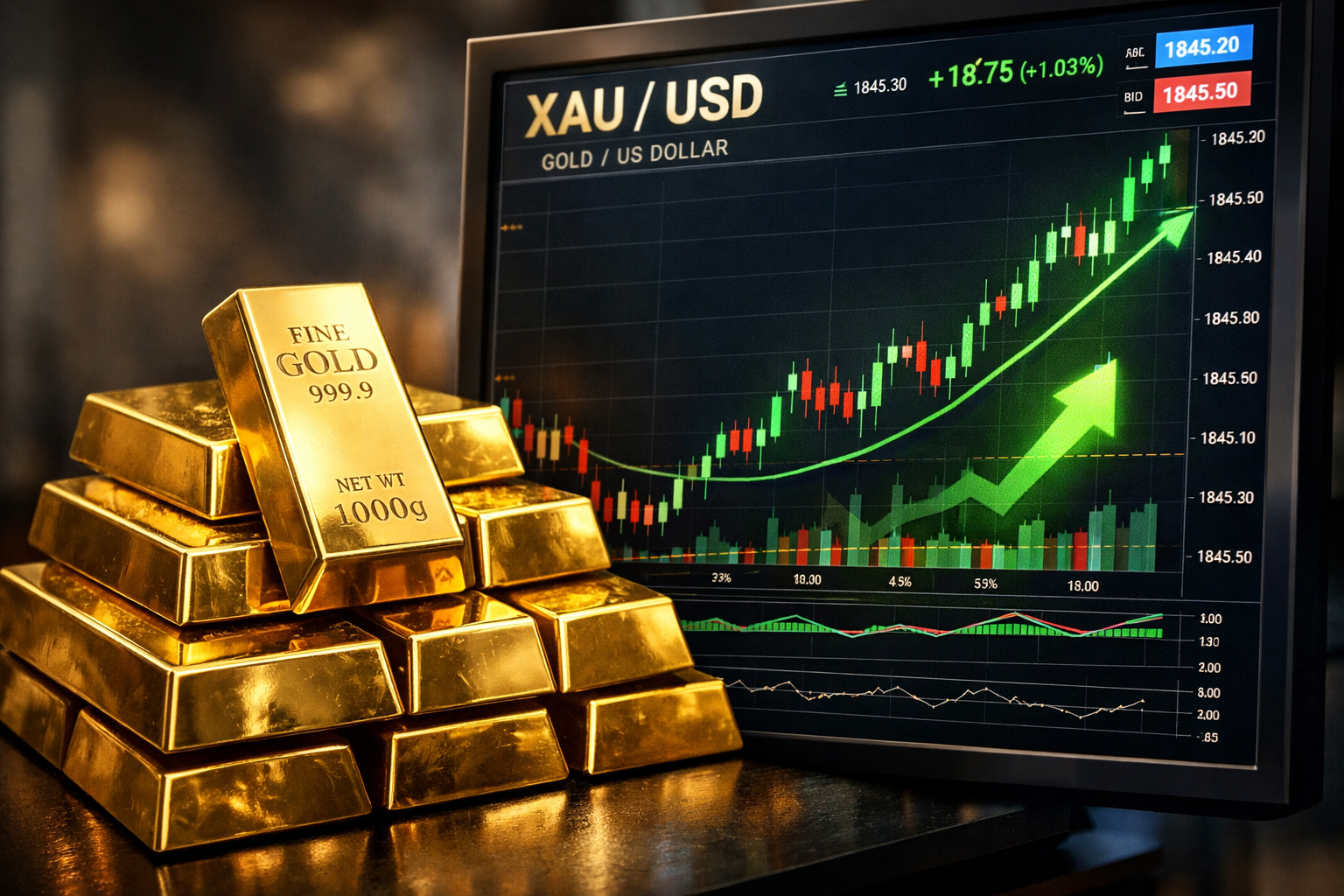
By 09:31 ET, spot gold had fallen 0.3% to approximately $4,030.21 per ounce. U.S. gold futures declined 0.5% to around $4,085.95 per ounce.
The reversal reflected growing uncertainty over whether diplomatic talks between Washington and Tehran were actually moving forward.
Conflicting U.S.-Iran Reports Pressure Gold
Market sentiment shifted after U.S. President Donald Trump said he had cancelled a planned military strike against Iran.
Trump also indicated that negotiations with Iranian officials were expected to begin on Monday.
However, Iran’s Foreign Ministry said no direct talks with Washington were taking place. The conflicting statements raised doubts about the prospects for a diplomatic breakthrough.
Investors are closely watching whether the two countries can reach an agreement involving Iran’s nuclear programme and the reopening of the Strait of Hormuz.
Strait of Hormuz Remains a Key Market Risk
Trump said renewed discussions with Iran would focus partly on restoring normal shipping activity through the Strait of Hormuz.
The waterway is one of the world’s most important routes for oil and gas exports.
A successful agreement could reduce geopolitical risk, support lower oil prices, and weaken demand for safe-haven assets such as gold.
However, Trump did not provide a clear deadline for reaching a deal. This uncertainty continues to limit confidence across commodity markets.
Federal Reserve Outlook Caps Gold Prices
The Federal Reserve left interest rates unchanged at its latest policy meeting.
However, three officials opposed the decision and supported an immediate rate increase. They argued that delaying further action could eventually force the central bank to tighten policy more aggressively.
Markets are now pricing in approximately a 68% probability of a 25-basis-point interest-rate increase in September.
This hawkish outlook remains a major obstacle for gold.
Why Higher Interest Rates Hurt Gold
Gold does not provide interest or dividend income.
When interest rates rise, government bonds and other yield-generating assets become more attractive compared with the precious metal.
Higher rates can also increase the opportunity cost of holding gold. Therefore, expectations of further Federal Reserve tightening may continue to limit major price recoveries.
Gold’s Technical Outlook Remains Bearish
The short-term technical picture for XAU/USD remains negative.
Gold continues to trade below its major 50-day, 100-day, and 200-day simple moving averages.
These indicators are positioned above the current market price and may act as separate layers of resistance.
As long as gold remains below those averages, rallies could face renewed selling pressure. A sustained recovery would likely require the price to reclaim at least one of these important technical levels.
Weaker Dollar Offers Limited Support
The U.S. dollar weakened modestly during Monday’s session and fell to its lowest level since the middle of June.
Reports suggested that authorities had intervened in currency markets to support the Japanese yen. The intervention pushed the yen higher and placed pressure on the dollar.
A weaker dollar usually supports gold because it makes the metal less expensive for buyers using other currencies.
However, the dollar’s decline was not strong enough to offset concerns about higher U.S. interest rates and uncertainty surrounding the Iran negotiations.
Falling Oil Prices Weigh on the Dollar
ING analysts said lower crude oil prices may also be placing pressure on the U.S. currency.
Oil prices declined after Trump suggested that Washington preferred negotiations with Iran rather than further military action.
Lower energy prices may reduce inflation expectations and ease demand for the dollar as a geopolitical safe haven.
At the same time, falling oil prices can reduce demand for gold by lowering concerns about inflation and instability.
U.S. Employment Data Comes Into Focus
Gold traders are now preparing for a busy week of U.S. economic releases.
The main event will be the July employment report, including nonfarm payrolls, wage growth, and the unemployment rate.
Investors will also monitor surveys covering activity in the manufacturing and services sectors.
Stronger-than-expected data could increase expectations of another Federal Reserve rate hike. That would likely support the dollar and Treasury yields while creating additional pressure on gold.
Weaker economic figures could have the opposite effect by reducing expectations of tighter monetary policy.
Gold Price Outlook
Gold remains caught between several competing market forces.
Geopolitical uncertainty surrounding the U.S. and Iran continues to provide some safe-haven demand. Meanwhile, a weaker dollar offers additional support.
However, hawkish Federal Reserve expectations and the possibility of higher interest rates are limiting the metal’s upside.
The next major price move may depend on whether the U.S.-Iran talks produce meaningful progress and how the upcoming U.S. employment data affects the interest-rate outlook.
Until greater clarity emerges, gold prices could remain volatile and struggle to sustain rallies above nearby technical resistance.