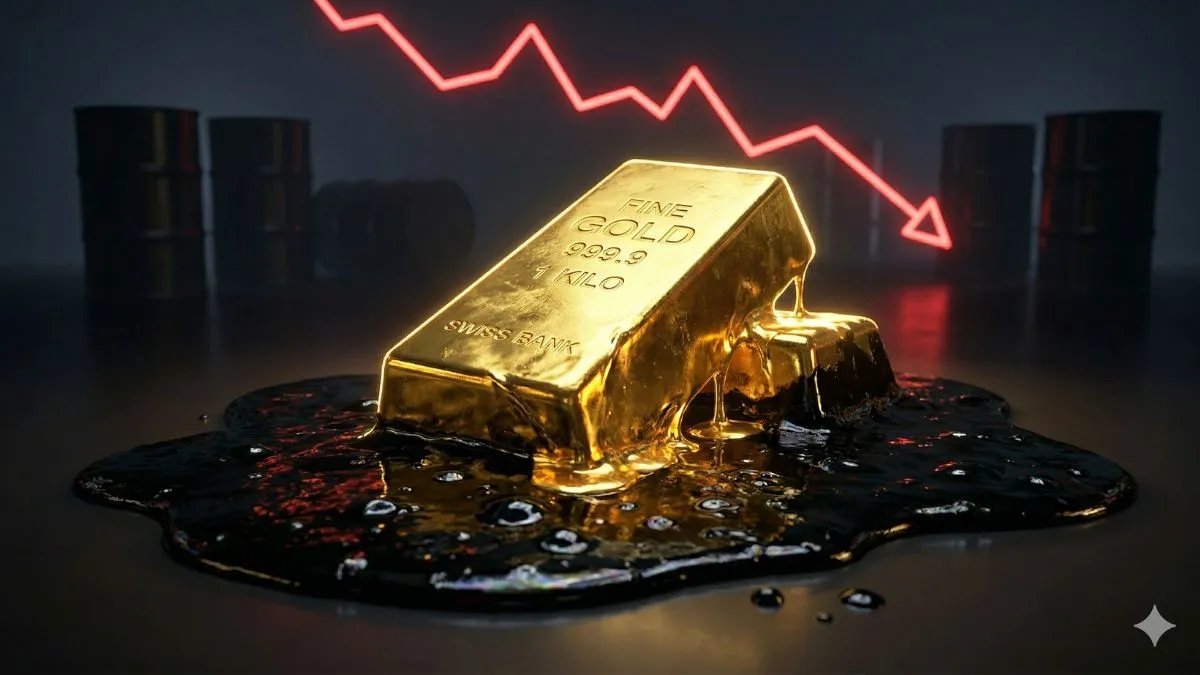
Gold Prices Plunge as Middle East Tensions Fuel Interest-Rate Fears
Gold prices fell sharply on Monday as renewed military action in the Middle East raised concerns about inflation and higher U.S. interest rates.
At 11:44 ET, spot gold dropped 2.6% to $4,013.83 per ounce. Gold futures also declined by 2.23% to $4,022 per ounce.
The losses marked a second consecutive weak session for the precious metal.
Middle East Conflict Intensifies
Tensions in the Middle East escalated over the weekend after the United States launched another series of strikes against Iranian targets.
The action followed an attack on a Cyprus-flagged cargo vessel in the Strait of Hormuz.
Iran said the strategic shipping route would remain closed until further notice. However, U.S. officials disputed that claim.
The conflicting statements highlighted the uncertainty surrounding ceasefire negotiations and the risk of further military escalation.
Markets Increase Bets on a Fed Rate Hike
Higher inflation concerns have also changed expectations for U.S. monetary policy.
According to the CME FedWatch Tool, traders currently see a 69% probability that the Federal Reserve will raise interest rates in September.
Expectations of higher rates usually place pressure on gold because the metal does not pay interest.
When bond yields rise, interest-bearing assets can become more attractive than bullion.
Oil Prices Revive Inflation Concerns
Oil prices remained more than 3% higher after reducing an earlier gain of almost 5%.
Traders continued to price in the possibility of supply disruptions through the Strait of Hormuz.
The waterway is one of the world’s most important energy transit routes. Therefore, any prolonged disruption could push crude oil prices significantly higher.
Sustained gains in energy prices could create another wave of inflation across the global economy.
Higher Yields and Dollar Strength Weigh on Gold
The prospect of renewed inflation has reinforced expectations that the Federal Reserve may keep interest rates elevated for longer.
Higher Treasury yields tend to reduce demand for non-interest-bearing assets such as gold.
A stronger U.S. dollar can also pressure bullion because gold becomes more expensive for buyers using other currencies.
The U.S. Dollar Index remained relatively stable during Monday’s session. However, expectations for tighter monetary policy continued to weigh on gold prices.
Fed Minutes Show Growing Inflation Concerns
Minutes from the Federal Reserve’s June meeting showed that several policymakers believed there was a case for increasing interest rates.
Officials also expressed greater concern about inflation, while worries surrounding the U.S. labour market appeared to ease.
The next Federal Reserve meeting is scheduled for July 28–29.
Investors will closely monitor the meeting for further signals about future rate decisions.
U.S. CPI Report Could Determine Gold’s Next Move
Attention now turns to Tuesday’s U.S. Consumer Price Index report.
The inflation data could provide important clues about whether the Federal Reserve is likely to raise interest rates again.
Investors are also awaiting Federal Reserve Chair Kevin Warsh’s first congressional testimony.
His comments could influence the outlook for interest rates, the U.S. dollar and gold prices.
Key Gold Price Levels to Watch
Tony Sycamore, a market analyst at IG, said gold remains highly sensitive to both geopolitical developments and U.S. inflation data.
Gold recently found support near the psychologically important $4,000 level.
A sustained move above the $4,200 to $4,220 area could improve the outlook and support a broader recovery.
Such a breakout could eventually open the way toward the 200-day moving average near $4,491.
Strong CPI Data Could Add Pressure
A stronger-than-expected inflation report could increase expectations for another Federal Reserve rate hike before the end of the year.
That outcome could strengthen the U.S. dollar and create additional pressure on gold.
However, softer inflation data could reduce rate-hike expectations and help bullion stabilize after its recent decline.
For now, gold prices remain caught between geopolitical uncertainty and growing concerns about higher interest rates.