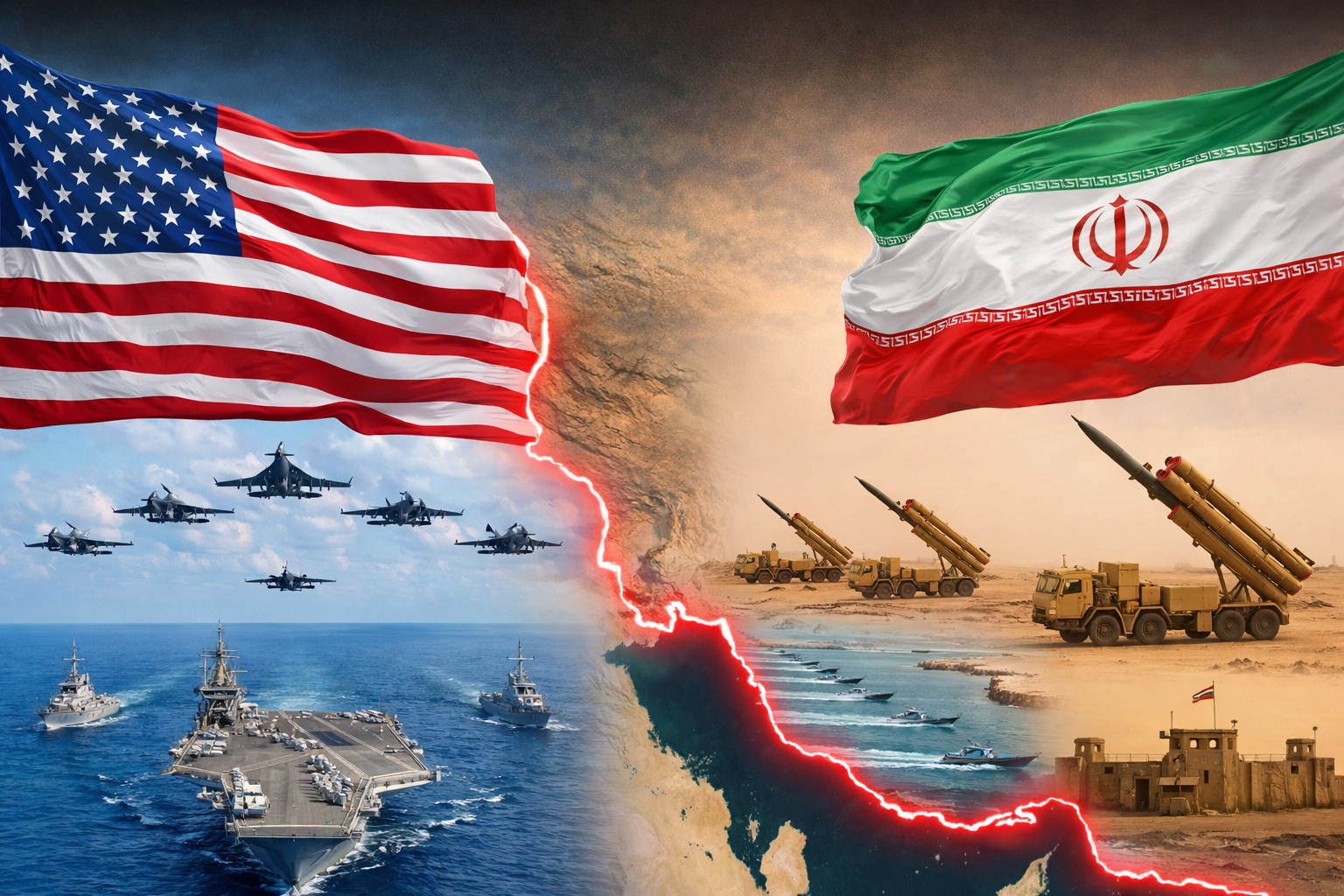
The United States launched new air strikes on Iran on Thursday, prompting Tehran to respond with attacks on sites across the Persian Gulf.
The latest exchange marks another round of tit-for-tat military action that threatens to weaken an already fragile ceasefire agreement.
Ceasefire Faces Fresh Pressure
Since the framework truce was signed in June, both sides have repeatedly traded strikes before returning to temporary pauses in fighting.
This cycle has left the agreement surrounded by uncertainty. Washington and Tehran have each accused the other of violating the deal.
Qatar Pushes for Diplomacy
Efforts to calm the latest escalation were underway.
Qatar urged both Iran and the United States to commit to a diplomatic solution. In a phone call, Qatari Prime Minister Sheikh Mohammed bin Abdulrahman al-Thani told Iranian Foreign Minister Abbas Araghchi that both sides should respect the June memorandum.
Qatar and Pakistan have both acted as mediators in recent peace talks.
Al-Thani also condemned an attack earlier this week on a Qatari tanker in the Strait of Hormuz, according to Qatar’s foreign ministry.
U.S. Targets Iranian Military Sites
Earlier Thursday, the U.S. military said it had carried out another round of strikes on Iran. The announcement came just hours after President Donald Trump questioned the future of the ceasefire with Tehran.
U.S. Central Command said it hit around 90 military targets across Iran.
The targets included air defense systems, coastal surveillance assets, and drone storage facilities. CENTCOM said the strikes were intended to weaken Iran’s ability to attack commercial shipping in the Strait of Hormuz.
Washington framed the operation as retaliation for Iranian attacks on three oil tankers in the key waterway.
Iran Retaliates Across the Gulf
Iran’s military responded with separate strikes on what it described as U.S. military bases in Kuwait and Bahrain.
Iran’s Islamic Revolutionary Guards Corps also warned that more attacks on American military sites in the Gulf could follow if Washington carried out further acts of aggression, according to Iranian state media.
The conflict also spread to other parts of the region.
Jordan, where U.S. military forces and aircraft are stationed, reportedly intercepted Iranian missiles. The IRGC said Iran fired 10 ballistic missiles at Jordan’s Azraq military base.
Trump Says Ceasefire Is “Over”
Speaking at a NATO summit in Türkiye on Wednesday, President Trump said the ceasefire with Iran was now “over.”
He accused Tehran of rejecting the terms of the agreement publicly after earlier talks.
However, Trump also suggested that negotiations could continue if both sides were willing to engage. Later, during his flight back to the United States, he claimed that Iran had reached out and wanted to make a deal. Iran has not confirmed any new talks.
Hormuz Dispute Blocks Peace Talks
The latest strikes have raised fresh doubts about the interim ceasefire deal signed in June.
Negotiations for a permanent agreement have also been complicated by disputes over Iran’s nuclear program, fighting between Israel and Iran-backed Hezbollah militants in Lebanon, and control of the Strait of Hormuz.
Iran wants to retain some authority over the key shipping route. Tehran has also demanded that vessels passing through the strait use routes approved by Iran.
The United States has rejected those demands and has blamed Iran for attacks on ships in the waterway.
Iran Demands Control Over Strait of Hormuz
Talks between Washington and Tehran were reportedly paused during the funeral ceremonies for former Iranian Supreme Leader Ayatollah Ali Khamenei, who was killed at the start of the war in late February.
Iran’s top negotiator, Mohammad Bagher Ghalibaf, said the Strait of Hormuz would only remain open under Iranian arrangements, not American threats.
Oil Prices Rise on War Risks
Oil prices moved higher in volatile trading on Thursday as the latest escalation revived concerns over energy-driven inflation.
The Strait of Hormuz remains one of the world’s most important shipping routes. Any disruption there could affect global oil flows and add pressure to energy markets.
For now, the U.S.-Iran ceasefire remains under serious strain, while diplomatic efforts continue to prevent a wider regional conflict.