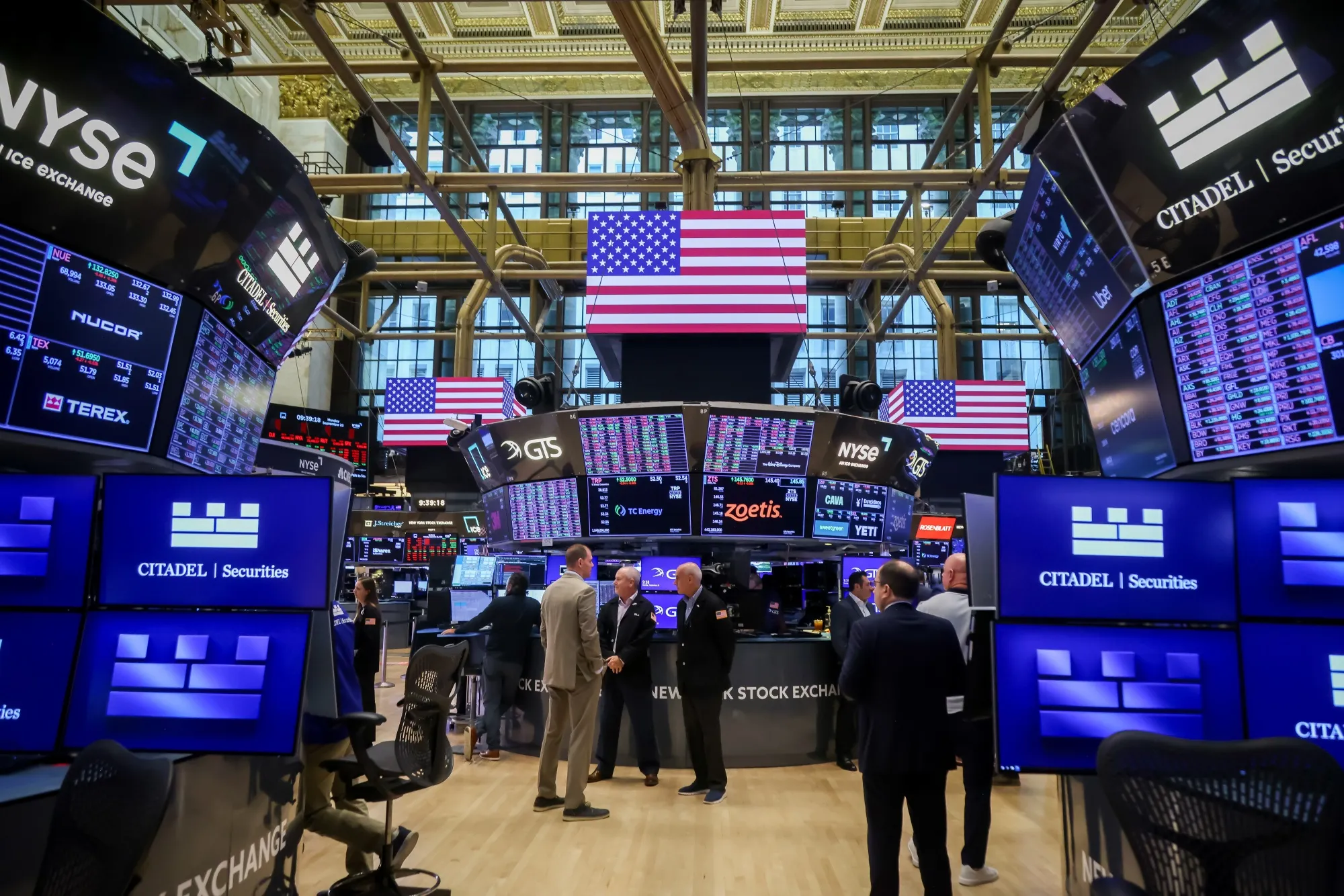
Wall Street moved higher on Thursday as chip stocks extended their rebound following several major developments across the technology sector.
Oil prices also moved lower after President Donald Trump said Iran had contacted Washington and wanted to make a deal. His comments came after the United States launched fresh strikes against Iran.
At 12:35 ET, the S&P 500 rose 0.6% to 7,530.88 points. The tech-heavy Nasdaq Composite gained 0.8% to 26,087.92 points, while the Dow Jones Industrial Average climbed 0.4% to 52,545.92 points.
Investors Focus on AI Spending
Oliver Pursche, senior vice president at Wealthspire Advisors, said investors remain focused on artificial intelligence spending as the second-quarter earnings season approaches.
He noted that markets appear to have a short attention span when it comes to politics and geopolitical risks.
However, he also warned that investors may eventually need to deal with several growing headwinds. These include renewed inflation pressures from higher oil prices, signs of a more cautious consumer, and continued fragility in the labor market.
For now, equity markets continue to reflect a strong growth environment powered by AI-related spending. The key question is whether that momentum can continue.
Chip Stocks Extend Their Recovery
Chip stocks were among the strongest performers on Thursday.
After falling nearly 14% over four sessions, the Philadelphia Semiconductor Index rebounded more than 5% across Wednesday and Thursday.
Semiconductor and memory stocks led the Nasdaq’s top gainers in midday trading. Arm, Sandisk, and Lam Research were among the strongest names in the sector.
AI Trade Remains a Key Market Driver
Earlier this year, a powerful rally in chip stocks helped fuel the broader artificial intelligence trade. That momentum pushed U.S. markets back toward record levels despite the Middle East conflict.
However, profit-taking in the sector since mid-June has weighed on technology stocks. Investors have also questioned whether the AI trade had risen too far, too quickly.
Despite those concerns, fresh tech headlines helped revive interest in the sector on Thursday.
Meta, SK Hynix and Micron Boost Chip Sentiment
Reuters reported that Meta Platforms is planning to begin production of a custom AI chip in September. The company is also reportedly aiming to double its computing power to 14 gigawatts next year, according to an internal memo.
Investor enthusiasm was also supported by SK Hynix’s expected U.S. listing. Reports suggested the offering could be more than seven times oversubscribed.
Bloomberg and Reuters reported that SK Hynix is expected to price its U.S.-listed shares at $149 each. That would represent a premium of about 3.1% over the company’s Korean-listed stock.
At that price, the offering could raise more than $26 billion. It would surpass Saudi Aramco’s $25.6 billion IPO in 2019 and trail only SpaceX’s $85.7 billion offering last month.
Memory Demand Hits Record Levels
SK Hynix, Samsung Electronics, and Micron are among the world’s biggest producers of memory chips used in computers and AI systems.
Demand for high-performance memory has surged as artificial intelligence spending accelerates. This has created supply shortages and pushed memory prices higher.
According to UBS’s July Memory Monthly report, global monthly memory sales reached a record $74.6 billion.
OpenAI CEO Sam Altman told CNBC that rising memory and computing costs are becoming a major challenge for the company’s rapid expansion.
Micron also attracted attention after announcing that it would raise its planned U.S. investment to more than $250 billion through 2035. The company also committed up to $3 billion to support the domestic semiconductor supply chain.
Micron shares were last up 6.5%.
Software Stocks Recover After Starbucks AI Report
Bloomberg News reported that Starbucks is developing internal artificial intelligence software that could replace applications it currently buys from outside vendors such as Microsoft and IBM.
The report initially pressured software stocks in pre-market trading. However, the group later recovered during the regular session.
The iShares Expanded Tech-Software Sector ETF was last up 1.2%.
Trump Says Iran Wants a Deal
Geopolitical risk remained in focus after the latest escalation between the United States and Iran.
The U.S. military launched strikes on about 170 targets in Iran on Tuesday and Wednesday. The targets included air defense systems, missile and drone storage sites, and more than 60 Islamic Revolutionary Guard Corps small boats.
The strikes came in response to attacks on three commercial oil tankers.
Iranian armed forces later responded by striking U.S. bases in the region, according to state media.
Oil Prices Slip After Trump Comments
At a NATO summit in Türkiye, President Trump said the ceasefire with Iran was over and that he did not want to deal with Tehran anymore.
Later, speaking to reporters on Air Force One, Trump described the U.S. strikes as retaliation for the tanker attacks.
He also said Iran had contacted Washington and wanted to make a deal, although he questioned whether Tehran would honor any agreement.
Oil traders appeared to take some relief from the possibility of renewed negotiations. Crude prices fell about 2% on Thursday after Brent futures jumped more than 5% in the previous session and briefly moved above $80 a barrel for the first time since June 22.
Pepsi and AstraZeneca Move Lower
Among individual stocks, PepsiCo slipped more than 3% after reporting second-quarter results.
The company beat revenue expectations, but adjusted earnings came in slightly below analyst forecasts.
U.S.-listed shares of AstraZeneca fell 5.1% after the company and partner Ionis Pharmaceuticals said their Wainua drug failed in a late-stage trial for a rare heart disease.
Ionis shares dropped nearly 24%.
For now, Wall Street remains supported by the AI trade and chip stock recovery, while investors continue to monitor oil prices, inflation risks, and the possibility of renewed U.S.-Iran talks.