U.S. Dollar Retreats as Traders Await Key Labor Market Data
The U.S. dollar moved lower on Monday, pausing after two consecutive weeks of gains. The recent rally had pushed the currency to its highest level since mid-May 2025.
Investors are now turning their attention to upcoming U.S. labor market data. The figures could provide fresh clues about the Federal Reserve’s next interest rate decision following last week’s inflation report.
Improved risk sentiment also reduced demand for the dollar as a safe-haven asset. Global stock markets recovered after suffering steep losses during the previous week.
Meanwhile, concerns over the Middle East eased after U.S. President Donald Trump said Iran had requested a meeting with American officials in Qatar.
At 15:59 ET, or 19:59 GMT, the U.S. Dollar Index was down 0.3% at 101.11. The index, which measures the dollar against six major currencies, had gained approximately 1.6% during the previous two weeks.
U.S. Jobs Data Takes Center Stage
The dollar’s recent rally was largely driven by growing expectations that the Federal Reserve could raise interest rates.
Those expectations also triggered a sell-off in the bond market, pushing U.S. Treasury yields higher.
The Federal Reserve’s preferred inflation measure rose in May to its highest annual level since October 2023. Meanwhile, the headline inflation reading recorded its strongest annual increase since April 2023.
However, both figures were in line with economists’ forecasts.
Despite the elevated inflation readings, investors slightly reduced their expectations for further Federal Reserve rate increases this year. At the same time, they increased bets that policymakers would keep rates unchanged.
This shift reflected expectations that inflationary pressure may have peaked in May.
Oil prices have fallen rapidly toward levels last seen before the latest Middle East conflict began. As a result, concerns about energy-driven inflation have eased.
Labor Reports Could Influence Federal Reserve Policy
Several important U.S. employment reports are scheduled for release this week.
The April Job Openings and Labor Turnover Survey, commonly known as JOLTS, is due on Tuesday. ADP will then publish its report on private-sector employment on Wednesday.
The closely watched May nonfarm payrolls report will follow on Thursday.
Stronger-than-expected employment figures could reduce the Federal Reserve’s ability to ease monetary policy. A resilient labor market, combined with elevated inflation, could support a more restrictive interest rate outlook.
José Torres, senior economist at Interactive Brokers, said the upcoming JOLTS report and revisions to the previous month could significantly lift both interest rates and the dollar.
According to Torres, economists widely expect job openings to decline. Therefore, an unexpected increase could create considerable market volatility.
Although the JOLTS report does not always cause a major market reaction, a sharp rise in job openings could strengthen the case for a more hawkish Federal Reserve.
Policymakers could then focus more heavily on controlling inflation and worry less about weakening employment conditions.
Torres added that stronger readings from ADP, Challenger and the government’s employment report could create a volatile summer for financial markets.
Treasury prices could face further pressure if the labor market unexpectedly accelerates.
In contrast, weaker employment figures could support stocks and bonds. They could also encourage investors to expect a more dovish Federal Reserve outlook.
Lagarde Rejects “Insurance Hike” Description
The European Central Bank was also in focus as its annual policy forum began in Sintra, Portugal.
During her opening speech, ECB President Christine Lagarde said Europe was becoming more resilient to economic shocks.
Lagarde also discussed the ECB’s recent decision to increase its main interest rates for the first time since 2023.
She rejected claims that the move was simply an “insurance hike.”
According to Lagarde, the ECB was responding to an outlook that included rising headline and core inflation. Forecasts also showed inflation returning to the central bank’s 2% target only during the final quarter of 2027.
She explained that keeping rates unchanged would have left inflation above 2% in both 2027 and 2028.
Therefore, the rate increase was based on the economic conditions and inflation forecasts available to policymakers.
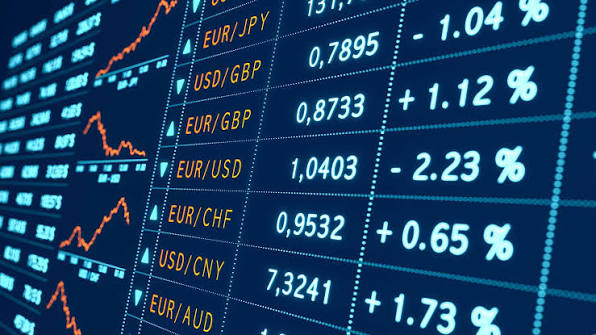
Following Lagarde’s comments, the euro gained 0.4% against the dollar to trade near $1.1424. The British pound also rose 0.4% to approximately $1.3259.
Japanese Yen Falls to Lowest Level Since 1986
The Japanese yen continued its historic decline against the U.S. dollar.
The USD/JPY exchange rate rose 0.1% to 161.93 after reaching an intraday high of 161.98. This placed the yen near its weakest level against the dollar since 1986.
The decline has increased pressure on Japanese authorities to support the currency.
Earlier in the year, the government spent a record 11.73 trillion yen, worth more than $70 billion, to defend the yen. It was Japan’s first direct currency market intervention since 2024.
The yen’s weakness has also continued despite tighter monetary policy from the Bank of Japan.
After maintaining interest rates close to 0% for nearly two decades, the central bank tightened policy as higher energy prices increased inflationary pressure.
Separate economic data showed that Japanese retail sales rose 5.3% in May. The result was well above the 3.1% market forecast and higher than April’s 2.8% increase.
Trump Says Iran Requested Talks
Investors also closely monitored developments in the Middle East.
The United States and Iran exchanged further strikes on Friday and during the weekend. The escalation represented the biggest challenge to diplomatic efforts since the two sides signed an interim memorandum of understanding on June 17.
However, tensions eased after President Trump said Iran had requested a meeting with U.S. officials.
Trump stated that the talks would take place in Doha on Tuesday.
White House Press Secretary Karoline Leavitt later told Fox News that U.S. Special Envoy Steve Witkoff and Jared Kushner would travel to Doha for the meeting.
She added that the United States believed it was continuing to respect its commitments under the ceasefire.
The possibility of renewed diplomatic talks improved market sentiment, supported equities and reduced safe-haven demand for the U.S. dollar.