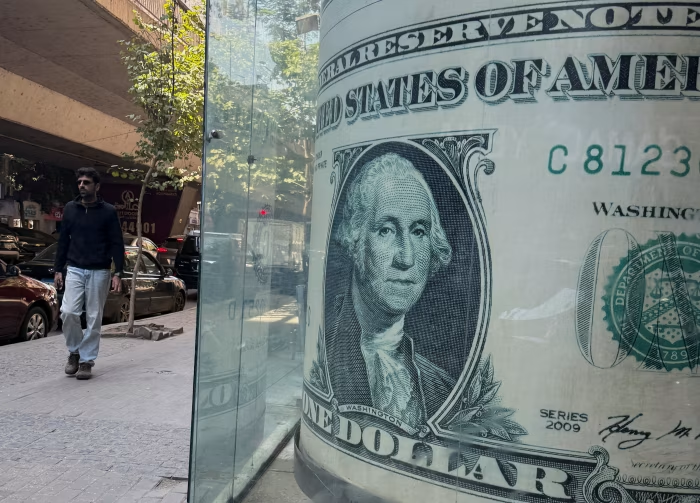
The U.S. dollar climbed for a third consecutive session on Wednesday, reaching its highest level in 13 months.
Growing expectations that the Federal Reserve could raise interest rates later this year supported the greenback. A global technology stock sell-off and geopolitical uncertainty also increased demand for the safe-haven currency.
Fed Rate Hike Expectations Support the Dollar
Expectations for another U.S. interest rate increase have strengthened since the Federal Reserve’s latest policy announcement.
Several Fed officials have recently emphasized the need to control inflation. At the same time, the wider U.S. economy appears to remain relatively stable.
These conditions have encouraged traders to consider the possibility of a more hawkish monetary policy outlook.
According to CME FedWatch data, markets were pricing in an approximately 32% probability of a rate increase of at least 25 basis points at the Fed’s July meeting.
The estimated probability of a rate hike by September stood at around 66%.
Technology Sell-Off Boosts Safe-Haven Demand
Recent weakness across global equity markets also supported the U.S. dollar.
Technology stocks came under particular pressure, prompting some investors to reduce their exposure to risk-sensitive assets and move toward safer investments.
U.S. stocks recorded modest gains during early trading on Wednesday. Investors were also awaiting earnings from semiconductor company Micron Technology after the market close.
U.S.-Iran Uncertainty Adds to Dollar Strength
Continued uncertainty surrounding the tentative peace agreement between the United States and Iran provided additional support for the dollar.
However, oil prices fell to their lowest level since before the conflict began. Reports indicated that more oil tankers could soon pass through the Strait of Hormuz, easing concerns about supply disruptions.
Juan Perez, director of trading at Monex USA, said concerns about high prices could push the Federal Reserve toward a more aggressive policy stance.
He added that the combination of Fed policy expectations and uncertainty surrounding Iran was contributing to the dollar’s dominance.
Dollar Index Reaches 13-Month High
The U.S. Dollar Index, which measures the currency against a basket of major rivals, rose 0.23% to 101.62.
Earlier in the session, it reached 101.80, its highest level since May 12, 2025.
The euro fell approximately 0.3% against the dollar to $1.1348.
The greenback was heading for its longest winning streak since the beginning of the month. It had also gained during five of the previous six trading sessions.
Barclays Sees Mixed Dollar Signals
Barclays analysts said their month-end portfolio rebalancing model produced a moderate dollar-buying signal against most major currencies.
However, the bank’s quarter-end model indicated a stronger dollar-selling signal.
Overall, Barclays said the combined signals did not point to a clear directional bias for the dollar against major currencies at the end of June.
PCE Inflation Report Comes Into Focus
Investors are now waiting for the release of the U.S. Personal Consumption Expenditures price index for May.
The PCE report, due on Thursday, is the Federal Reserve’s preferred measure of inflation.
A stronger-than-expected reading could reinforce expectations for tighter monetary policy. A softer figure could reduce market confidence in a potential rate hike.
British Pound Falls After Starmer Resignation
The British pound weakened 0.33% to approximately $1.3161.
Sterling had earlier fallen to $1.3139, its lowest level since November. The currency was also heading for a second consecutive daily decline.
Political uncertainty continued to weigh on the pound following the resignation of Prime Minister Keir Starmer on Monday.
Dollar Strength Pushes Yen Toward Historic Low
The dollar gained 0.08% against the Japanese yen to trade near 161.7.
A move above 161.96 would push the yen to its weakest level against the dollar since 1986.
Recent warnings from Japanese officials have done little to relieve the pressure on the currency. The government is reportedly preparing measures to manage its $1.3 trillion in foreign exchange reserves more effectively for possible yen intervention.
Former Bank of Japan policymaker Sayuri Shirai said the yen could weaken to 165 per dollar if the Federal Reserve raises interest rates this year.
Meanwhile, a summary of opinions from the Bank of Japan’s June meeting showed that some policymakers supported additional rate increases. They argued that borrowing costs should move closer to levels considered neutral for the Japanese economy.