Trump Threatens 100% Tariffs on French Wine Over U.S. Tech Tax
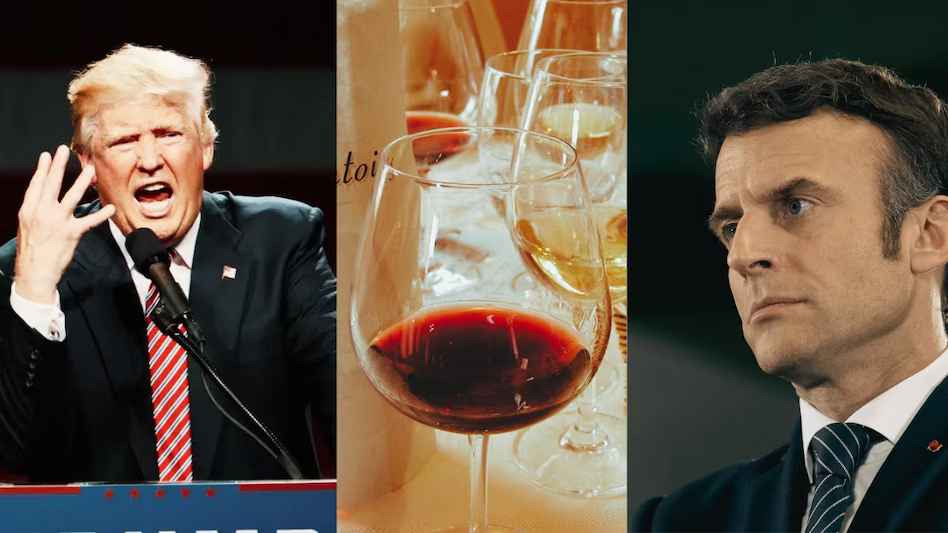
U.S. President Donald Trump has threatened to impose 100% tariffs on French wine and champagne unless France removes its digital services tax on American technology companies.
Trump issued the warning during an exclusive interview with the New York Post published on Monday. He said France must eliminate the 3% levy or face severe trade consequences.
Trump Delivers Warning to Macron
According to Trump, he personally raised the issue with outgoing French President Emmanuel Macron.
Trump urged Macron to abolish the digital services tax, often called the GAFAM tax. The levy applies to revenue generated in France by major technology companies such as Alphabet, Amazon, Meta and Apple.
The U.S. president warned that Washington could place 100% duties on all French wine and champagne entering the American market if Paris refuses to act.
However, Trump added that France could immediately avoid the tariffs by removing the tax.
Dispute Could Dominate G7 Summit
The tariff threat could create fresh tensions during the G7 summit in Évian-les-Bains, France. The gathering runs through Wednesday and includes discussions on trade, economic policy and global security.
The United States is one of the most important markets for French wine producers. American buyers account for around one-fifth of France’s global wine exports, generating more than $2 billion in annual sales.
As a result, a 100% tariff could significantly damage French exporters and increase prices for American consumers.
Tariff Threat Revives Earlier Trade Dispute
The proposed tariff level is not new. The Office of the U.S. Trade Representative first considered 100% duties during a 2019 investigation into France’s digital services tax.
France introduced the GAFAM tax that same year. According to the French Finance Ministry, the measure generated approximately $700 million in revenue during 2025.
Washington has repeatedly argued that the tax unfairly targets successful American technology companies.
France and U.S. Disagree Over Reported Settlement
Trump’s comments also challenge claims that France and the United States had already resolved the disagreement.
Macron’s office, the Élysée Palace, reportedly suggested last week that the dispute over Silicon Valley taxation had been quietly settled.
A senior French source also claimed that G7 nations had effectively reached an agreement. However, a U.S. official rejected that statement.
The latest warning indicates that significant differences remain between Washington and Paris.
France Faces Growing International Pressure
France has become increasingly isolated among its allies over digital services taxes.
Canada abandoned its own digital levy in 2025 after the United States withdrew from trade negotiations. Italy is also reportedly considering changes to its tax policy.
Britain remains a notable exception. The country continues to apply its digital services tax under its existing trade agreement with the United States.
French Lawmakers Push for a Higher Tax
Political pressure to increase the levy has also grown inside France.
In October, the French National Assembly voted 296-58 in favor of doubling the tax rate from 3% to 6%. Government ministers later blocked the proposal.
Some lawmakers had initially suggested raising the rate to 15%. However, they reduced the proposal following strong opposition from the technology industry.
White House Defends Tougher Trade Position
The White House supported Trump’s position by referring to a presidential memorandum issued in February 2025.
The document stated that American companies should no longer be forced to support foreign economies through what the administration considers unfair taxes and financial penalties.
Trump’s latest threat raises the possibility of a wider U.S.-France trade confrontation, with French wine producers potentially becoming the first major industry affected.