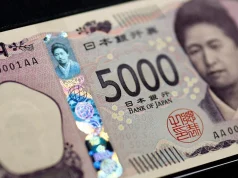
Japanese Yen Falls to 160 per Dollar as Middle East Tensions Strengthen the Greenback
The Japanese yen weakened to the key 160-per-dollar level on Wednesday as escalating tensions in the Gulf region boosted demand for the U.S. dollar and renewed concerns over Japan’s currency outlook.
The move highlights how geopolitical uncertainty continues to influence global currency markets, with investors seeking safety in the U.S. dollar amid growing instability in the Middle East.
Rising Geopolitical Risks Support the U.S. Dollar
Market sentiment deteriorated after reports that Iran launched ballistic missiles toward neighboring countries in the region. According to U.S. officials, the missiles failed to reach their intended targets.
In response, U.S. forces carried out military strikes on Qeshm Island, further escalating tensions between Washington and Tehran.
With diplomatic negotiations between the United States and Iran remaining stalled, investors have increasingly favored the U.S. dollar as a safe-haven asset during periods of uncertainty.
Why the Yen Is Under Pressure
While the U.S. dollar has benefited from safe-haven inflows, the Japanese yen has faced additional pressure from rising oil prices.
Japan remains heavily dependent on imported energy, making its economy particularly vulnerable to increases in crude oil prices. As energy costs rise, concerns over Japan’s trade balance and economic outlook tend to weigh on the national currency.
The recent surge in oil prices linked to the Middle East conflict has therefore contributed to the yen’s decline against the dollar.
Previous Currency Intervention Loses Impact
The yen’s drop back to 160 per dollar effectively erased the gains generated by Japan’s massive currency intervention conducted just one month ago.
Tokyo spent approximately 11.7 trillion yen, equivalent to around $73 billion, in an effort to support the currency and slow its depreciation.
The 160 level is especially significant because Japanese authorities have intervened in foreign exchange markets around this area before. As a result, traders remain alert for any signs that policymakers could step in again if the currency weakens further.
Markets Watch for Possible Government Action
Japanese officials have already issued verbal warnings regarding excessive currency volatility, a common precursor to potential intervention.
While no direct action has been announced, market participants are closely monitoring comments from government and central bank officials for clues about their next move.
Any indication of renewed intervention could trigger increased volatility in the USD/JPY currency pair.
Higher Oil Prices Shift Interest Rate Expectations
The prolonged conflict in the Middle East is also reshaping expectations for global monetary policy.
Before the conflict intensified, investors largely anticipated that major central banks would continue cutting interest rates throughout the year. However, rising energy prices have increased concerns about inflation, prompting markets to reconsider that outlook.
Many investors now expect central banks to maintain higher interest rates for longer, while some are even beginning to price in the possibility of additional policy tightening if inflationary pressures persist.
Outlook for the Yen
The combination of geopolitical uncertainty, elevated oil prices, and a stronger U.S. dollar continues to create challenges for the Japanese yen.
With the currency once again trading near levels that previously triggered government intervention, investors will be watching closely to see whether Japanese authorities are prepared to defend the currency or allow market forces to dictate its direction.