Trump Says Iran Requested Ceasefire, Links Decision to Hormuz Reopening
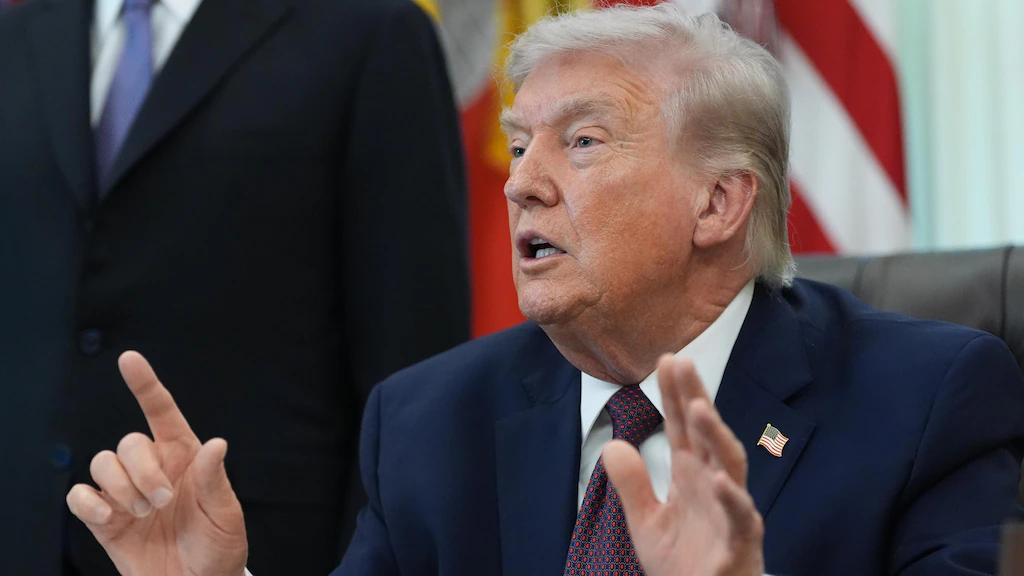
U.S. President Donald Trump stated that a senior Iranian official has requested a ceasefire in the ongoing Middle East conflict. However, he made it clear that the United States will only consider the request if the Strait of Hormuz is reopened to global tanker traffic.
In a post on Truth Social, Trump claimed that Iran’s new leadership had reached out to Washington seeking a halt to hostilities, describing the official as less radical than previous figures.
Strait of Hormuz Becomes Key Condition for De-Escalation
Trump emphasized that any ceasefire consideration depends on the reopening of the Strait of Hormuz. This critical shipping route, located along Iran’s southern coast, handles around 20% of global oil supply.
The waterway has been largely closed for weeks, with vessels facing threats of attack. This disruption has increased global inflation concerns and weighed on the broader economic outlook.
The president warned that military action would continue until the strait is fully reopened and safe for passage.
U.S. Signals Potential Withdrawal From Iran Conflict
In additional remarks, Trump suggested that U.S. forces could exit Iran relatively soon, possibly within two to three weeks. He reiterated that Washington has already achieved its main objective of weakening Iran’s nuclear capabilities.
Trump also indicated that the U.S. does not require a formal agreement to withdraw and suggested that responsibility for reopening the Strait of Hormuz should fall on countries that depend on the route.
Iran Responds With Conditions for Reopening
Iranian officials signaled that the Strait of Hormuz could reopen, but only under new conditions. Authorities suggested that access may be restricted to countries complying with Iran’s new rules, including the potential imposition of tolls on vessels.
This adds further uncertainty to global energy markets and raises questions about the long-term stability of oil supply routes.
Ongoing Military Activity Keeps Tensions High
Despite ceasefire discussions, military operations continue across the region. The U.S. has targeted key Iranian military infrastructure, while Israel has carried out strikes in Tehran, central Iran, and Beirut.
In response, Iran has launched attacks toward Israel and Persian Gulf countries, maintaining a high level of geopolitical tension.
Trump Signals Possible NATO Exit
Trump also revealed that he is considering withdrawing the United States from NATO. He criticized the alliance for not supporting U.S. military actions in Iran and described it as ineffective.
He is expected to address the nation with further updates on the conflict and outline potential policy changes regarding NATO.
However, formally exiting NATO would be complex, as U.S. law requires significant congressional approval.
Markets React: Stocks Rise, Oil Prices Pull Back
Financial markets responded positively to the prospect of de-escalation. U.S. stock futures moved higher, suggesting a continuation of recent gains across major indices such as the S&P 500, Nasdaq, and Dow Jones.
Meanwhile, oil prices declined following Trump’s comments. Brent crude fell to around $102 per barrel after briefly dropping below $100, while U.S. crude dropped below $99.
Uncertainty Remains Despite De-Escalation Hopes
Although markets have welcomed the possibility of a ceasefire, analysts warn that the economic impact of the conflict could persist even if hostilities end soon.
Ongoing risks, particularly surrounding the Strait of Hormuz and regional stability, are likely to keep volatility elevated in global markets.