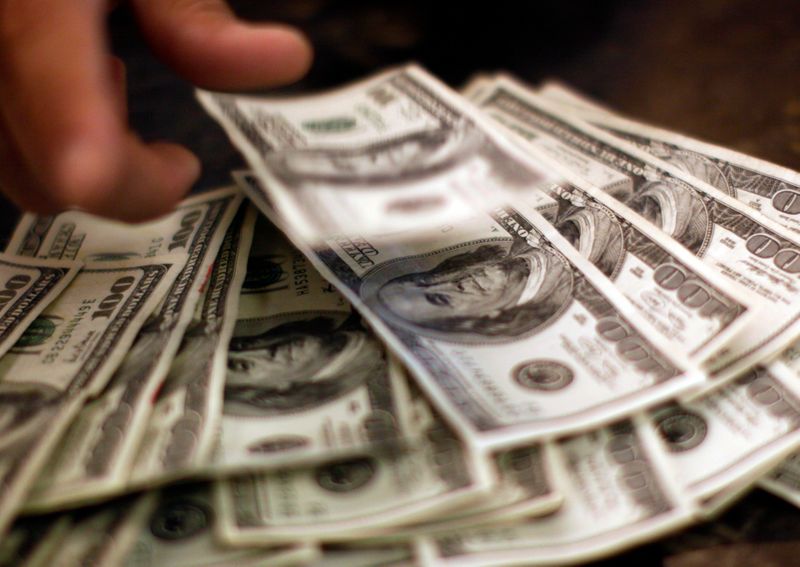
U.S. Dollar Strengthens as Investors Seek Safety
The U.S. dollar advanced on Friday, putting it on track for its strongest monthly performance since July. The move comes as investors increasingly turn to the greenback as a safe-haven asset amid growing uncertainty surrounding the evolving Iran conflict.
By 08:49 ET (12:49 GMT), the U.S. Dollar Index — which measures the currency against a basket of major peers — rose 0.2% to 100.06.
Dollar Posts Best Monthly Gain Since July
Throughout March, the dollar index has climbed approximately 2.4%, marking its largest monthly increase since July 2025, when it gained 3.4%. This sustained upward momentum highlights the renewed demand for safety in global markets.
Safe-Haven Demand and Interest Rate Expectations Boost Dollar
Demand for the U.S. dollar has strengthened significantly in recent weeks. Investors are increasingly positioning for a prolonged period of higher interest rates, driven by rising inflation pressures linked to surging energy prices.
Expectations that the Federal Reserve would begin cutting rates this year have largely faded. Instead, markets are now pricing in the possibility that policymakers could raise interest rates in the coming months, further supporting the dollar.
Treasury Yields Hit Multi-Month Highs
U.S. government bond yields also surged, with benchmark 10-year Treasury yields reaching their highest level since July. The rise in yields reflects shifting market expectations around inflation and monetary policy.
Oil Prices Surge as Iran Tensions Escalate
Oil prices climbed back to $110 per barrel, as geopolitical tensions in the Middle East remained elevated. Markets found only limited relief after President Donald Trump extended the deadline for Iran to reopen the Strait of Hormuz.
The new deadline, set for April 6, delays potential U.S. strikes on Iranian energy infrastructure. Trump stated via Truth Social that the extension was requested by Iran and claimed that ongoing negotiations between the two sides are progressing positively. However, media reports suggesting otherwise were dismissed by him as inaccurate.
Conflicting Signals on U.S.–Iran Negotiations
Despite Trump’s statements, Iranian officials have publicly denied that any negotiations with the United States are taking place. The situation remains highly uncertain, contributing to ongoing volatility in global markets.
Previously, Trump had issued a warning that the U.S. would target Iranian power facilities if the Strait of Hormuz — a critical route for roughly 20% of global oil supply — remained blocked.
Global Leaders to Address Strait of Hormuz Crisis
Diplomats from the Group of Seven (G7) are scheduled to meet in France, where discussions are expected to focus heavily on the Strait of Hormuz situation. The U.S. has called for international support to ensure the waterway remains open, although these requests have so far received limited backing.
Currency Markets React to Rising Geopolitical Risks
In currency markets, the Japanese yen weakened toward the 160 level against the dollar — a threshold that could prompt potential intervention by Japanese authorities, according to media reports.
Meanwhile, the Australian dollar, often seen as a proxy for global risk sentiment, remained relatively stable after falling to a two-month low earlier in the session.
Outlook: Short-Term Conflict or Prolonged Risk?
According to analysts at MUFG, the base-case scenario suggests that the U.S.–Iran conflict may be relatively short-lived, with geopolitical risk premiums eventually easing.
However, they caution that the balance of risks points toward a more prolonged conflict, which could keep energy prices elevated for an extended period.
Asian currencies that rely heavily on energy imports — particularly the South Korean won (KRW) and Japanese yen (JPY) — remain especially vulnerable to further escalation in Middle East tensions.