U.S. Dollar Edges Higher as Iran Tensions and Inflation Data Capture Market Attention
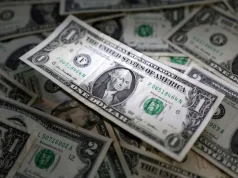
The U.S. dollar strengthened modestly on Wednesday as investors evaluated the evolving conflict involving Iran while waiting for the latest U.S. consumer inflation data. Market participants are closely monitoring geopolitical risks and their potential impact on global energy prices and monetary policy.
Dollar Index Moves Higher
At 06:06 ET (10:06 GMT), the U.S. Dollar Index, which measures the greenback against a basket of major currencies, rose 0.2% to 99.02. The euro remained largely unchanged, while the British pound gained 0.2% to $1.3441.
According to analysts at ING, the foreign exchange market is currently strongly influenced by the sharp swings in oil prices, which have been triggered by escalating tensions surrounding Iran.
Strait of Hormuz Remains a Critical Focus
Market attention is centered on the Strait of Hormuz, a narrow but strategically vital waterway south of Iran through which around 20% of global oil supply passes. Much of this crude oil is transported to major Asian economies.
Concerns about potential Iranian military actions have caused shipping congestion near the strait, with vessels waiting to pass while shipping companies attempt to ensure crew safety and secure insurance coverage for their routes.
Oil Price Volatility Influencing Markets
Brent crude, the global benchmark for oil prices, currently trades near $90 per barrel, after briefly surging to $120 earlier in the week. Rising oil prices have already led to higher gasoline costs in the United States, which could increase inflationary pressures.
If inflation accelerates, the Federal Reserve may adopt a more hawkish monetary policy stance, potentially keeping interest rates higher for longer. Higher interest rates typically attract foreign capital inflows, which can further support the strength of the U.S. dollar.
Oil markets have been reacting sharply to developments in the Middle East. For example, Brent crude fluctuated between $81 and $92 per barrel after the U.S. Energy Secretary announced that military forces had escorted a tanker through the Strait of Hormuz.
Rising Geopolitical Tensions
U.S. President Donald Trump has warned that American military action against Iran could escalate if Tehran does not remove naval mines reportedly placed in the Strait of Hormuz. Reports suggest the mines have been deployed in the strategic waterway, raising concerns about disruptions to global oil supply.
Trump stated that Iran would face retaliation “at a level never seen before” if the mines remain in place, intensifying fears of further conflict in the region.
IEA Considers Massive Strategic Oil Release
Meanwhile, the International Energy Agency (IEA) is reportedly considering the largest coordinated release of strategic oil reserves in history to stabilize energy markets.
According to the Wall Street Journal, the proposed release could exceed the 182 million barrels made available by IEA member countries following Russia’s invasion of Ukraine in 2022. Member nations are expected to decide on the proposal soon.
Analysts at ING believe such a move could temporarily limit further oil price spikes, although they stress that it would only provide short-term relief. In their view, sustainable declines in crude prices will likely require a military de-escalation in the region.
The analysts also suggested that the IEA’s proposal may signal limited expectations for an immediate ceasefire, which could keep energy markets volatile.
Dollar Outlook Tied to Geopolitical Headlines
ING analysts note that these mixed signals from geopolitics and energy markets could prevent the dollar from weakening significantly unless there are strong signs of de-escalation in the Middle East.
U.S. Inflation Data in Focus
In addition to geopolitical developments, markets are also awaiting new U.S. inflation figures.
Economists expect the Consumer Price Index (CPI) to rise 0.3% month-on-month in February, compared with 0.2% in January. On an annual basis, CPI is forecast to remain at 2.4%, matching the previous month’s pace.
Core inflation, which excludes volatile categories such as food and energy, is projected to increase by 0.2%, slightly lower than January’s 0.3% reading. Analysts attribute the moderation partly to declining airfares and easing winter weather disruptions.
However, some factors could still keep inflation pressures elevated. Seasonal strength in goods prices, stable healthcare costs, and a rebound in used vehicle prices may offset some of the expected softness, according to economists at Wolfe Research.