Dollar Heads for Weekly Gain Amid Middle East Uncertainty
The U.S. dollar was on track to post its first weekly gain in three weeks on Friday, as stalled negotiations between the United States and Iran reduced expectations for a near-term easing of geopolitical tensions.
Despite a three-week ceasefire extension between Israel and Lebanon, uncertainty remained elevated. Iran reinforced its control over the Strait of Hormuz by releasing footage of commandos boarding a cargo vessel, raising concerns about disruptions to a critical global shipping route and keeping oil prices high.
Dollar Index Edges Higher as Euro and Sterling Slip
The dollar index, which tracks the greenback against major currencies such as the euro and yen, edged up slightly to 98.84 and was heading for a weekly increase of about 0.62%.
The euro weakened marginally to $1.1682, while the British pound also slipped slightly to $1.3464, reflecting broader dollar strength.
Oil Prices and Safe-Haven Demand Support Dollar
Rising oil prices continued to underpin the dollar. Brent crude climbed to around $105.52 per barrel, while U.S. crude traded near $95.99.
According to Sho Suzuki of Matsui Securities, the dollar has been closely tracking oil prices, with higher crude levels helping to sustain its strength.
The greenback has also benefited from safe-haven demand, gaining traction amid geopolitical risks after giving back some earlier gains this month.
Japanese Yen Weakens as Intervention Risks Loom
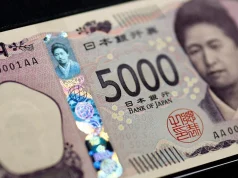
The Japanese yen extended its losses, marking a fifth consecutive day of decline against the dollar, trading near 159.77.
Satsuki Katayama reiterated warnings that authorities are ready to take decisive action to counter excessive currency moves.
Analysts at Mitsubishi UFJ Bank suggested that a sharp move beyond the 160 level could trigger stronger intervention signals from policymakers.
BOJ Policy Decision in Focus
Japan’s core inflation remained below the Bank of Japan 2% target for a second consecutive month. However, inflation is expected to rise again as higher energy costs from the Middle East conflict begin to filter through the economy.
The Bank of Japan is set to conclude its upcoming policy meeting next week, with expectations that interest rates will remain unchanged. Still, the central bank may signal readiness to tighten policy in response to growing inflationary pressures.
Global Central Banks Monitor Inflation Risks
In Europe, the European Central Bank is expected to hold its deposit rate steady at its next meeting, with a potential rate hike anticipated in June to counter energy-driven inflation risks.
Emerging Markets and Commodity Currencies Under Pressure
Commodity-linked currencies such as the Australian and New Zealand dollars weakened slightly against the U.S. dollar.
Emerging Asian currencies also came under pressure, with declines seen in the Philippine peso, Malaysian ringgit, and Indian rupee as the stronger dollar weighed on regional markets.
Cryptocurrencies Decline Alongside Risk Assets
In the cryptocurrency market, Bitcoin fell 0.23% to $77,740.57, while Ethereum declined 0.73% to $2,309.52, reflecting broader risk aversion across financial markets.