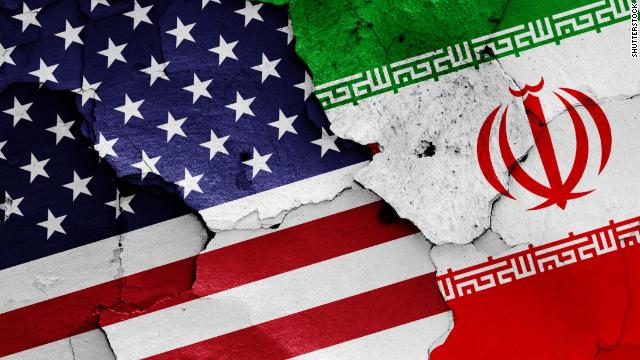
U.S. President Donald Trump said on Friday that the United States will accept nothing less than Iran’s “unconditional surrender”, as military conflict continues to intensify across the Middle East.
In a post on social media, Trump stated that once the conflict ends, the United States would support the appointment of “a great and acceptable leader” for Iran. He added that Washington would then work to help rebuild the country’s economy and bring Iran back from the brink of destruction.
Middle East Conflict Intensifies
Trump’s remarks came as Israel expanded its military operations in the region. Israeli forces reportedly struck Hezbollah targets in Lebanon and carried out attacks on Iranian infrastructure in Tehran.
According to the Israel Defense Forces, the campaign against Iran has now entered its “next phase” following an earlier surprise strike stage, as reported by The Wall Street Journal.
Iran responded by launching drones and missile strikes targeting Tel Aviv, according to Iran’s state news agency. Several Gulf countries, including Bahrain and Saudi Arabia, also reported being targeted by Iranian attacks.
As the joint U.S.-Israeli military operation entered its seventh day, Iran’s foreign minister warned that the conflict could evolve into a prolonged and difficult confrontation for those involved. Meanwhile, U.S. Defense Secretary Pete Hegseth said the United States has sufficient military resources to continue operations for as long as necessary.
Reports from The New York Times also indicated that Iran has delayed announcing a successor to former Supreme Leader Ali Khamenei, who was killed in recent airstrikes carried out by U.S. and Israeli forces.
His son, Mojtaba Khamenei, is widely viewed as a leading candidate to replace him. However, Trump has described the potential appointment as unacceptable.
Oil Prices Surge as Strait of Hormuz Risks Rise
Financial markets have been closely monitoring the potential disruption of oil supplies through the Strait of Hormuz, a critical shipping corridor south of Iran that carries roughly 20% of the world’s oil supply.
Several global shipping companies have already suspended operations in the region. Container shipping giants A.P. Moller-Maersk and Hapag-Lloyd have temporarily halted some routes connecting the Middle East with Europe and East Asia.
Oil prices have responded sharply to the rising geopolitical risks. Brent crude, the global oil benchmark, climbed above $90 per barrel on Friday and has surged more than 23% over the past week.
Meanwhile, U.S. crude oil futures have jumped nearly 21% since the United States and Israel launched coordinated strikes on Iran.
The rise in crude oil prices has also pushed gasoline costs higher in the United States. Average fuel prices have increased by about 27 cents to $3.25 per gallon since the start of the conflict, according to data from AAA cited by Reuters.
Markets React to Inflation and Economic Risks
Higher oil prices have raised concerns among investors that prolonged conflict could fuel a new wave of inflation. Rising energy costs could complicate monetary policy decisions and potentially delay expected interest-rate cuts by the Federal Reserve later this year.
U.S. bond yields have increased amid these concerns, putting pressure on equity markets. However, stock markets have remained relatively resilient so far this week.
Outside the United States, Asian markets have been more sensitive to the surge in oil prices. Countries that rely heavily on imported energy, particularly oil passing through the Strait of Hormuz, have seen increased volatility.
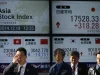
South Korea’s main stock index, the KOSPI, finished Friday’s session mostly unchanged but has declined more than 10% over the past week. European markets are also on track for their largest weekly losses since April.
U.S. Moves to Ease Oil Market Pressure
In an effort to limit the rise in energy prices, the United States has temporarily allowed the sale of Russian oil to India for a period of 30 days.
According to analysts at ING Group, the decision is part of the U.S. administration’s strategy to prevent oil prices from rising further.
The U.S. Department of the Treasury is also expected to introduce additional measures aimed at stabilizing energy prices through financial markets, according to reports from Reuters.