Wall Street Slips as Warsh Hearing and Geopolitical Risks Weigh
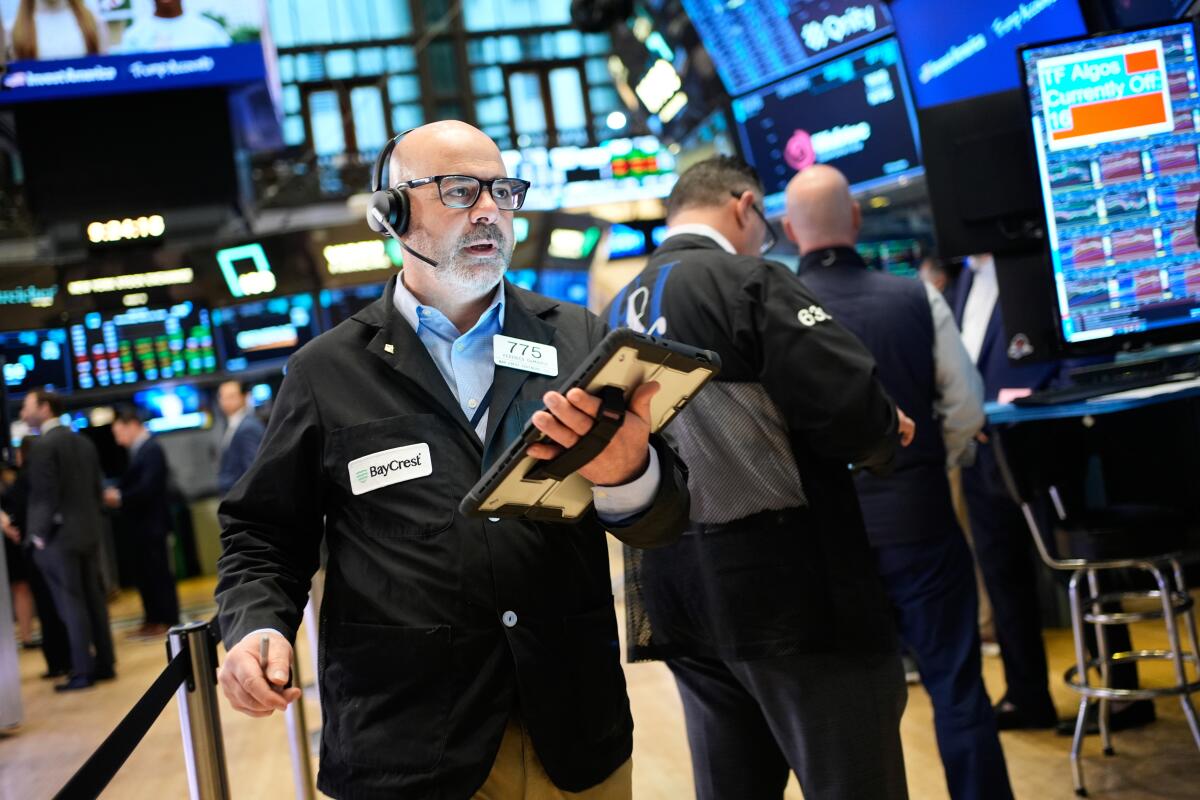
U.S. stocks edged lower on Tuesday after briefly trading higher earlier in the session, as investors monitored the ongoing Senate confirmation hearing for Federal Reserve Chair nominee Kevin Warsh and continued uncertainty surrounding Middle East developments.
By 10:59 ET (14:59 GMT), the S&P 500 had reversed gains to trade 0.1% lower at 7,098.59. The NASDAQ Composite also slipped 0.1% to 24,400.52, while the Dow Jones Industrial Average remained flat at 49,443.97.
Warsh Hearing Draws Market Attention
While geopolitical tensions remained a dominant theme, investor focus also shifted to Washington, where Kevin Warsh—President Donald Trump’s nominee for Fed Chair—was testifying before the Senate.
Markets are closely watching the hearing for signals on monetary policy and the Federal Reserve’s independence. Warsh stated in prepared remarks that, if confirmed, he would ensure the Fed remains “strictly independent.”
The issue of central bank independence has gained prominence following ongoing disagreements between Trump and current Fed Chair Jerome Powell. Trump has repeatedly called for aggressive rate cuts, while Powell has emphasized data-driven policymaking.
Warsh also pointed to a “legacy” of policy mistakes in 2021 and 2022, arguing that “fundamental reforms” and a broader shift in policy approach are necessary.
Iran Talks Uncertainty Continues to Weigh
Geopolitical developments in the Middle East continue to influence market sentiment. Wall Street had already closed slightly lower on Monday after a strong rally last week, as renewed tensions between the U.S. and Iran dampened optimism.
Investors remain uncertain about the prospects for peace talks as a two-week ceasefire approaches its expiration later this week. Mixed signals from both sides have clouded expectations around a potential agreement.
The situation has been further complicated by the U.S. seizure of an Iranian cargo vessel, which prompted threats of retaliation from Tehran.
Markets Expect Negotiations Despite Tensions
Despite ongoing tensions, many investors still expect negotiations to move forward. Analysts suggest that both the U.S. and Iran have incentives to avoid further escalation and pursue a diplomatic resolution.
However, conflicting statements from officials and uncertainty over delegation leadership have added to the ambiguity surrounding the talks.
Trump reiterated his belief that Iran would participate in negotiations and that a “great deal” could be reached. At the same time, he warned that the U.S. is prepared to resume military action if talks fail.
Oil Prices Volatile Amid Energy Crisis
Oil markets remained volatile, with prices still elevated compared to pre-conflict levels. The International Energy Agency has described the situation as the most severe energy crisis in history.
The Strait of Hormuz, a key global shipping route for oil, continues to play a central role in market dynamics, with ongoing disruptions affecting supply expectations.
Earnings Season and Corporate Movers in Focus
Corporate earnings continued to influence individual stock movements.
UnitedHealth shares surged 7%, leading gains on both the S&P 500 and the Dow, following strong quarterly results.
Meanwhile, 3M shares gave up earlier gains despite beating profit estimates and improving margins.
Apple remained in focus after announcing a major leadership transition, with Tim Cook set to become executive chairman and John Ternus taking over as CEO. Shares of Apple declined 1.6% following the news.
Strong Retail Sales Add Economic Context
On the economic front, U.S. retail sales data showed stronger-than-expected growth. According to the U.S. Census Bureau, retail sales rose 1.7% month-over-month in March, surpassing forecasts of 1.4%.
Gasoline station sales saw a sharp 15.5% increase, largely driven by higher oil prices amid the ongoing conflict.