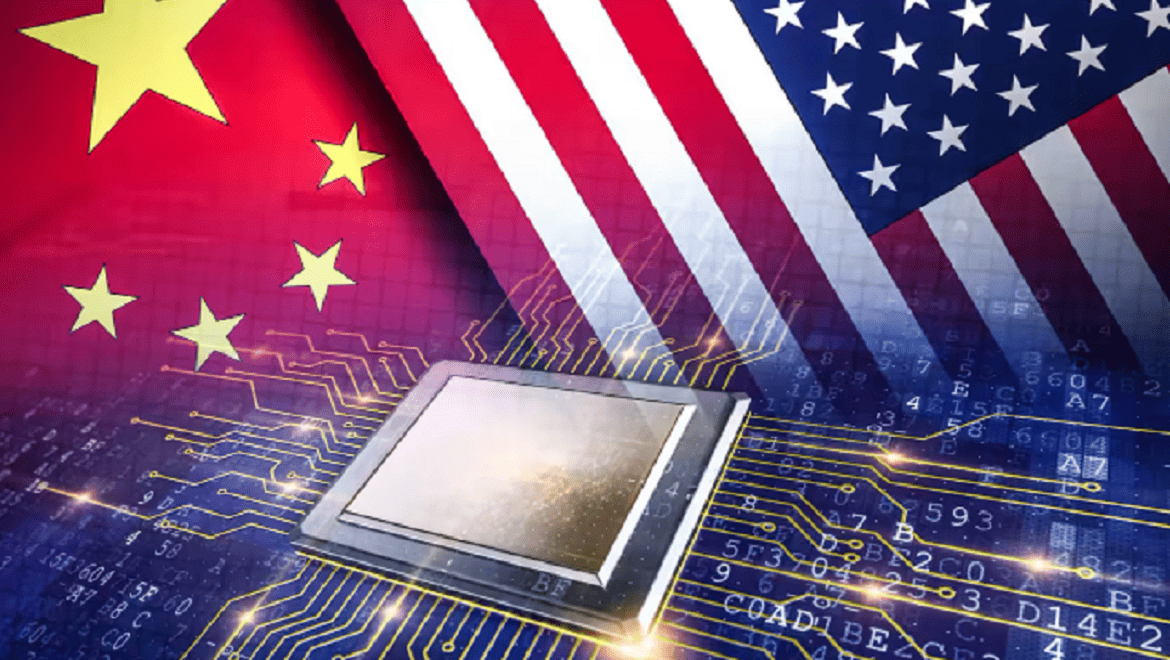
China has unveiled a new five-year strategic plan aimed at accelerating scientific innovation and expanding the use of artificial intelligence across its industrial economy, positioning technological leadership as a central national security priority amid growing competition with the United States.
The roadmap forms part of China’s 15th five-year development plan, continuing a policy framework first introduced in the 1950s. In this latest strategy, Beijing is placing strong emphasis on technology-driven growth rather than consumption, signaling a shift in how the country plans to sustain long-term economic development despite rising structural pressures.
China focuses on technology and AI leadership
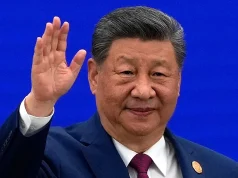
The plan reflects President Xi Jinping’s vision of developing “new productive forces” that can help China escape the middle-income trap, offset demographic challenges, and strengthen economic self-reliance in response to U.S. export restrictions.
During the opening of the annual parliamentary session, Premier Li Qiang highlighted China’s ability to withstand tariff increases introduced by U.S. President Donald Trump, but warned that the global economic environment is becoming increasingly unstable.
Li stated that multilateral trade and global cooperation face growing pressure, while announcing 7% increases in both the country’s defense budget and research and development spending.
He also acknowledged that China faces several economic challenges, including weak domestic demand, a prolonged property sector downturn, and rising local government debt levels.
Lower growth target reflects economic pressures
Amid these challenges, Beijing has set a GDP growth target of 4.5% to 5% for 2026, slightly lower than the 5% growth achieved in the previous year. Much of last year’s expansion was supported by a record trade surplus of $1.2 trillion, driven by a sharp increase in exports.
The new five-year plan also mentions the need to increase household consumption, although it does not provide specific targets. This has led some economists to believe that China will continue prioritizing industrial investment and production capacity over demand-driven reforms.
China’s development model has long relied on heavy investment, with the country investing around 20 percentage points more of GDP than the global average, while household consumption remains significantly lower than in many advanced economies.
Strategic industries and AI expansion
The plan aims to increase the contribution of core digital economy industries to 12.5% of GDP, while introducing policies to create a national data market, expand AI adoption across supply chains, and establish a comprehensive AI security system.
China is also investing heavily in a wide range of emerging technologies, including:
- Biomedicine
- Quantum computing
- Atomic-scale manufacturing
- Large-scale AI computing infrastructure
- Nuclear fusion
- Brain-computer interfaces
- AI-powered humanoid robotics
State-owned enterprises are expected to support these efforts by increasing demand for domestically produced semiconductors, drones, and advanced manufacturing technologies.
The strategy also builds on recent progress by Chinese AI developers such as DeepSeek, which have rapidly narrowed the technological gap with U.S. companies like OpenAI and Google’s Gemini.
Rare earth dominance and electric vehicle infrastructure
China also reaffirmed its commitment to maintaining global leadership in rare earth materials, which are essential for advanced technologies ranging from AI chips to defense systems. Western countries remain heavily dependent on China for these resources.
In sectors where China already dominates, such as electric vehicle charging infrastructure, the country plans further expansion. China currently accounts for around 85% of the world’s EV charging stations, and the government plans to double that number within the next three years.
Managing growth while restructuring the economy
Economists say the slightly lower growth target gives Beijing greater flexibility to reduce industrial overcapacity in lower-value sectors, while gradually transitioning toward a more advanced technology-focused economy.
At the same time, authorities are signaling tighter oversight of local government spending, particularly on infrastructure projects that have generated limited economic returns.
China’s fiscal plans remain broadly unchanged from the previous year. The government has set a budget deficit target of 4% of GDP, along with special bond issuance quotas of 1.3 trillion yuan for the central government and 4.4 trillion yuan for local governments.
Officials also announced modest social policy measures, including increases in pension payments, healthcare subsidies, and education spending, as well as support for childcare services and reforms in the public hospital system to address demographic challenges.
Geopolitical risks and global trade routes
Analysts note that China’s economic strategy was developed before the latest escalation in geopolitical tensions in the Middle East.
Fund manager Yuan Yuwei from Trinity Synergy Investment warned that disruptions in the region could create new risks for China’s trade flows.
He pointed out that the Strait of Hormuz remains a critical route for China’s energy imports and global trade, meaning prolonged instability could negatively affect the country’s economic outlook.
Overall, Beijing appears to be pursuing a carefully managed transition toward a technology-driven economy, relying heavily on artificial intelligence, advanced manufacturing, and digital infrastructure to power its next phase of growth.